Eastwood's Manzanita
Arctostaphylos glandulosa · Ericaceae
- Form
- Shrub
- Height
- 3–8 ft
- Sun
- Full Sun
- Water
- Very Low
- Blooms
- Dec, Jan, Feb, Mar
- Habitat
- Chaparral
🌿 California native
Quick facts · Habitat: Chaparral · Form / size: Evergreen shrub, 3–8 ft (can mound wider) · Sun: Full sun · Water (established): Very low · Blooms: Winter–early spring · Pollinator value: High
Description
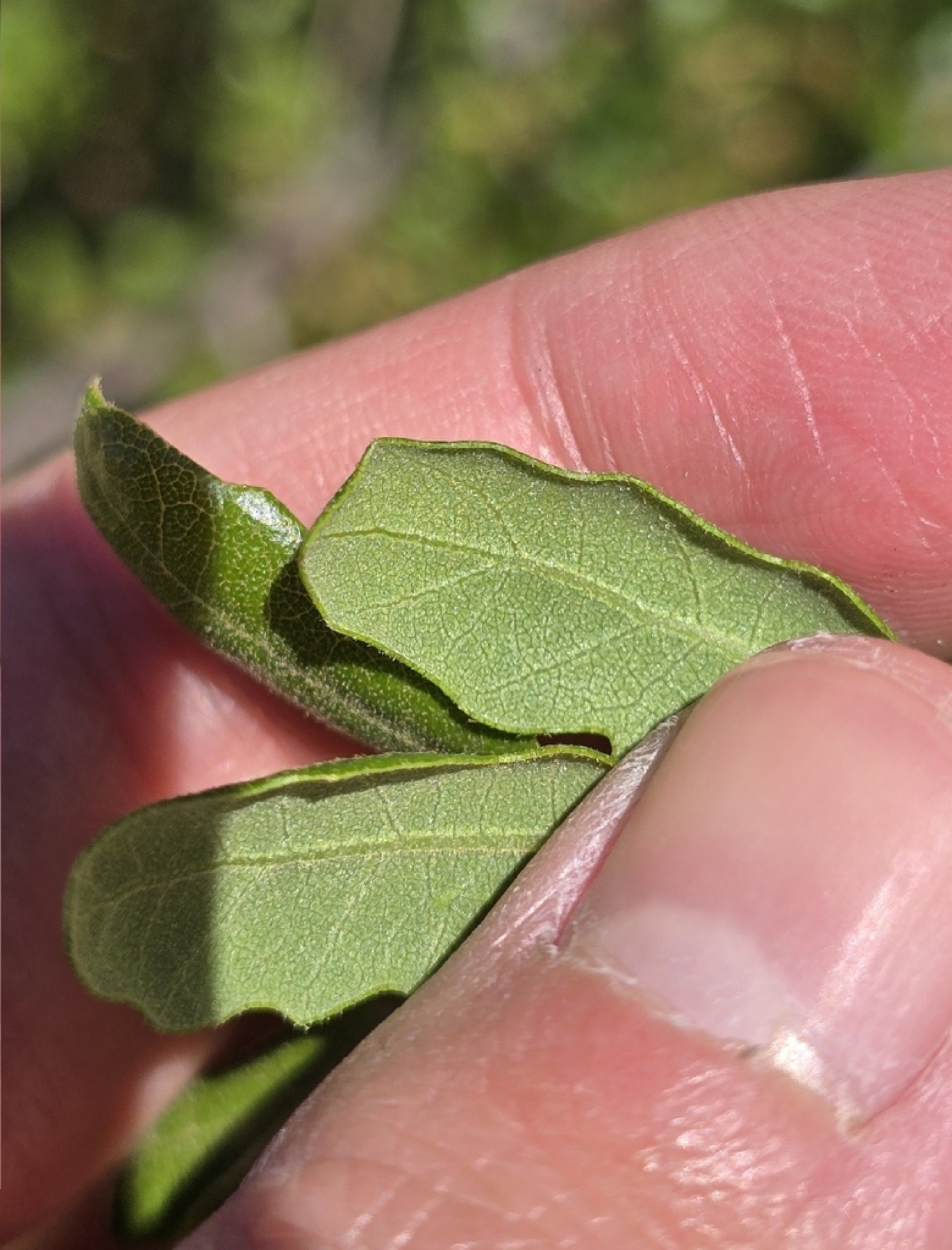
A classic manzanita: smooth, sinuous mahogany-red bark over hard, crooked branches, with stiff, oval, grey-green leaves held upright. In winter it hangs clusters of small, waxy, urn-shaped white-to-pink flowers, followed by reddish berry-like fruits (“manzanita” = “little apple”). New twigs are often glandular-hairy and sticky to the touch — the trait behind glandulosa.
Wildlife & pollinators
Early-winter flowers are a crucial nectar source when little else blooms — worked by native bees (which “buzz”-pollinate the closed flowers) and hummingbirds. Fruits feed birds, coyotes, and other mammals.
Habitat & range
A dominant shrub of Chaparral on dry slopes and ridgelines through the Coast Ranges and into the Santa Ana Mountains. The most widespread manzanita in California.
In the garden
A sculptural, water-wise evergreen prized for its bark and winter bloom. Wants excellent drainage, full sun, and almost no summer water once established — overwatering and poor drainage are the usual killers. Beautiful against boulders or as a focal point; don’t crowd it.
Propagation
Challenging — manzanitas are notoriously finicky. Semi-hardwood cuttings (late summer/fall, with rooting hormone and bottom heat) work for some growers, but rooting is slow and variable. From seed, the hard coat needs scarification plus a heat/smoke cue (it’s a fire-follower), so germination is erratic — most gardeners start with nursery plants. See Propagation Basics.
Where to see it near you
- iNaturalist — observed in Orange County
- Santa Ana Mountains, Whiting Ranch, Caspers Wilderness Park.
Problems
Tough and largely pest-free in the wild. In gardens, the real risks are overwatering and poor drainage (leading to Root Rot and fungal branch dieback). Keep it lean and dry.