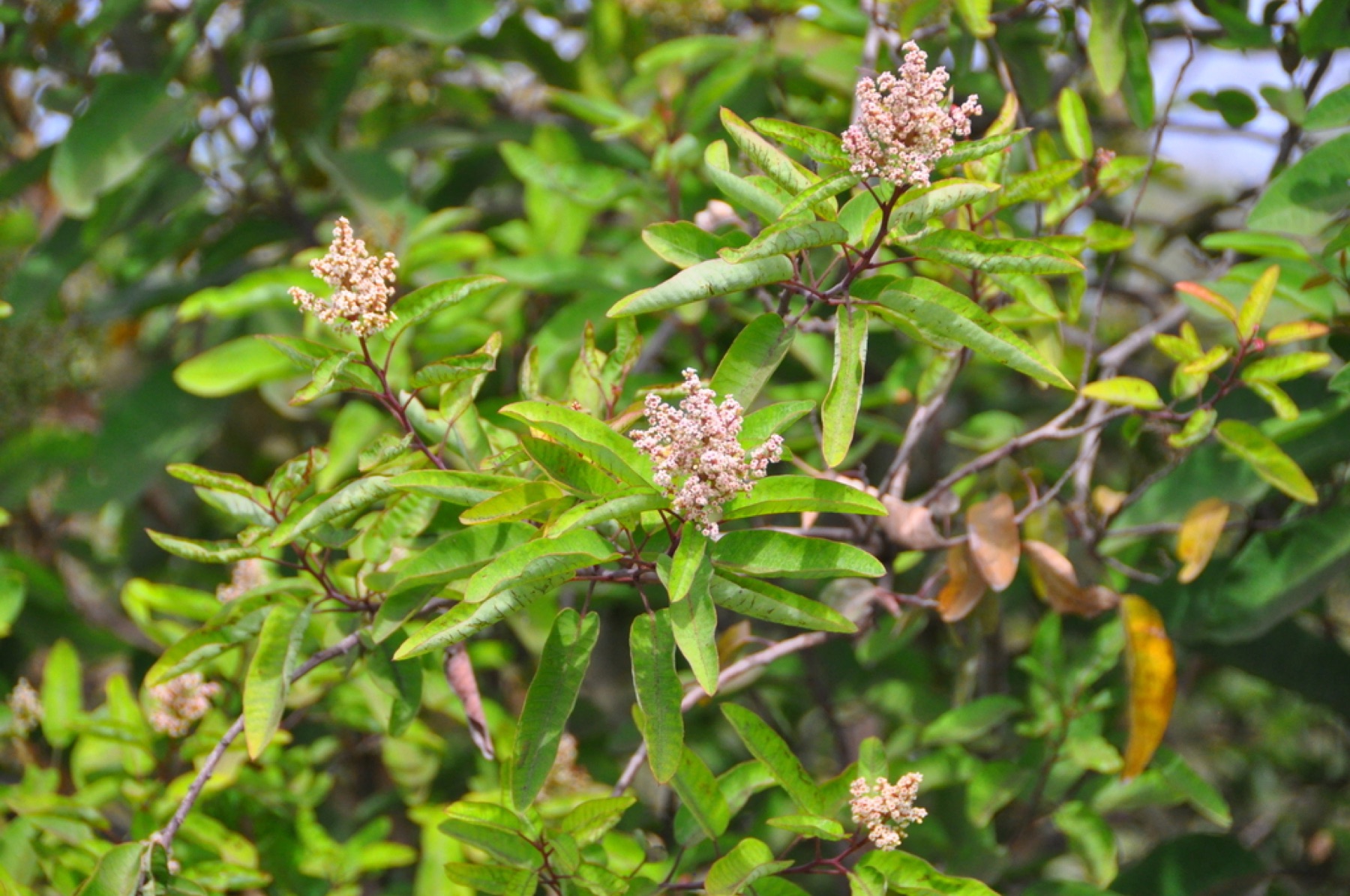
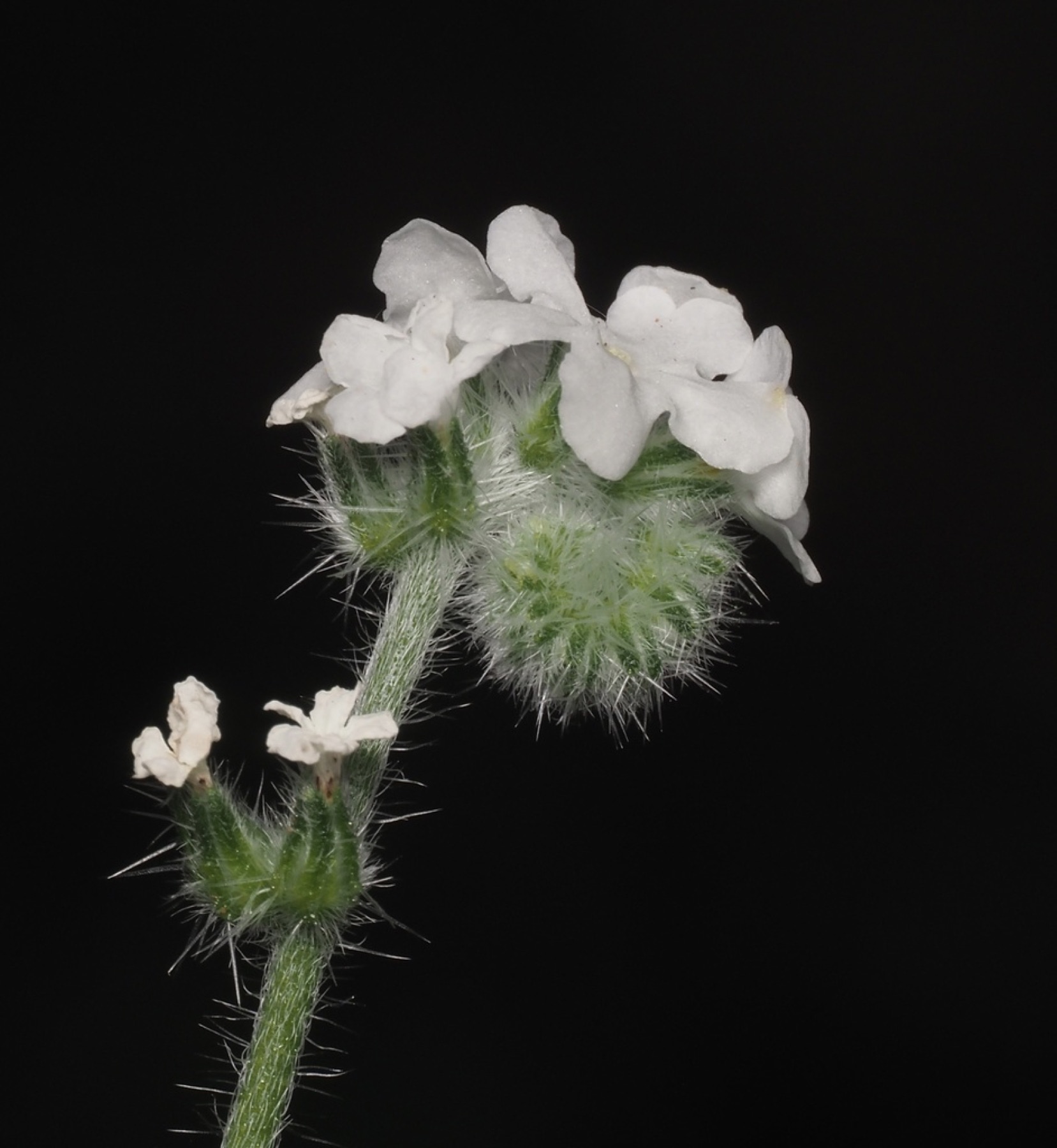
Southern Bush Monkeyflower
Diplacus longiflorus · Phrymaceae
- Form
- Shrub
- Height
- 1-4 ft
- Sun
- Full Sun
- Water
- Low
- Blooms
- Mar, Apr, May, Jun, Jul
- Habitat
- Coastal Sage Scrub · Chaparral
🌿 California native
Quick facts
- Habitat: Coastal Sage Scrub, Chaparral, rocky slopes
- Form / size: Sticky subshrub, 1-4 ft
- Sun: Full sun to light shade · Water: Low once established
- Blooms: Spring-summer · Pollinator value: High
Description
A sticky, woody monkeyflower with showy tubular flowers in orange, yellow, red, or blended tones. The leaves are narrow and resinous, and the plant often tucks into rocky slopes, roadcuts, and dry scrub openings.
Wildlife & pollinators
Hummingbirds, native bees, and butterflies visit the flowers. The long bloom season makes it especially useful in habitat gardens.
Habitat & range
Dry slopes, chaparral openings, coastal sage scrub, rocky canyon edges, and disturbed native slopes across Southern California.
In the garden
Excellent for dry native gardens, slopes, and pollinator plantings. It wants drainage, light pruning after bloom, and a dry summer rhythm once established.
Propagation
From cuttings or seed. Cuttings are the easiest way to preserve flower color forms; seed gives natural variation.
Where to see it near you
- iNaturalist — observed in Southern California
- Dry slopes, chaparral roadcuts, and coastal sage scrub edges.
Problems
Can get woody and sparse if overwatered or not lightly pruned. Avoid rich, wet soil.
Sources
Commonly confused with
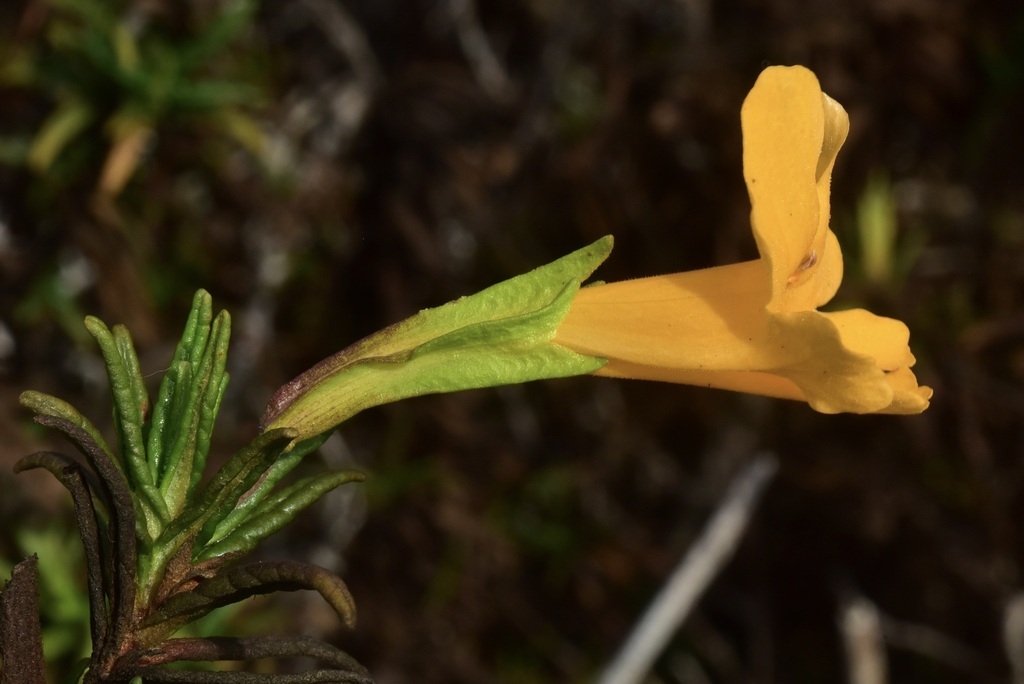 Sticky Monkeyflower 🌿 Diplacus aurantiacus very similar dryland monkeyflower; southern bush monkeyflower is often treated in the same field group, with longer flowers and variable local forms.
 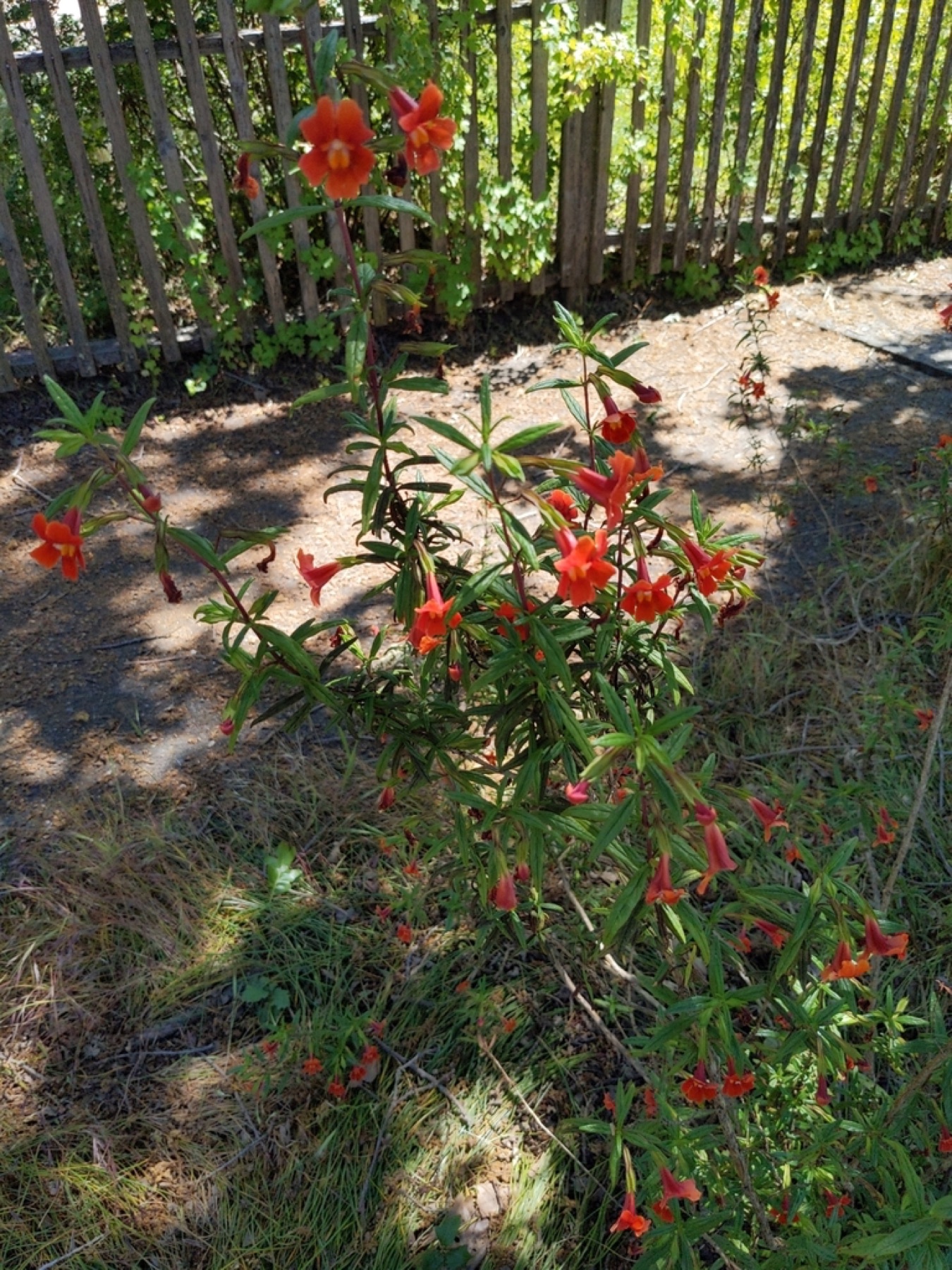 Red Bush Monkeyflower 🌿 Diplacus puniceus red-flowered dryland shrub; check flower color, plant habit, and local taxonomy.