Laurel Sumac
Malosma laurina · Anacardiaceae
- Form
- Shrub
- Height
- 8–18 ft
- Sun
- Full Sun
- Water
- Low
- Blooms
- May, Jun, Jul
- Habitat
- Coastal Sage Scrub · Chaparral
🌿 California native
Quick facts
- Habitat: Coastal Sage Scrub, Chaparral
- Form / size: Large rounded evergreen shrub, 8–18 ft
- Sun: Full sun · Water: Low
- Blooms: Late spring–summer · Tell: leaves folded like a taco
Description
A big, fast, rounded evergreen shrub with glossy leaves that fold upward along the midrib (taco-shaped) and often flush reddish, with reddish leaf stalks. Crushed foliage smells of bitter apple. Dense plumes of tiny whitish flowers in summer become small fruits. Historically a frost indicator — citrus and avocado growers planted where laurel sumac thrived, because it marks frost-free ground.
Indigenous & historical use
The Chumash, whose territory extended across coastal and inland Southern California within laurel sumac’s range, crushed and ate the dried fruits, possibly preparing them as flour or meal. They also brewed the root bark into a tea to treat dysentery.
Ecological role
Laurel sumac is a key host plant for California’s native moths and butterflies, supporting nine confirmed and nine likely lepidopteran species including Acronicta othello, the western avocado leafroller moth, and several Caloptilia species. Its flowers feed native bees, while the whitish fruits that follow attract songbirds, California quail, and other wildlife. The shrub provides dense shade in the summer heat of coastal sage scrub and chaparral. In the fire cycle, laurel sumac both sprouts vigorously from its lignotubers after being top-killed by flames and germinates from seed once fire cracks the seedcoat. The plant rebounds quickly in burned areas, and its deep litter layer, the heaviest measured among seven chaparral species studied, contributes to the fuel load that drives high-intensity fires through these communities.
Habitat & range
Coastal slopes and canyons of cismontane Southern California, common in Coastal Sage Scrub and the lower edge of Chaparral.
In the garden
A fast evergreen screen for large, dry spaces. Full sun, low water. Frost-sensitive, so it suits mild coastal zones; can get large quickly.
Propagation
From seed (germination improves with heat/smoke treatment) and semi-hardwood cuttings.
Where to see it near you
- iNaturalist — observed in Orange County
- Coastal canyons and scrub slopes.
Problems
Frost damage in cold pockets; otherwise very tough.
Sources
- Calscape · iNaturalist · Wikipedia
- Ecological role: USDA FEIS: Malosma laurina
- Indigenous use: Timbrook, Jan (1990). “Ethnobotany of Chumash Indians, California.” Economic Botany 44(2): 236–253.
Commonly confused with
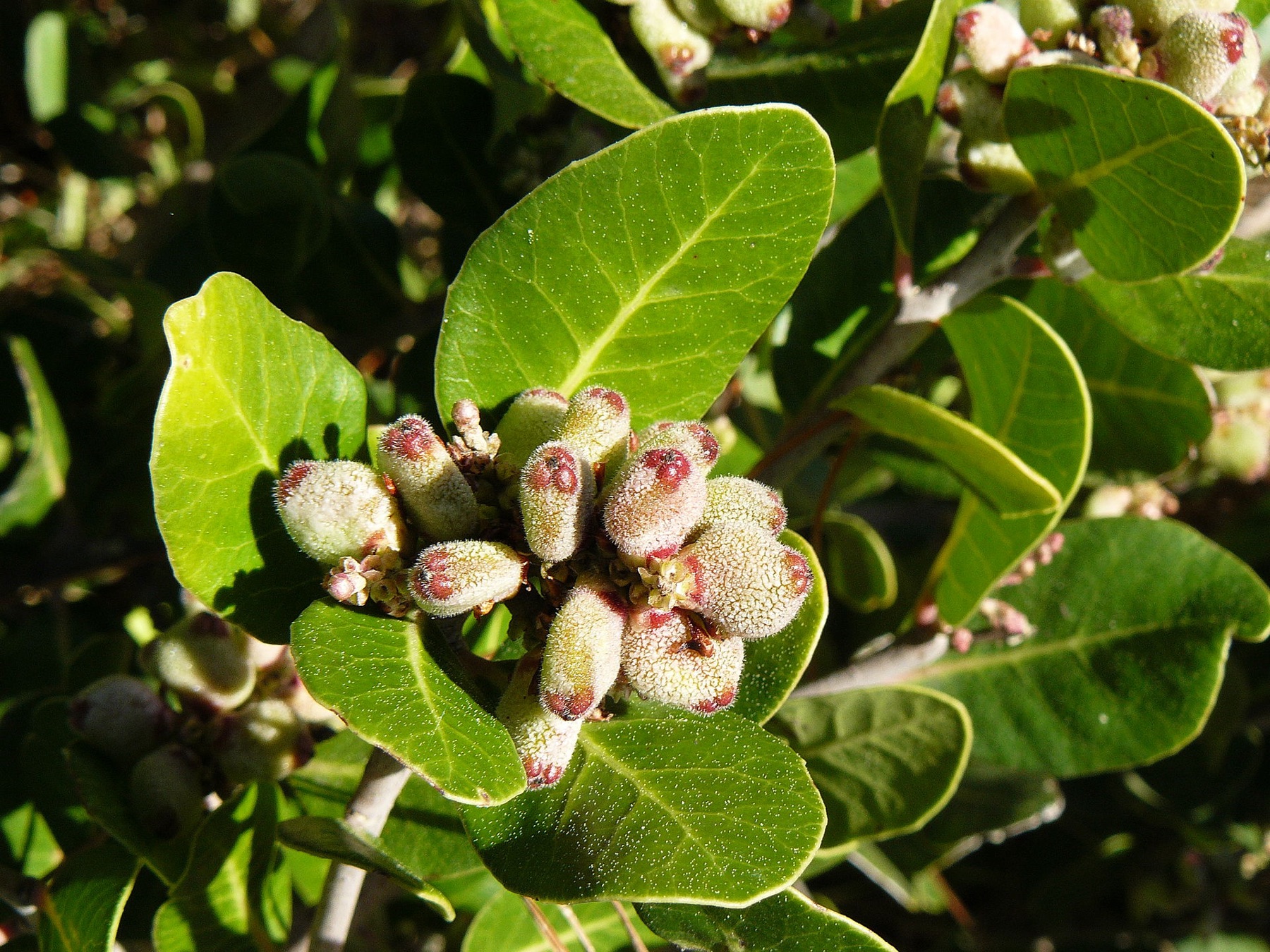 Lemonade Berry 🌿 Rhus integrifolia flat leathery leaves (not folded), pink-tinged flowers, sticky reddish berries; laurel sumac's leaves fold like a taco and it grows much larger.
 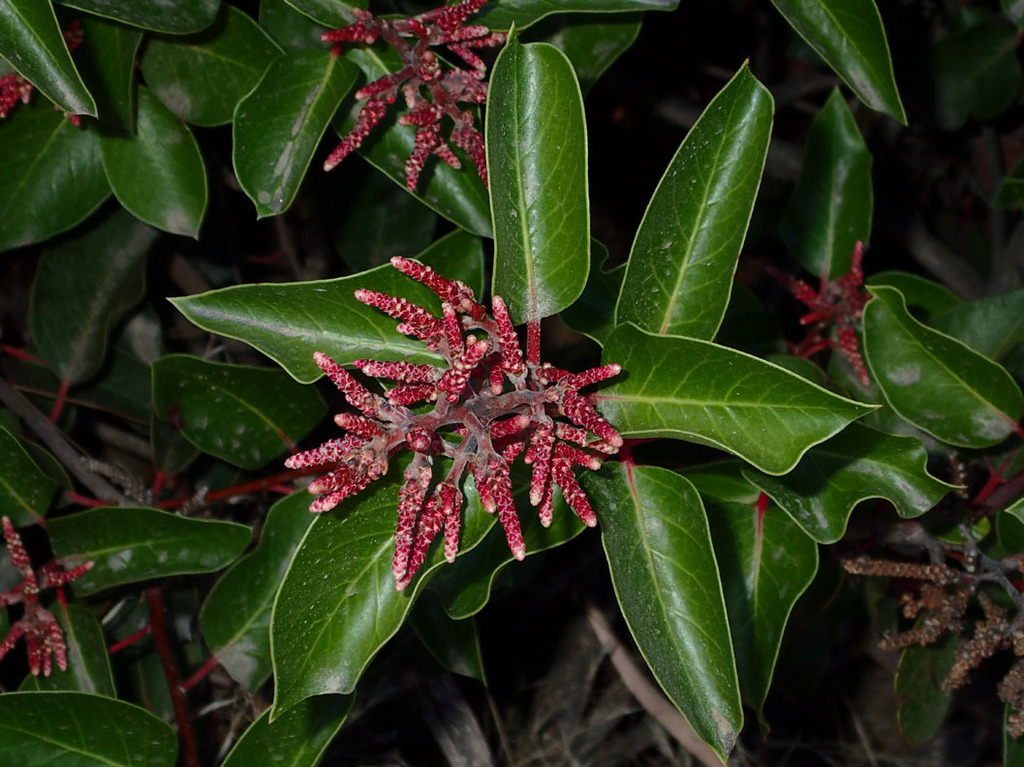 Sugar Bush 🌿 Rhus ovata also taco-folded leaves, but glossier and more inland; sugar bush has reddish flower buds and larger sticky fruit.