Caterpillar Scorpionweed
Phacelia cicutaria · Boraginaceae
- Form
- Annual herb
- Height
- 1-3 ft
- Sun
- Full Sun
- Water
- Low
- Blooms
- Mar, Apr, May
- Pet toxicity
- Unknown
- Habitat
- Chaparral · Coastal Sage Scrub · Grassland · Oak Woodland
🌿 California native
Quick facts · Habitat: Chaparral, Coastal Sage Scrub, grassland openings, oak woodland edges · Form / size: Spring annual, usually 1-3 ft · Sun: Full sun to light shade · Water: Winter rain only once established · Blooms: Spring · Pollinator value: High
Description
A bristly native annual with deeply divided leaves and curling flower clusters that unroll as the blooms open. Flowers are usually lavender to bluish purple, held in coiled clusters that give many phacelias their scorpionweed name.
Wildlife & pollinators
Excellent spring resource for native bees and flies, especially where it grows with other annual wildflowers.
Habitat & range
Common in open scrub, chaparral margins, grassy slopes, trail edges, and post-disturbance openings across Southern California.
In the garden
Best as a seasonal wildflower in dry native mixes. Let it reseed, and do not overwater once the warm season arrives.
Propagation
From seed. Sow in fall before winter rains; seed needs open soil and good drainage.
Where to see it near you
- iNaturalist — observed in Southern California
- Spring slopes, trail cuts, chaparral openings, and grassy scrub edges.
Problems
The bristly foliage can irritate sensitive skin. In gardens it disappears after seed set and returns only if allowed to reseed.
Sources
Commonly confused with
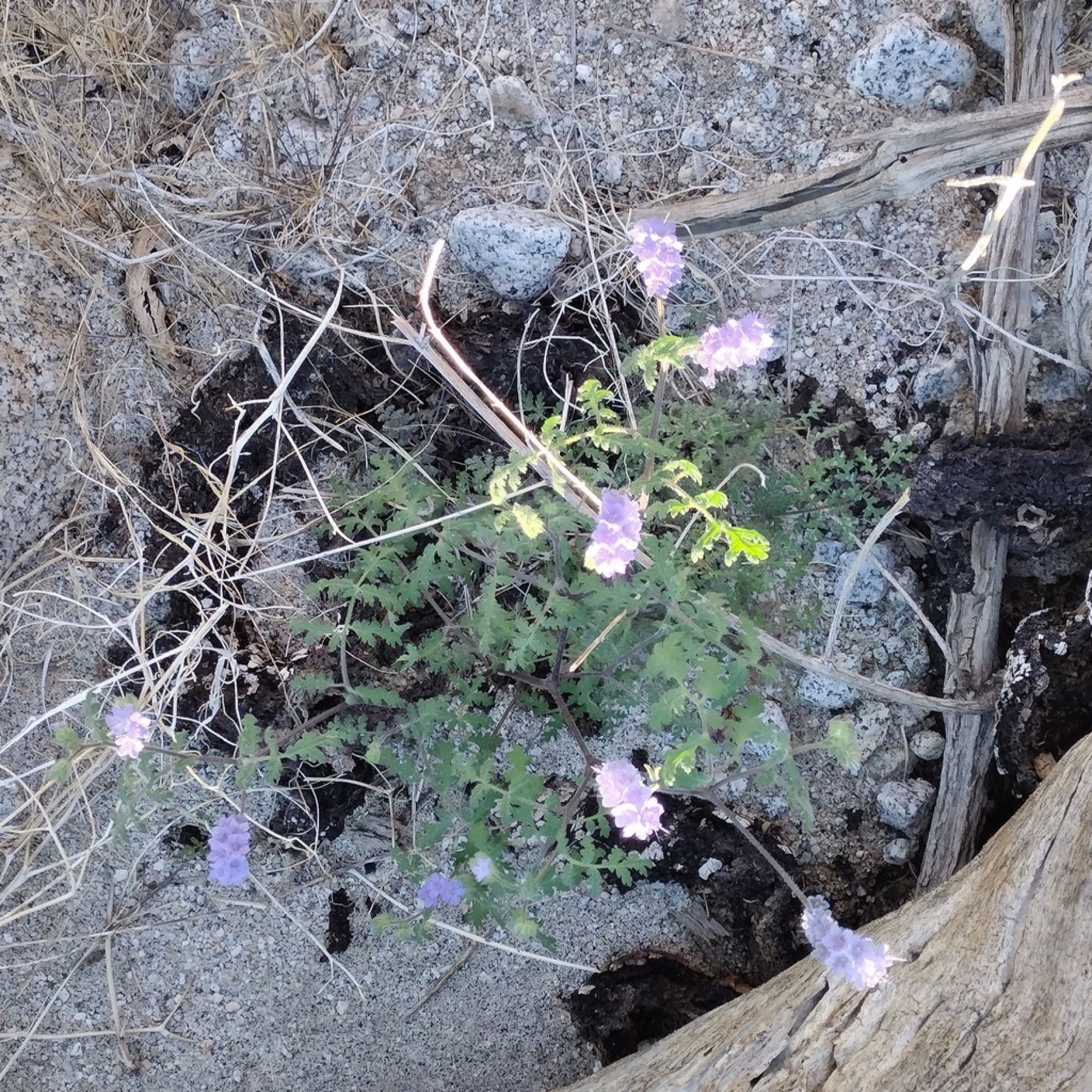 Distant Phacelia 🌿 Phacelia distans usually has more open, airy flowering stems and smaller flowers; caterpillar scorpionweed is bristlier with thicker, caterpillar-like coils.
 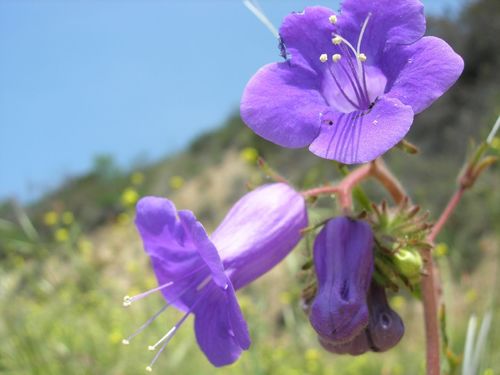 Wild Canterbury Bells 🌿 Phacelia minor larger bell-shaped purple flowers; caterpillar scorpionweed has coiled clusters and finely cut leaves.