Miniature Lupine
Lupinus bicolor · Fabaceae
- Form
- Annual herb
- Height
- 0.25-1 ft
- Sun
- Full Sun
- Water
- Low
- Blooms
- Mar, Apr, May
- Pet toxicity
- Toxic
- Habitat
- Grassland · Coastal Sage Scrub · Chaparral · Oak Woodland
🌿 California native
Quick facts · Habitat: Grassland, open scrub, oak openings · Form / size: Small spring annual, usually under 1 ft · Sun: Full sun · Water: Winter rain only · Blooms: Spring · Pollinator value: High
Description
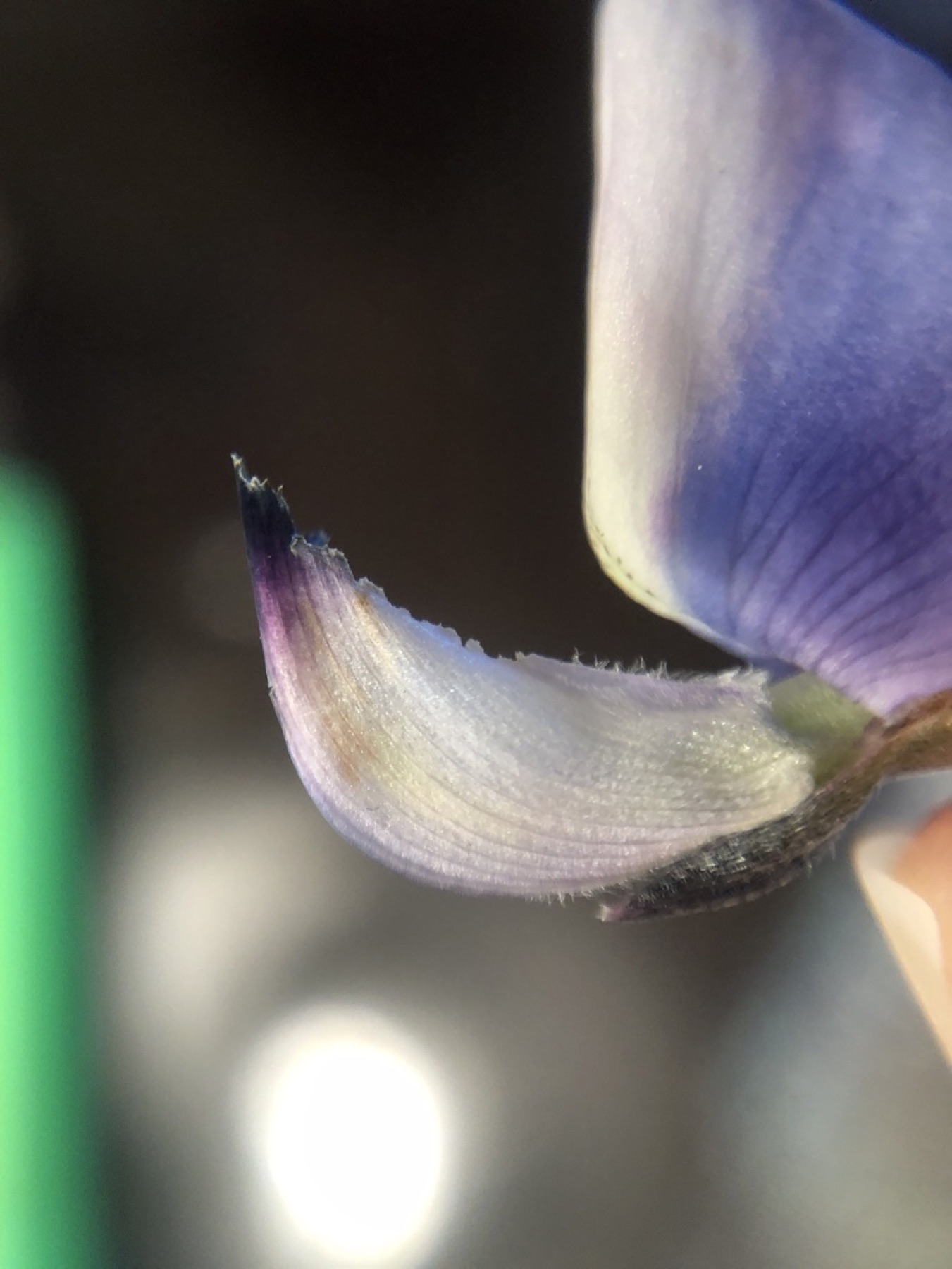
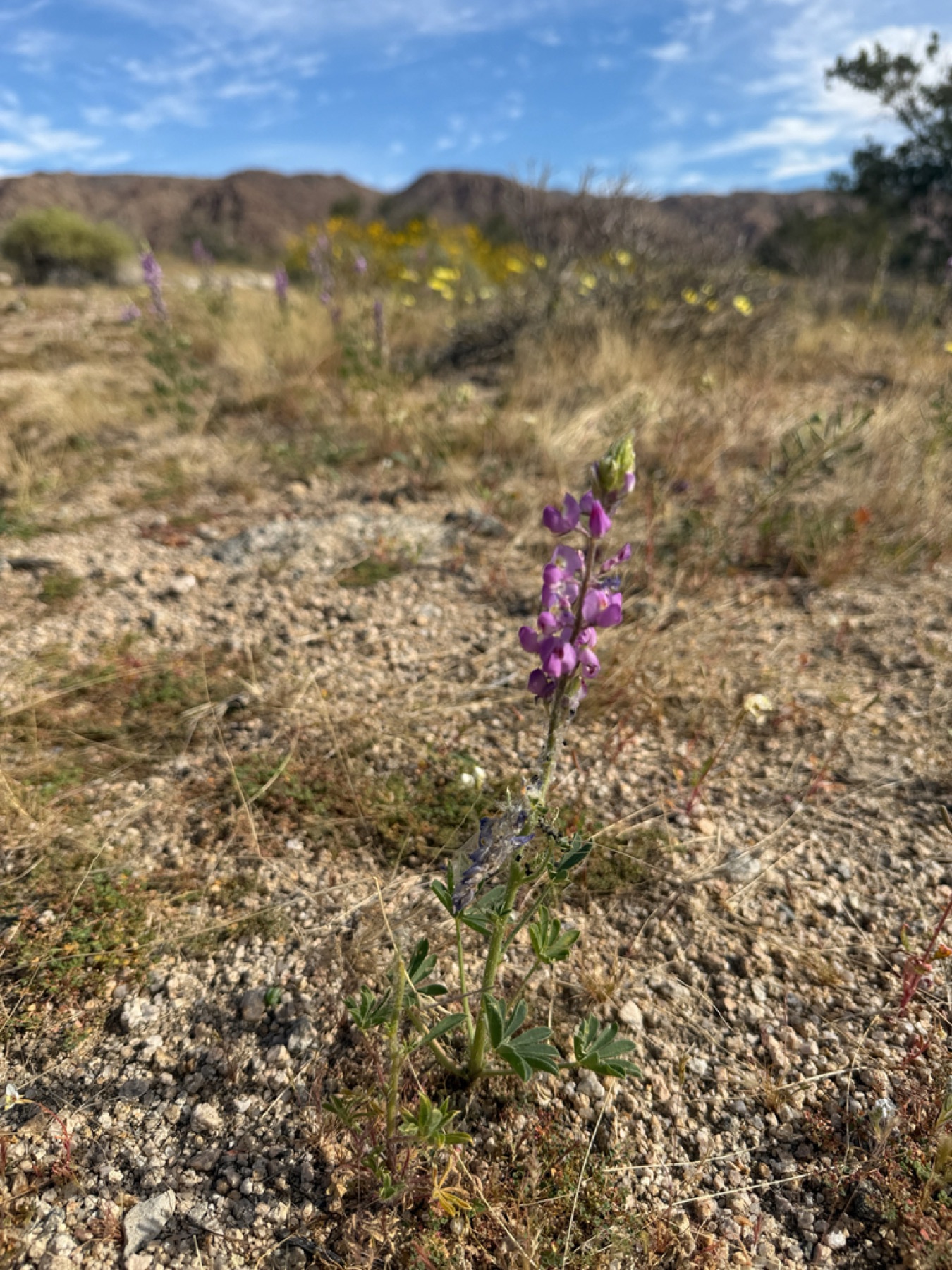
A small annual lupine with palmately divided leaves and short spikes of blue-purple and white pea flowers. It often grows in low carpets or scattered clusters in open spring grassland.
Wildlife & pollinators
Native bees work the pea flowers. Like other legumes, it also contributes to the seasonal nitrogen cycle in open soils.
Habitat & range
Open slopes, grassy fields, road edges, oak woodland openings, and coastal sage scrub gaps across much of California.
In the garden
Useful in wildflower seed mixes for open, low-nutrient soil. Avoid heavy irrigation and rich soil; lupines prefer lean seasonal conditions.
Propagation
From seed. Scarification can improve germination; sow in fall where plants can complete their life cycle before summer dryness.
Where to see it near you
- iNaturalist — observed in Southern California
- Spring grasslands, open scrub slopes, and oak woodland clearings.
Problems
Lupines can be toxic if eaten, especially seeds. In gardens, poor reseeding usually means the soil is too dense, weedy, or irrigated.