Cobwebby Thistle
Cirsium occidentale · Asteraceae
- Form
- Biennial herb
- Height
- 2-6 ft
- Sun
- Full Sun
- Water
- Low
- Blooms
- Apr, May, Jun, Jul
- Pet toxicity
- Unknown
- Habitat
- Chaparral · Coastal Sage Scrub · Grassland · Oak Woodland
🌿 California native
Quick facts · Habitat: Scrub openings, grassland edges, dry slopes · Form / size: Biennial/perennial thistle, 2-6 ft · Sun: Full sun · Water: Low · Blooms: Spring-summer · Pollinator value: High
Description
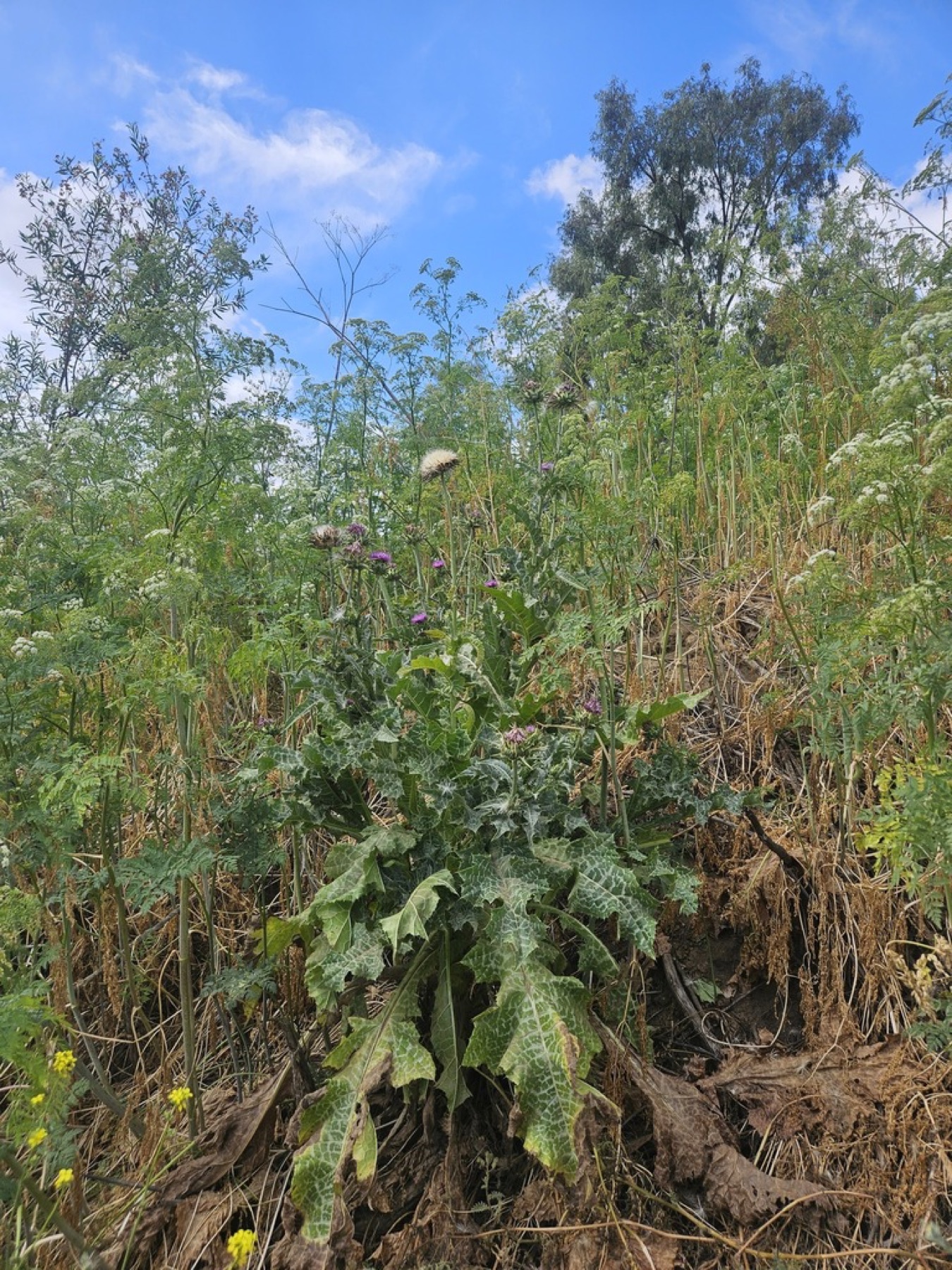
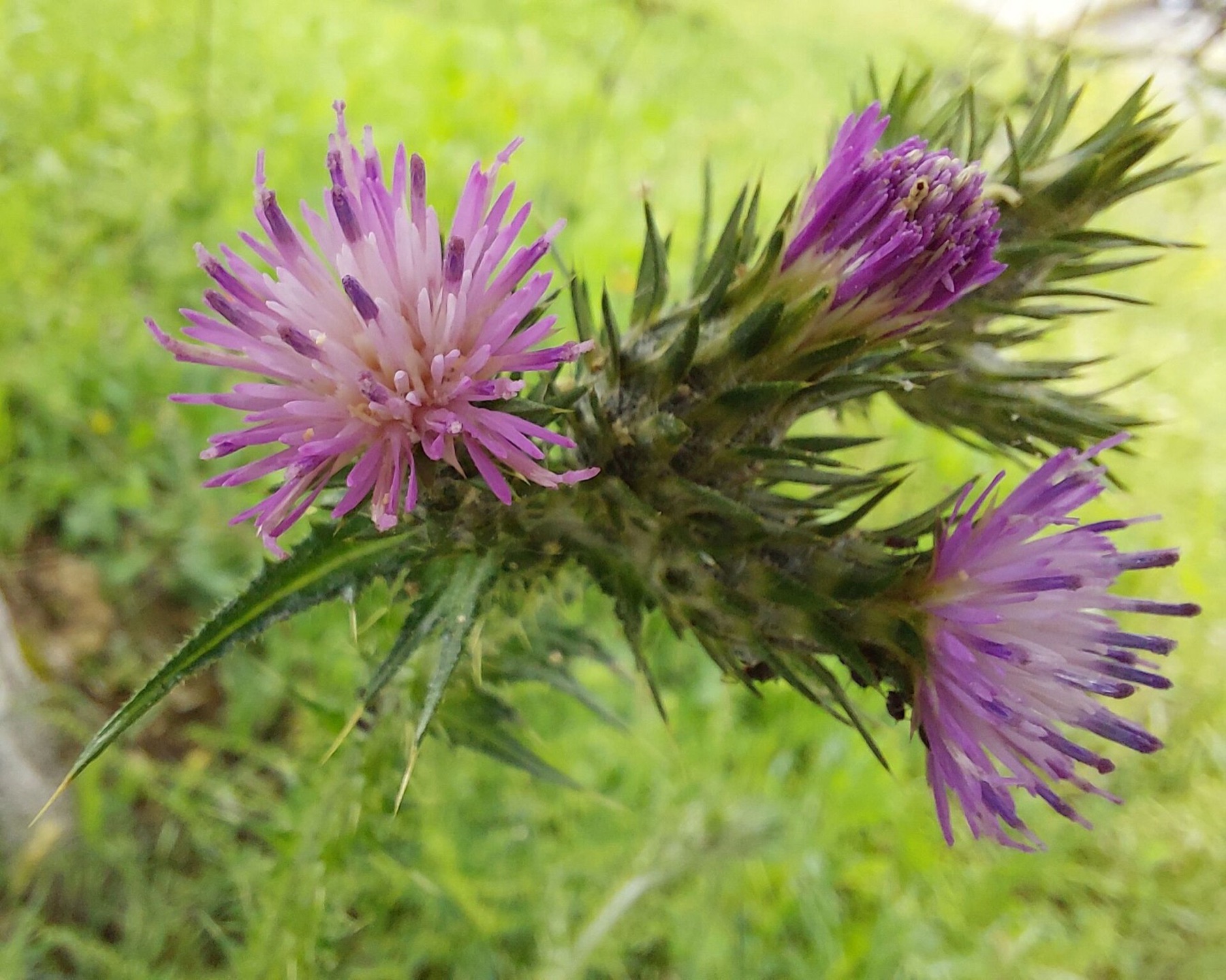
A native thistle with spiny leaves and large pink to reddish-purple flower heads wrapped in pale, cobwebby hairs. The cobwebbed buds are one of the best field clues.
Wildlife & pollinators
Thistles are major nectar plants for butterflies and bees, and seed heads can feed goldfinches and other birds.
Habitat & range
Open chaparral, coastal sage scrub, grassland edges, dry slopes, and roadsides across Southern California.
In the garden
Excellent wildlife value but best for habitat edges, restoration sites, and gardens with enough space for spines and seed heads. Not a narrow-path plant.
Propagation
From seed. Sow in fall on open soil and leave some seed heads for wildlife and reseeding.
Where to see it near you
- iNaturalist — observed in Southern California
- Open scrub slopes, dry road cuts, and grassland edges.
Problems
Spiny and not suited to tight public paths. Make sure not to confuse it with invasive thistles during weed work.