Milk Thistle
Silybum marianum · Asteraceae
- Form
- Annual herb
- Height
- 2-6 ft
- Sun
- Full Sun
- Water
- Low
- Blooms
- Mar, Apr, May, Jun
- Pet toxicity
- Mild
🚫 Invasive / non-native weed
At a glance
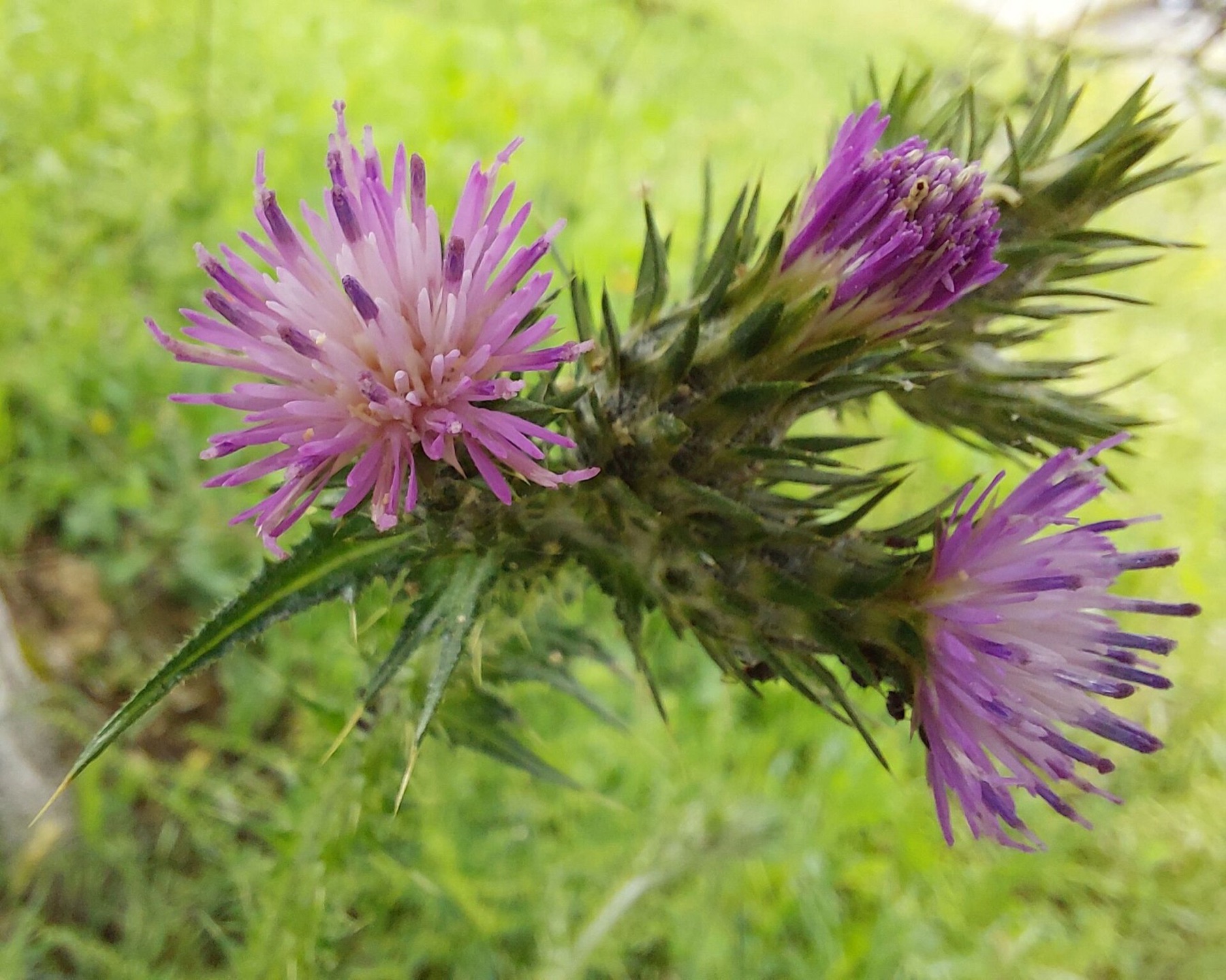
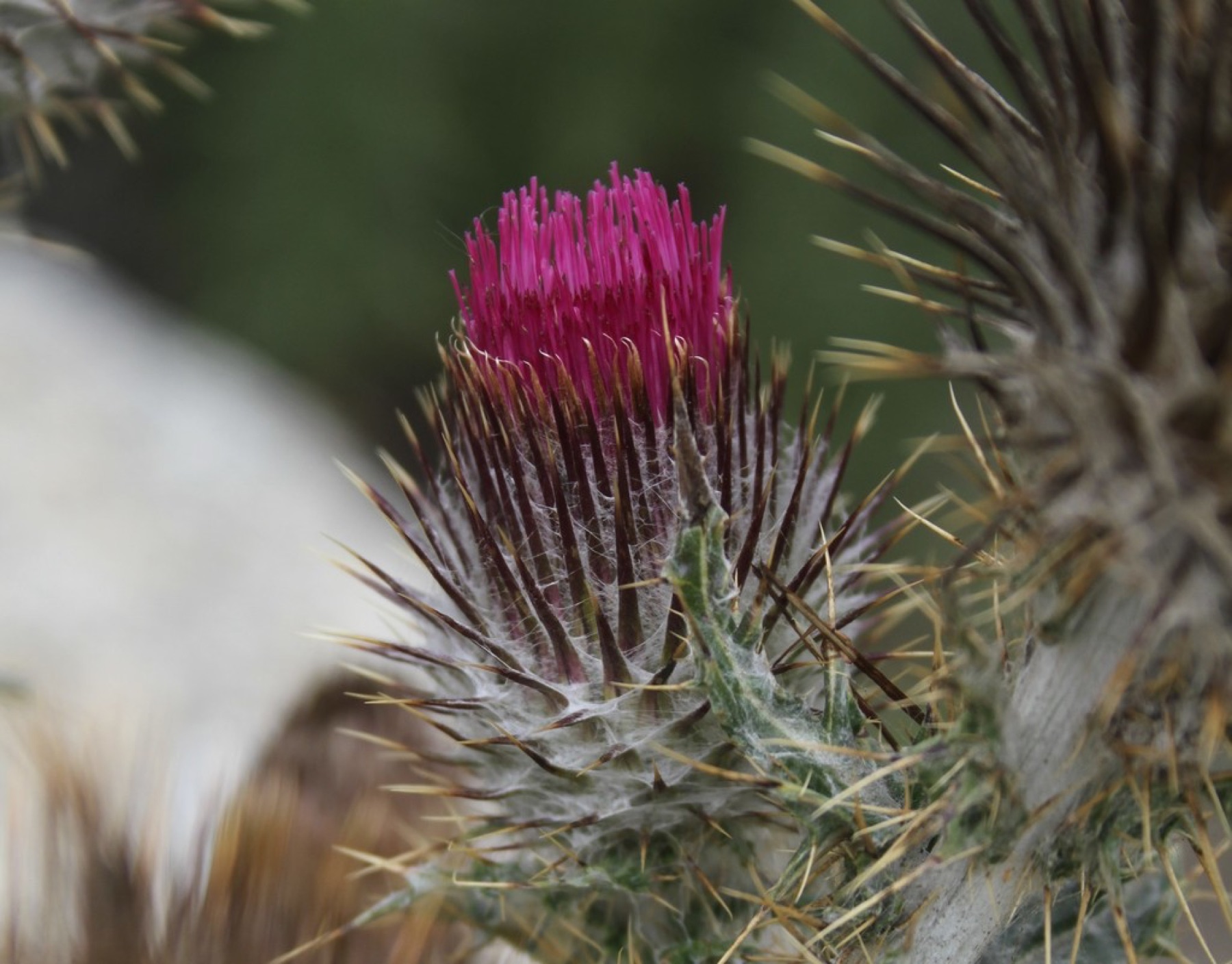
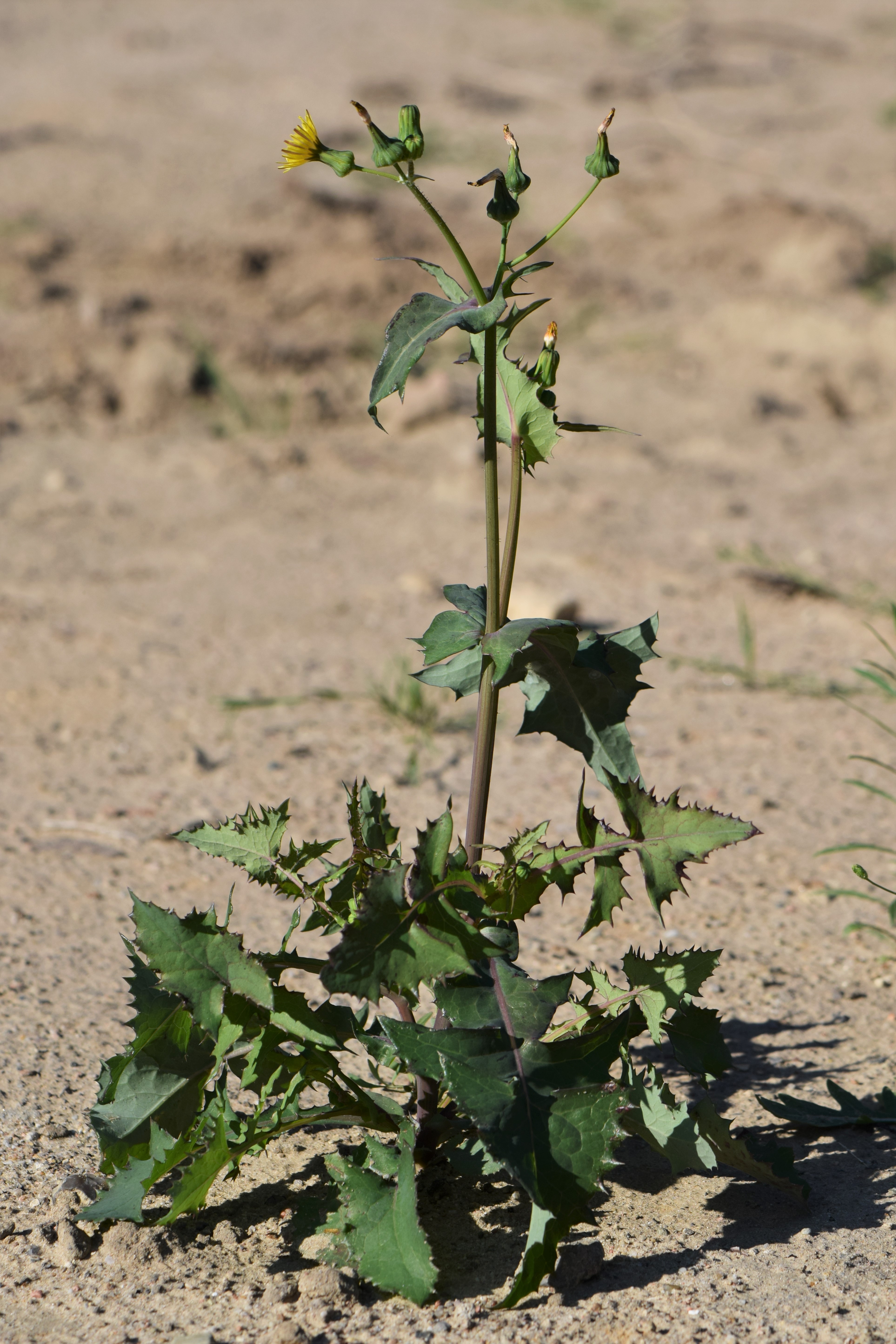
- Tell-tale sign: Large shiny leaves marbled white, with stout purple thistle heads
- Where: Disturbed fields, roadsides, grassland edges, and moist weedy ground
- Why it matters: Forms dense spiny stands that crowd natives and complicate access
How to identify
A robust winter annual or biennial thistle with broad glossy leaves strongly marbled white and edged with spines. Mature plants send up thick stems topped by large purple thistle heads.
Why it’s a problem
Milk thistle forms dense, thorny stands in disturbed areas, pastures, and invaded native habitat. It shades out lower vegetation and makes access and maintenance harder.
How it spreads
By abundant wind- and gravity-dispersed seed, especially where disturbance, overgrazing, or bare soil open space for establishment.
How to remove it
- Pull or dig rosettes when soil is moist, before flowering.
- Cut or bag flower heads before seed matures if plants are already tall.
- Wear gloves and long sleeves; the spines are no joke.
Plant this instead
For native structure and pollinator value, use California Buckwheat, Golden Yarrow, California Aster, Deergrass, or Bush Sunflower depending on the site.
Where it’s spread near you
- iNaturalist — observed in Southern California
- Disturbed fields, roadsides, weedy riparian edges, and grazed ground.