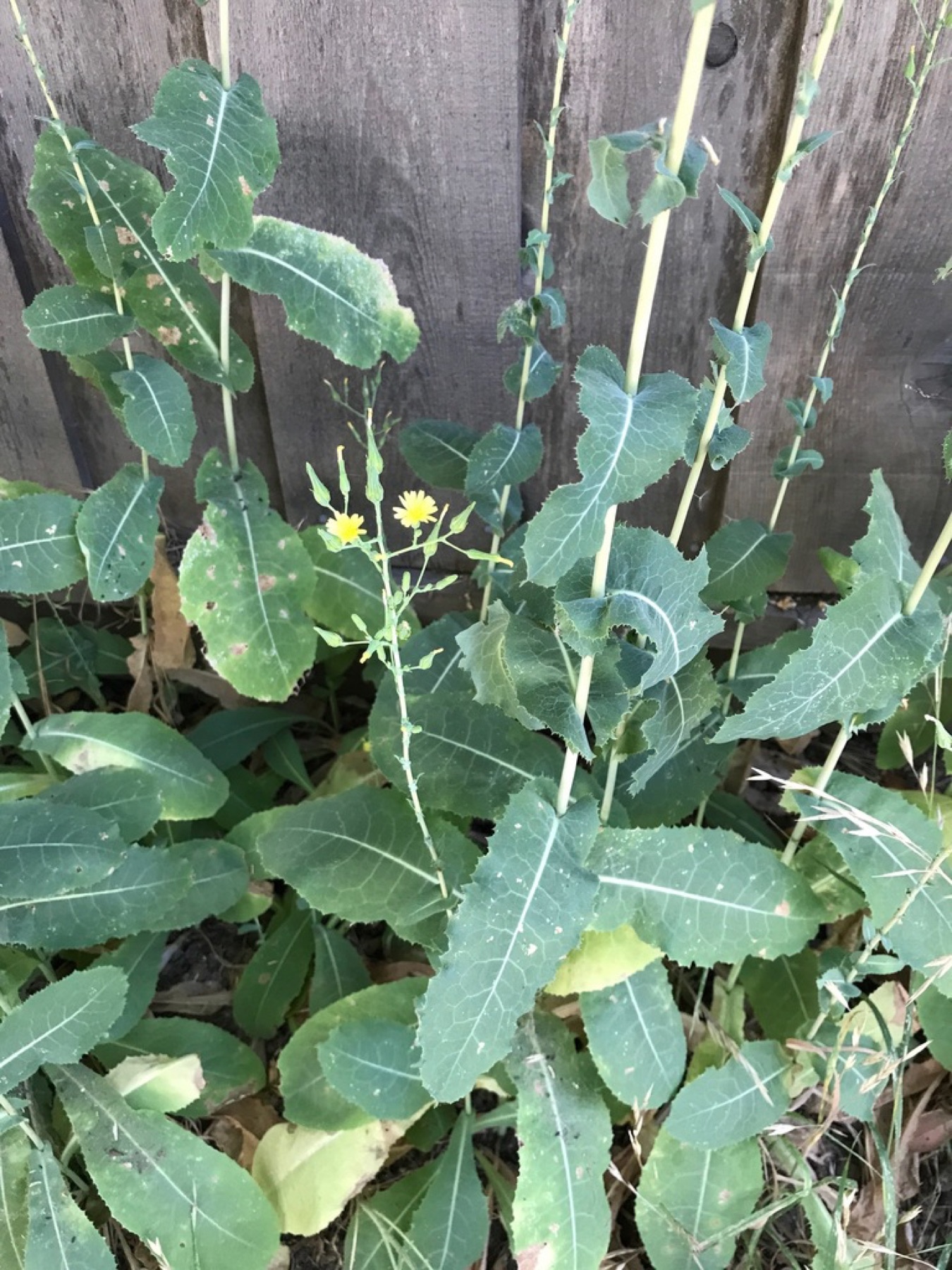
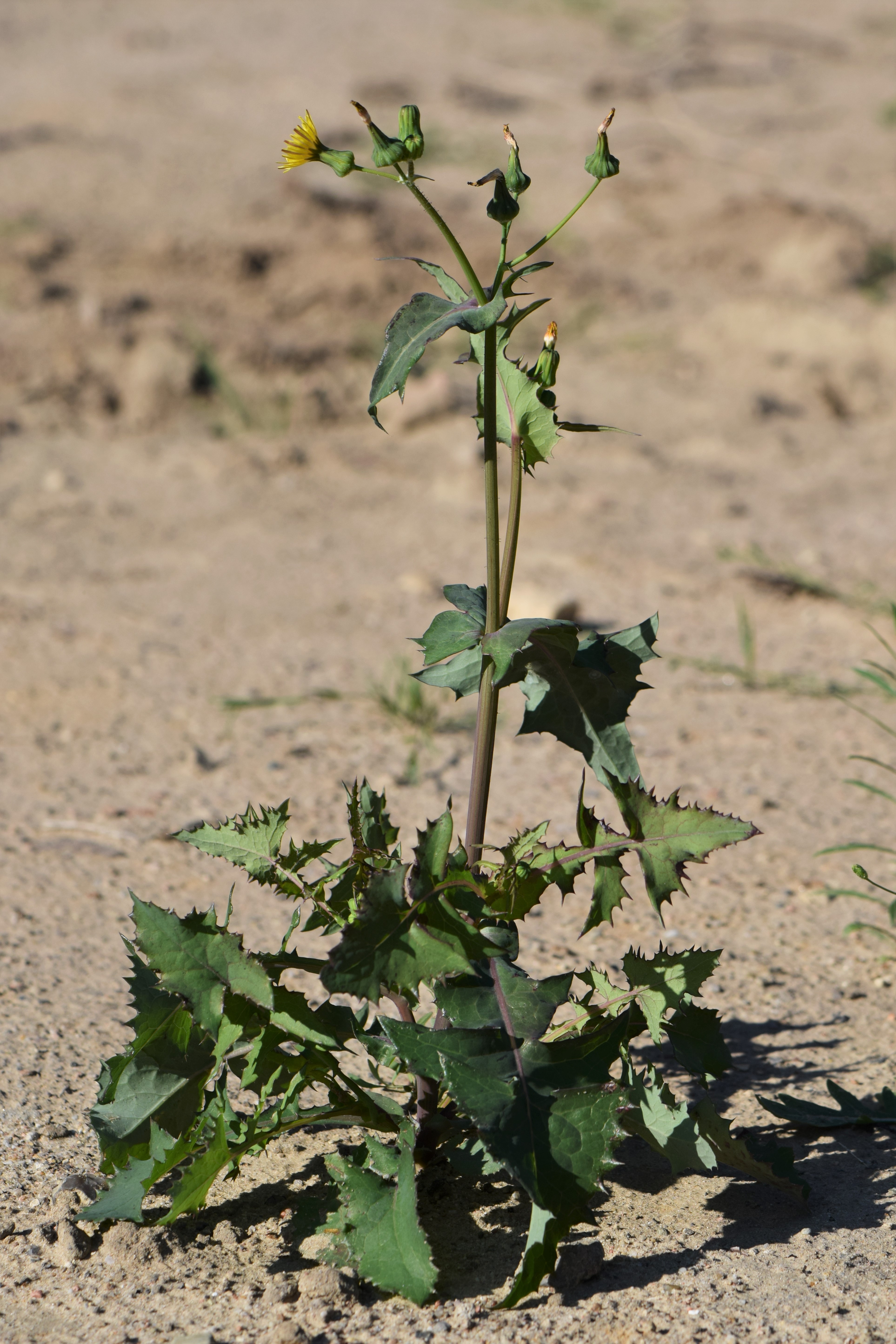
Stinkwort
Dittrichia graveolens · Asteraceae
- Height
- 1-4 ft
🚫 Invasive — priority to remove
At a glance
- Tell-tale sign: Sticky, strongly resin-scented late-season annual with small yellow flower heads
- Priority: Yes — catch early patches before they seed
- Why it matters: Expanding weed of roadsides, grassland, and disturbed wet/dry edges
How to identify
A sticky, aromatic annual that branches into a narrow, upright plant with small yellow flower heads in late summer and fall. Crush or brush the plant and the strong medicinal/resin smell is obvious.
Why it’s a problem
Stinkwort is spreading through disturbed ground, roadsides, grasslands, and restoration edges. It produces lots of wind-dispersed seed late in the season, after many crews have stopped looking for weeds.
How it spreads
By seed, moved by wind, vehicles, soil, mowing equipment, and water flow.
How to remove it
Pull young plants before flowering. Bag flowering or seeding plants. Monitor in late summer and fall, when it is easiest to overlook until seed is already forming.
Plant this instead
For late-season native insect value, use California Goldenrod, Mule Fat, California Fuchsia, Coastal Goldenbush, and California Buckwheat.
Where it’s spread near you
Sources
Commonly confused with
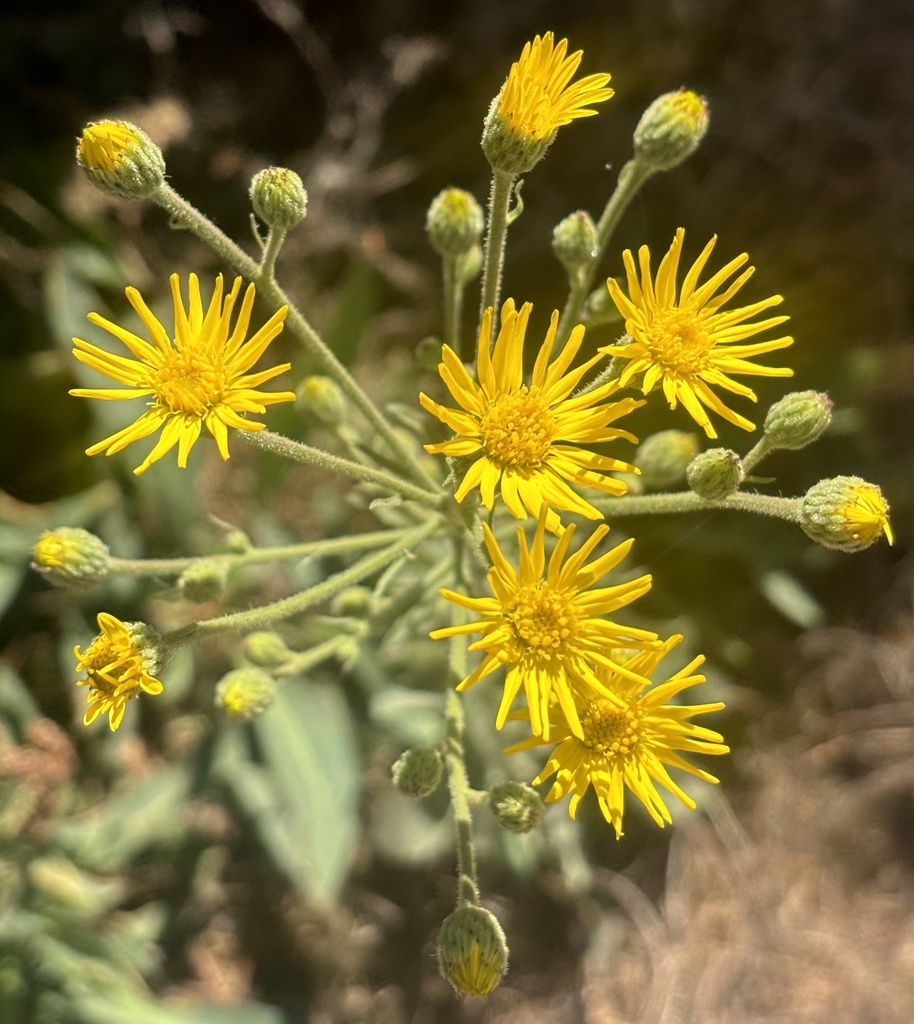 Telegraph Weed 🌿 Heterotheca grandiflora native, taller, with larger yellow heads and a rougher annual/biennial habit.