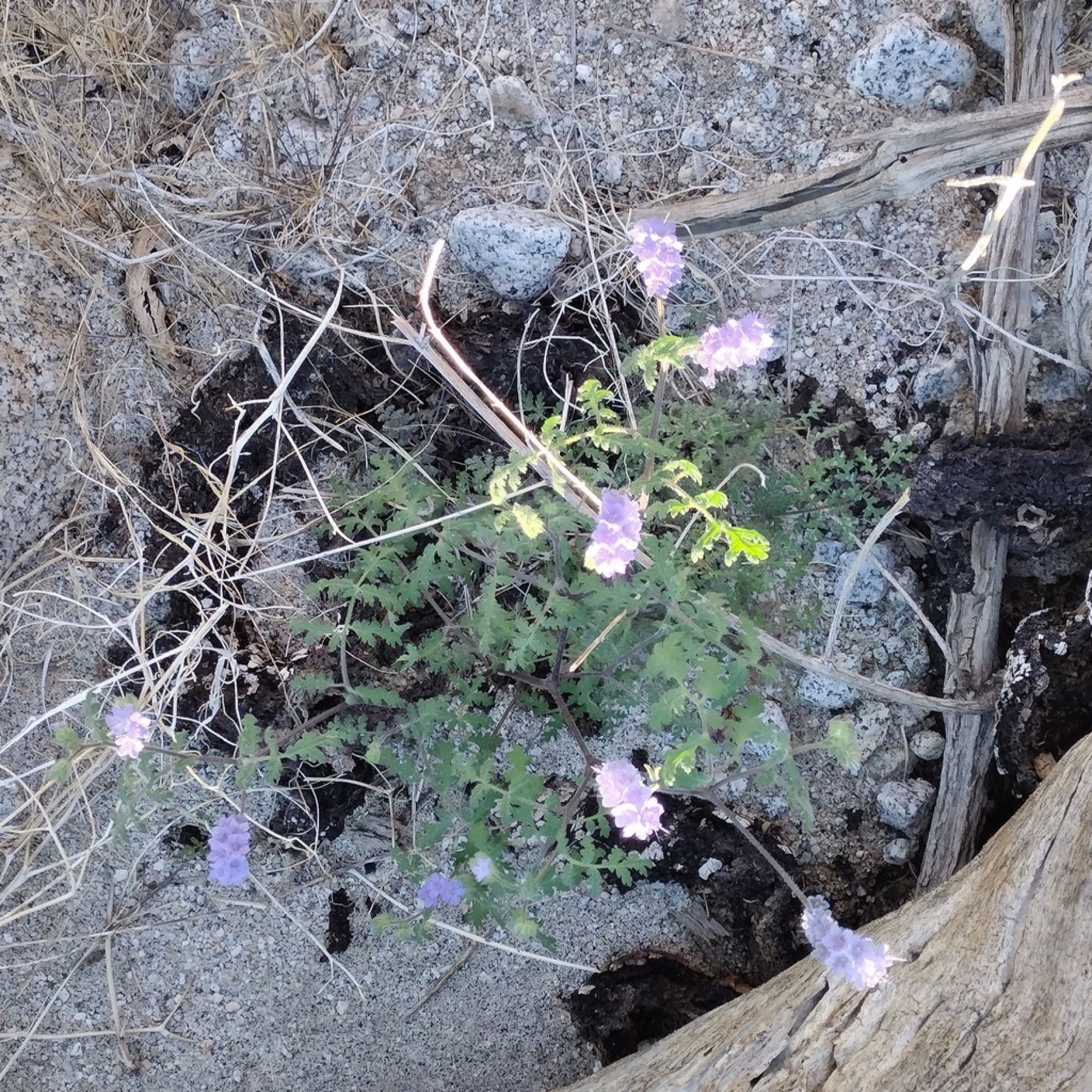
California Buckwheat
Eriogonum fasciculatum · Polygonaceae
- Form
- Subshrub
- Height
- 1–3 ft
- Sun
- Full Sun
- Water
- Very Low
- Blooms
- May, Jun, Jul, Aug, Sep, Oct
- Habitat
- Coastal Sage Scrub · Chaparral · Desert
🌿 California native
Quick facts · Habitat: Coastal Sage Scrub, Chaparral, Desert edges · Form / size: Low, spreading subshrub, 1–3 ft tall · Sun: Full sun · Water (established): Very low · Blooms: Late spring through fall · Pollinator value: High (one of the best)
Description
A modest-looking shrub that is, ecologically, a superstar. Small needle-like leaves clustered along the stems (fascicled — hence fasciculatum) form a low grey-green mound. From late spring it’s covered in flat-topped clusters of tiny white-to-pink flowers that age to a beautiful rust-brown and persist into winter, giving long color and great dried structure.
Indigenous & historical use
For the Tongva (Gabrielino), whose homeland covers the Los Angeles Basin and parts of Orange County, California buckwheat was a working medicine. Leaves gathered before flowering were brewed into a strong tea, and the dried roots were ground and used for headaches and stomach trouble. Its medicinal use was not limited to the Tongva; other groups brewed tea from the leaves, stems, and roots to treat headache, diarrhea, and wounds, and the Zuni of the Southwest applied a poultice of powdered root to cuts and wounds. Some peoples also ate the seeds, raw or ground into porridge.
Ecological role
California buckwheat blooms over an unusually long stretch, from late spring into fall, when many other scrub natives are finished or dormant. This extended season makes it a dependable nectar and pollen source at times when the habitat has little else on offer. Native bees visit steadily; so do butterflies, including the Acmon blue, blue copper, Electra buckmoth, Gorgon copper, lupine blue, and western green hairstreak, which use it as a larval host plant. The dense, bushy structure provides shelter, and seeds persist into winter, feeding birds when other food is scarce. In coastal sage scrub, where California buckwheat often forms low, spreading patches, it provides erosion control while supplying that critical late-season resource that keeps pollinators and their predators alive through the lean months.
Habitat & range
The most widespread shrub in coastal and inland Southern California — common in Coastal Sage Scrub and Chaparral and out to the desert edge, from sea level into the mountains.
In the garden
One of the most valuable habitat plants you can put in a dry garden, and one of the easiest. Tough, fast, long-blooming, and tidy if cut back in late fall. Full sun, sharp drainage, no summer water. A backbone plant for pollinator gardens and restoration alike.
Propagation
Easy. Sow seed in fall (it germinates readily with winter rain) or take semi-hardwood cuttings. A dependable plant to bulk up for restoration and pollinator gardens. See Propagation Basics.
Where to see it near you
- iNaturalist — observed in Orange County
- Coastal bluffs and foothill trails throughout OC.
Problems
Essentially trouble-free. Avoid rich soil and summer irrigation, which shorten its life.
Sources
- Calscape · iNaturalist · Wikipedia
- Indigenous use: Wikipedia: Eriogonum fasciculatum (Uses) · Stevenson, Ethnobotany of the Zuni Indians (1915) · Moerman, Native American Ethnobotany (Eriogonum fasciculatum)