Branching Phacelia
Phacelia ramosissima · Boraginaceae
- Form
- Perennial herb
- Height
- 1-3 ft
- Sun
- Full Sun
- Water
- Low
- Blooms
- Apr, May, Jun, Jul
- Pet toxicity
- Unknown
- Habitat
- Chaparral · Coastal Sage Scrub · Oak Woodland · Desert
🌿 California native
Quick facts · Habitat: Dry slopes, chaparral openings, rocky roadsides · Form / size: Perennial herb/subshrub, 1-3 ft · Sun: Full sun to light shade · Water: Low · Blooms: Spring-summer · Pollinator value: High
Description
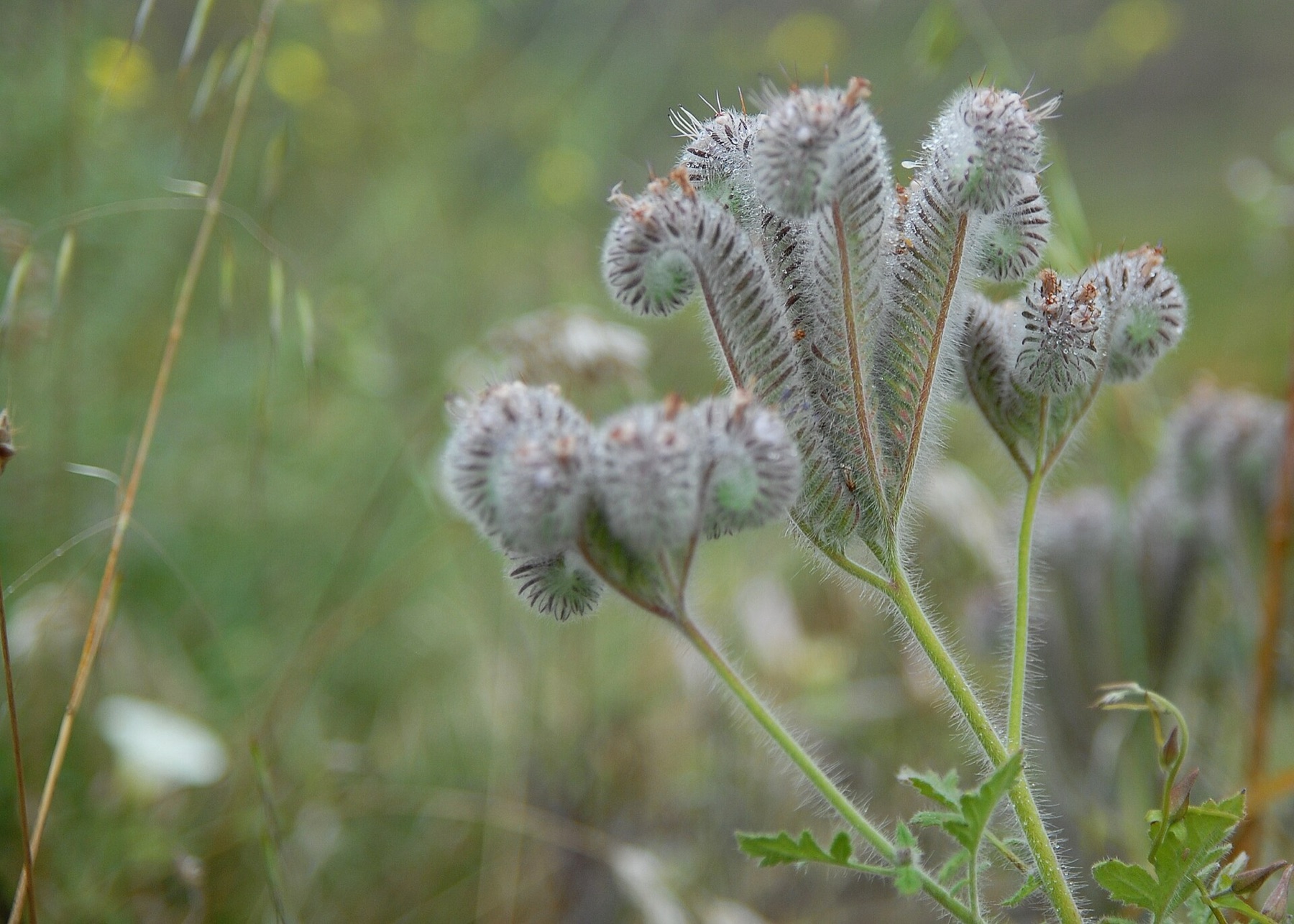
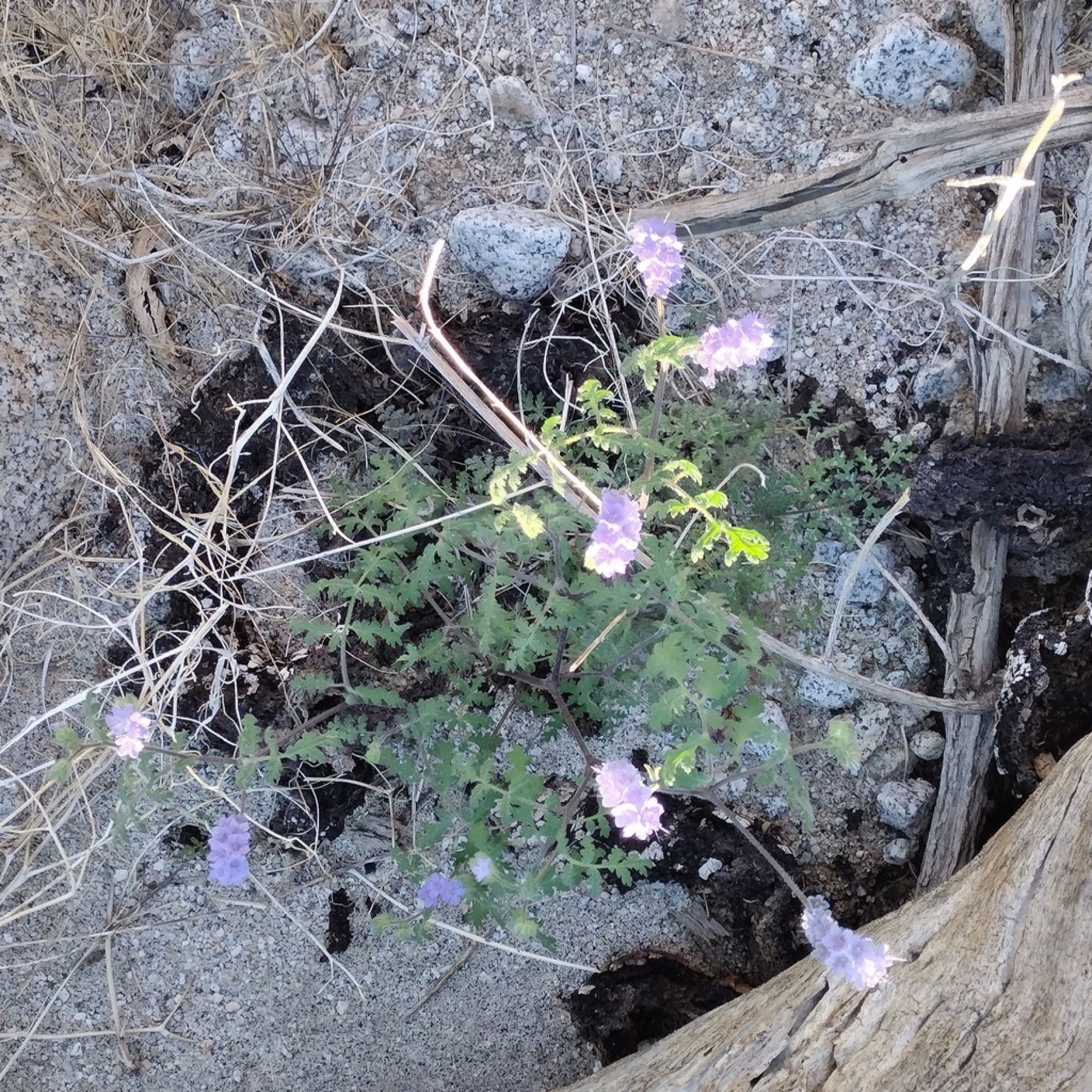
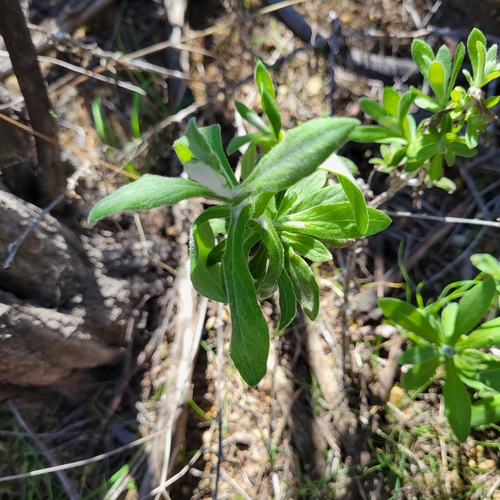
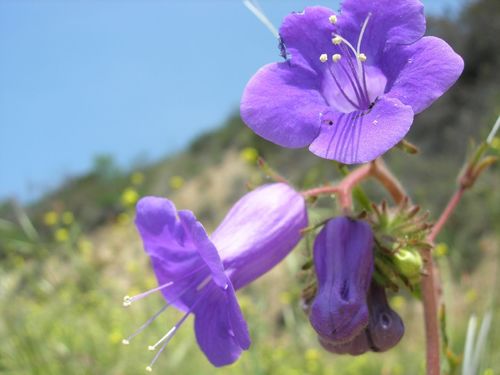
A branching phacelia with hairy stems, gray-green foliage, and coiled clusters of lavender to purple flowers. It is more persistent and woody at the base than many spring annual phacelias.
Wildlife & pollinators
High-value plant for native bees, flies, and butterflies during the warm-season phacelia bloom.
Habitat & range
Dry slopes, chaparral and coastal sage scrub openings, canyon roadsides, rocky cuts, and desert-edge habitats across Southern California.
In the garden
Good for dry slopes and wildlife plantings where a natural, somewhat wild look is welcome. Needs drainage and restraint with water.
Propagation
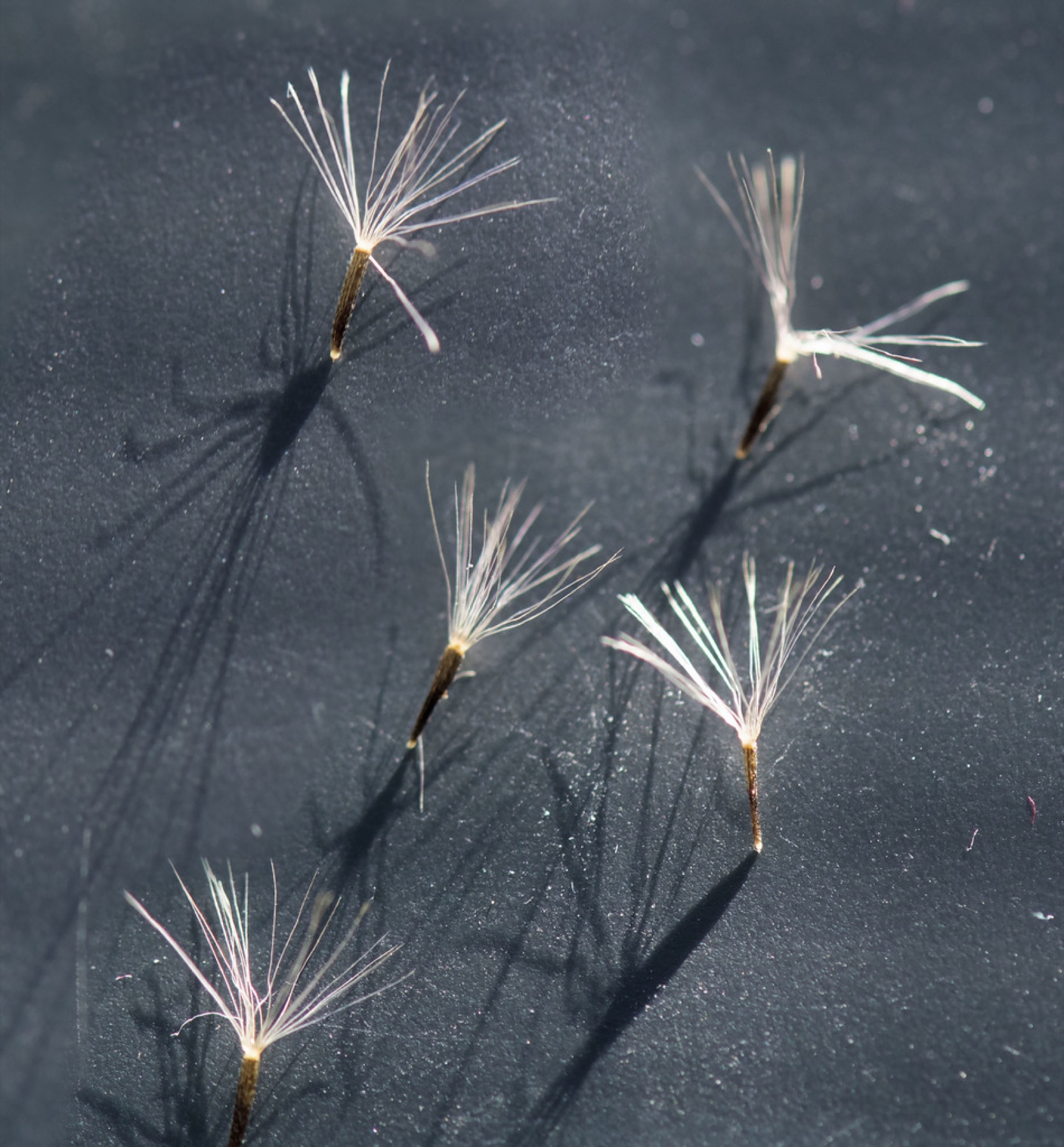
From seed or cuttings. Surface-sow seed in fall; cuttings may preserve desirable local forms.
Where to see it near you
- iNaturalist — observed in Southern California
- Dry trail cuts, chaparral slopes, and rocky canyon edges.
Problems
Hairs can irritate sensitive skin. Looks best in habitat-style plantings, not clipped landscapes.