California Goldenrod
Solidago velutina · Asteraceae
- Form
- Perennial
- Height
- 2–4 ft
- Sun
- Full Sun
- Water
- Moderate
- Blooms
- Jul, Aug, Sep, Oct
- Habitat
- Riparian · Wetland · Oak Woodland · Grassland · Montane
🌿 California native
Quick facts
- Habitat: Moist edges, meadows, stream terraces, woodland openings
- Form / size: Rhizomatous perennial, 2–4 ft
- Sun: Full sun to part shade · Water (established): Low to moderate
- Blooms: Late summer–fall · Pollinator value: High
Description
A late-season perennial with upright stems and narrow leaves, topped by sprays of small golden flower heads. It can form colonies where moisture lingers, lighting up the wet/dry edge after many spring natives have finished.
The species name is the field mark. Velutina means velvety, and that is exactly how the plant feels. Stems and leaves carry a fine short fuzz, so running a stem between two fingers gives a soft, dry, slightly grabby texture rather than a slick one. Leaves are small, lance-shaped, and spaced fairly evenly up the stem, and the plant does not hold a rosette of big leaves at its base. Both of those checks matter around Big Bear, where a second goldenrod grows in the same valley.
Ecological role
California goldenrod blooms late in the growing season, from midsummer through fall, when many other native plants have finished flowering. Calscape lists it as supporting 39 likely species of butterflies and moths, along with bees, flies, wasps, and other beneficial insects that depend on the abundant nectar and pollen its dense flower heads produce. Birds feed on the seeds after the flowers fade. The plant thrives in riparian edges and wet meadows where seasonal moisture lingers, and it spreads by rhizomes to form colonies in moist openings.
Habitat & range
Meadows, stream terraces, riparian edges, oak woodland openings, and seasonally moist grassland. It ranges well up into the mountains too, and is common through the San Bernardinos around Big Bear Lake at roughly 6,700 ft, where it turns up on damp roadsides, ditch banks, and forest openings rather than out in standing water.
In the garden
Excellent for late-season pollinator value in meadow, swale, and habitat plantings. It spreads by rhizomes, so place it where a patch is welcome.
Propagation
Easy by division or seed. Divide clumps in winter or early spring.
Where to see it near you
- iNaturalist — observed in Orange County
- Moist meadow edges, creek terraces, and native plant gardens.
- Damp roadsides and ditch banks around Big Bear in late summer.
Problems
Spreads in irrigated soil. Not the cause of hay fever — its pollen is sticky and insect-carried, unlike windborne ragweed pollen.
Sources
Commonly confused with
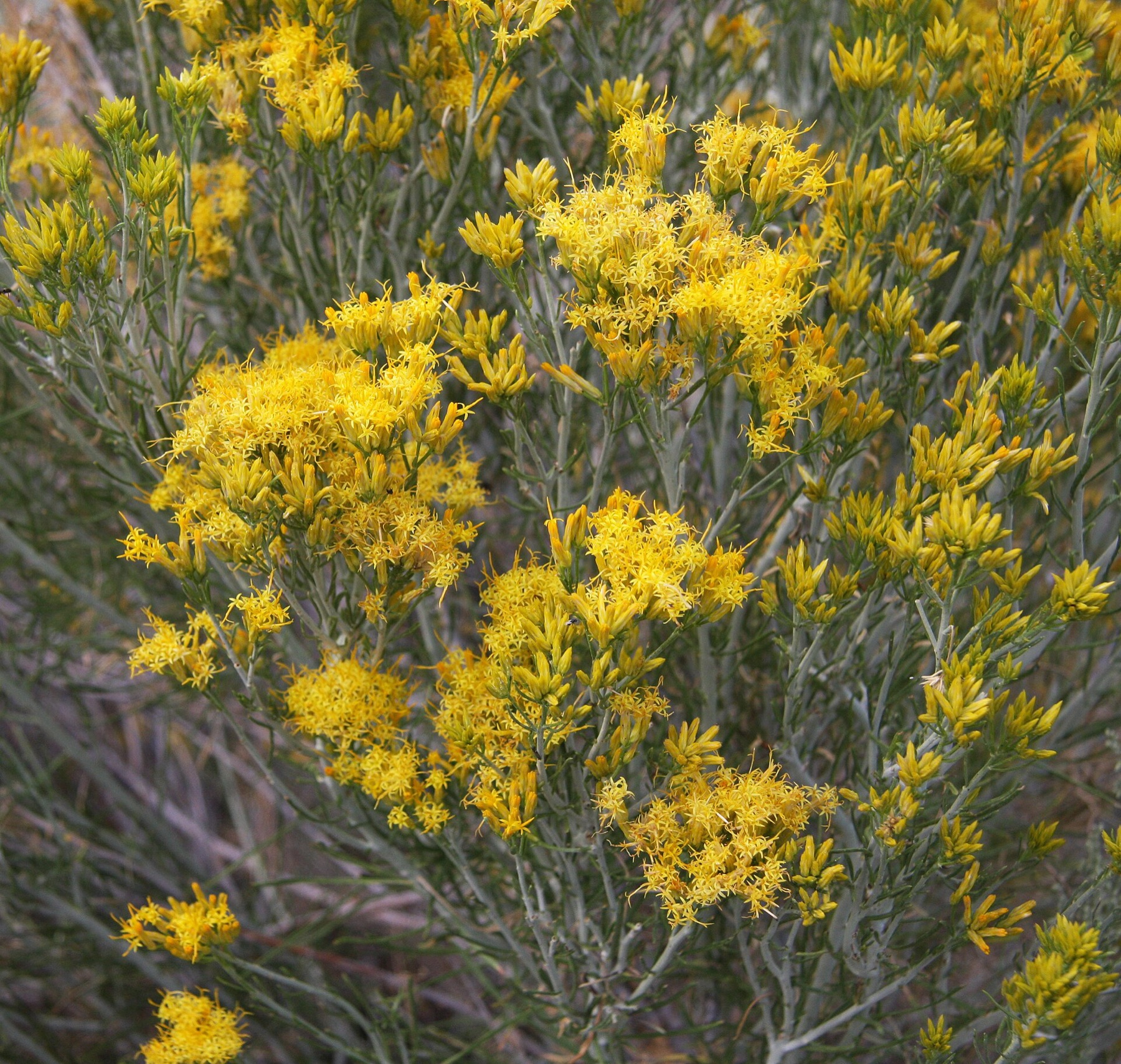 Rubber Rabbitbrush 🌿 Ericameria nauseosa the most common mix-up on the dry side, because they turn gold in the same weeks. Rabbitbrush is a woody shrub whose rigid stems stand through winter; goldenrod is a herbaceous perennial that dies to the ground. Leaves separate them at arm's length: rabbitbrush leaves are thread-narrow and gray-green, goldenrod leaves are flat and clearly green. Up close, goldenrod flower heads have small ray petals around the rim, rabbitbrush heads have none. Crushed rabbitbrush smells sharp and rubbery.
 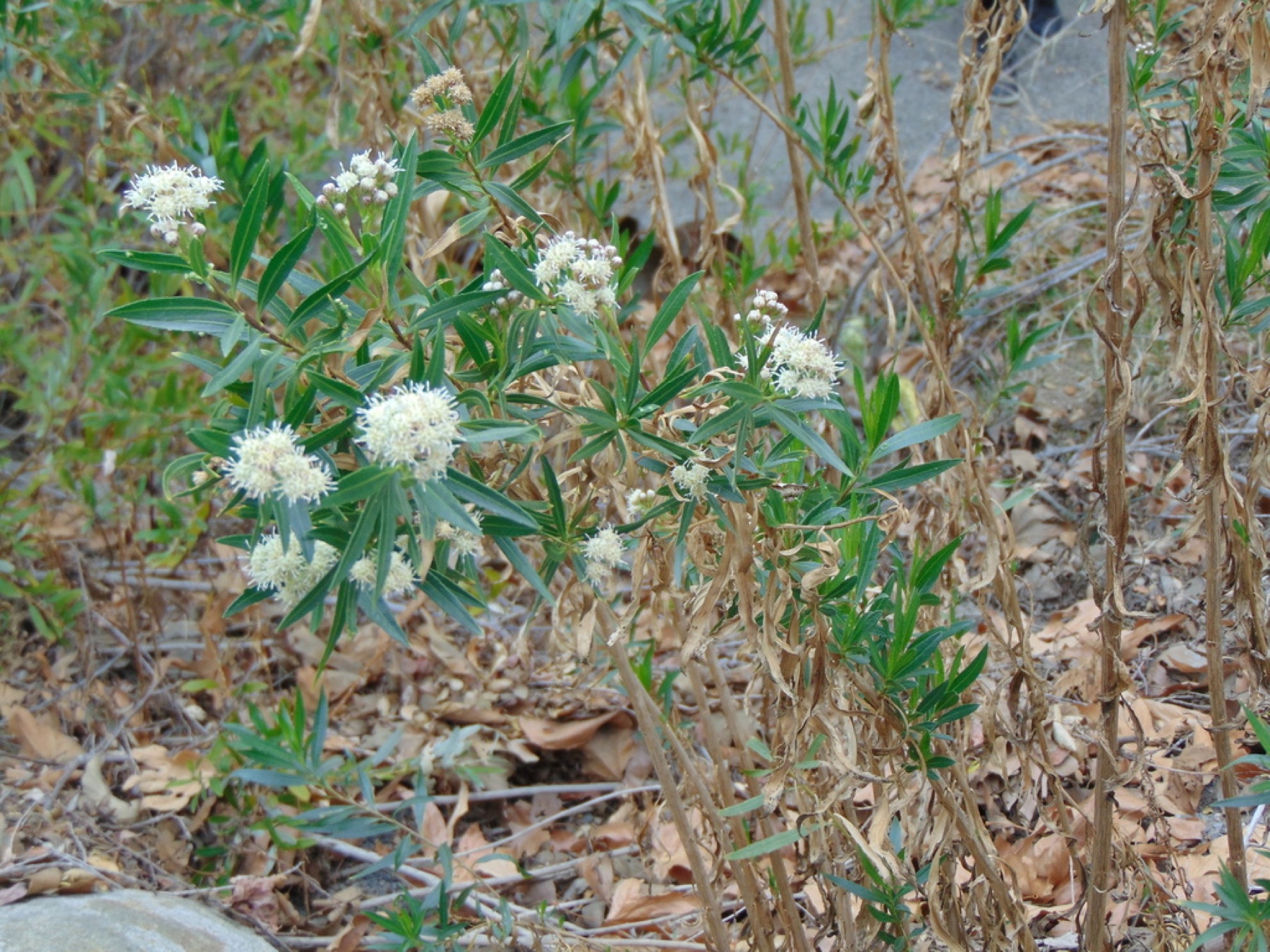 Mule Fat 🌿 Baccharis salicifolia taller woody riparian shrub with white flower clusters.