Creeping Wild Rye
Elymus triticoides · Poaceae
- Form
- Grass
- Height
- 1-4 ft
- Sun
- Full Sun
- Water
- Moderate
- Blooms
- May, Jun, Jul
Elymus triticoides (syn. Leymus triticoides) - Poaceae
🌿 California native
Quick facts · Habitat: Moist meadows, swales, creek edges, heavy soils · Form / size: Rhizomatous native grass, 1-4 ft · Sun: Full sun to part shade · Water: Low to moderate once established · Blooms: Late spring-summer · Pollinator value: Low
Description
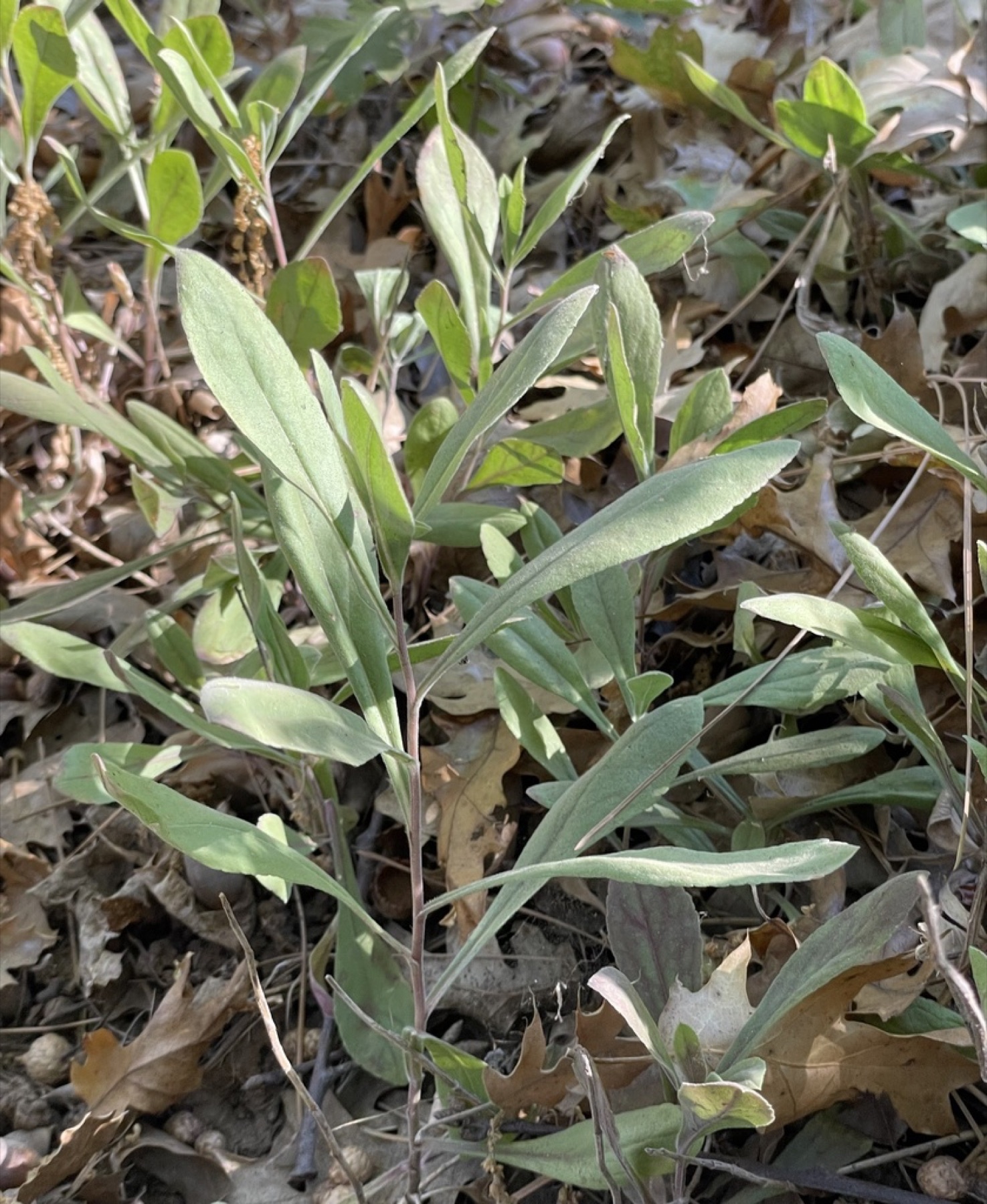
A spreading native grass with blue-green to green leaves and narrow, beardless seed spikes. It forms colonies by rhizomes, making it more of a meadow/bank stabilizer than a tidy bunchgrass.
Indigenous & historical use
The Kawaiisu harvested creeping wild rye seed by beating the ripe spikes into a V-shaped gathering basket, then parched and ground the seed into meal or pinole, a practice documented by Maurice Zigmond in his 1981 study of Kawaiisu plant knowledge.
Ecological role
Creeping wild rye anchors itself to the wet/dry transition zone through its rhizomatous root system, which spreads horizontally and helps hold soil at the streambank margin. Above ground, the plant provides seed and cover for birds, small mammals, and beneficial insects moving through the riparian edge. Its late-spring blooms offer modest pollen in a season when some insects are already foraging, but the plant’s primary ecological value here is structural rather than nutritional for its neighbors.
Habitat & range
Moist meadows, swales, creek margins, floodplains, and heavy soils across much of western North America. It is especially useful where winter-wet soil dries down in summer.
In the garden
A workhorse for meadow plantings, bioswales, erosion control, and native lawn alternatives. It can spread assertively with irrigation, so use it where a matrix grass is wanted.
Propagation
Easy by division, plugs, or seed. Plugs knit together fastest for restoration.
Where to see it near you
- iNaturalist — observed in Orange County
- Swales, creek terraces, damp meadows, and restoration plantings.
Problems
Can be too spreading for small beds. Cut or mow high in late season to refresh.
Sources
- Calscape · iNaturalist · Wikipedia
- Indigenous use: Zigmond, Maurice L. Kawaiisu Ethnobotany (1981), University of Utah Press, p. 58