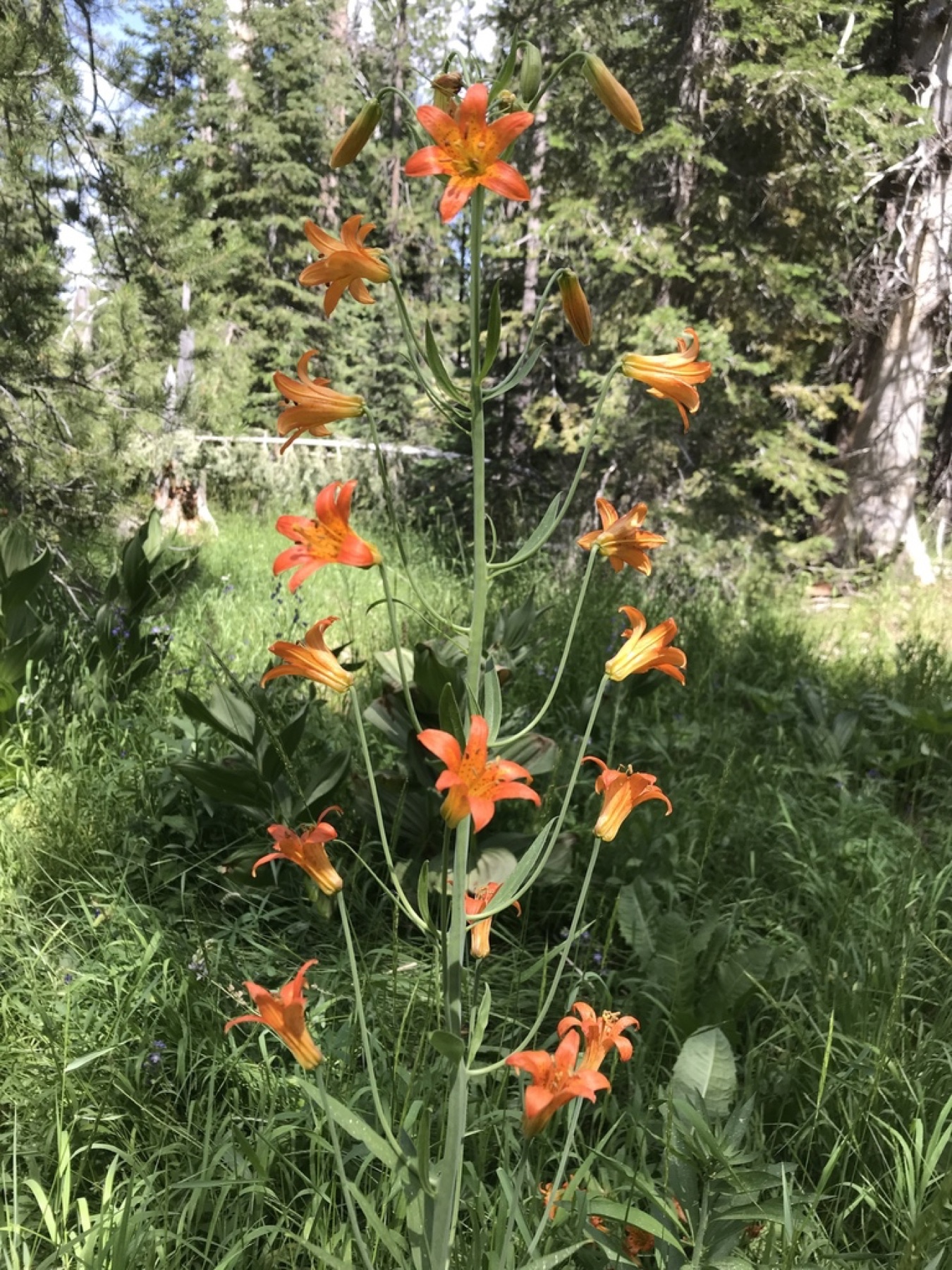
Mountain Alder
Alnus incana ssp. tenuifolia · Betulaceae
- Form
- Shrub
- Height
- 15–25 ft
- Sun
- Full Sun
- Water
- High
🌿 California native
Quick facts
- Habitat: Cold Riparian streamsides and wet Montane meadow edges (Tahoe, Eastern Sierra)
- Form / size: Multi-stemmed streamside shrub or small tree, 15–25 ft
- Sun: Full sun to part shade · Water: High (perennial water)
- The tell: small, persistent, cone-like woody fruits on bare winter twigs; doubly toothed leaves
Description
The high-country alder, a thicket-forming shrub or small tree that follows cold streams up into the mountains where its lowland relative, white alder, drops out. The leaves are thin, oval, and doubly serrate (fine teeth riding on larger teeth), matte green rather than shiny, and the twigs and buds are reddish. Catkins open before the leaves: drooping yellow-brown male catkins and small upright reddish female ones. Those female catkins mature into little woody, cone-like fruits about a half-inch long that hang blackened on the bare twigs through winter, the surest way to name any alder in the cold months.
Indigenous & historical use
In the mountains of the Southwest, within the subspecies’ range, the Zuni used the bark of mountain alder to dye deerskin a reddish-brown. The use is recorded in Matilda Coxe Stevenson’s 1915 study of Zuni ethnobotany. Alders are among the most reliable natural dye plants in the West, and this reddish bark dye is one of the better-documented examples.
Ecological role
Like all alders, mountain alder fixes its own nitrogen, hosting Frankia bacteria in root nodules that let it colonize raw, infertile gravel bars and enrich the soil for the plants that follow. It is a pioneer streambank stabilizer whose dense roots armor banks and whose canopy shades and cools the water for trout and other stream life. Calscape credits it with supporting on the order of 123 butterfly and moth species, and small finches such as pine siskins and goldfinches forage the persistent conelets through winter. Beavers cut it for food and dams, and it resprouts vigorously after cutting, fire, or flood.
Habitat & range
Streams, seeps, and wet meadow edges the length of the Sierra Nevada, roughly 4,500 to 8,000 ft. It is abundant around Lake Tahoe and is the characteristic streamside alder of the Eastern Sierra around Mammoth Lakes, where it largely replaces the lower-elevation white alder.
In the garden
Only for consistently wet or streamside settings, since it is not at all drought-tolerant. It prefers sandy or loamy soil over heavy clay, grows fast, and makes a quick bank stabilizer or screen for a pond or creek edge in full sun to part shade. Because it fixes its own nitrogen, it needs little to no feeding.
Propagation
From the tiny winged seed shed by the woody conelets in fall; surface-sow on wet mineral soil (it needs light), with a short cold-moist stratification. Dormant hardwood cuttings and live stakes root in wet ground, the standard riparian bank-planting technique, and low branches will layer where they touch moist soil.
Where to see it near you
- iNaturalist — observed across California (map)
- Cold streamsides around Lake Tahoe and the Eastern Sierra (Mammoth-area creeks).
Sources
- Calscape · iNaturalist · Wikipedia
- Indigenous use: Stevenson, M.C., “Ethnobotany of the Zuni Indians,” SI-BAE Annual Report 30 (1915).
Commonly confused with
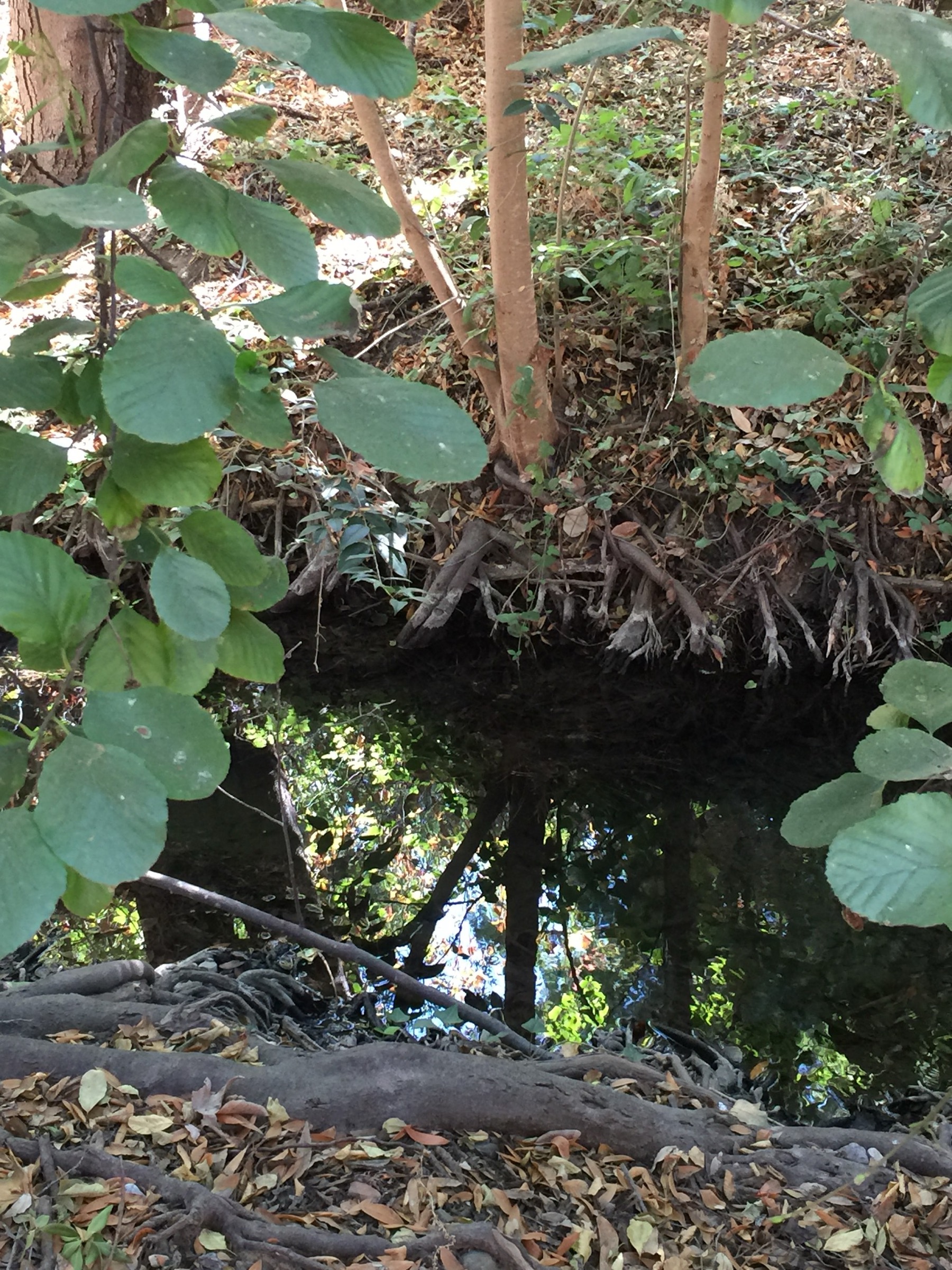 White Alder 🌿 Alnus rhombifolia a full-sized single-trunk tree of lower foothill streams with shinier, more finely toothed leaves that blooms in late winter. Mountain alder is a higher, thicket-forming shrub or small tree with doubly toothed, matte leaves.