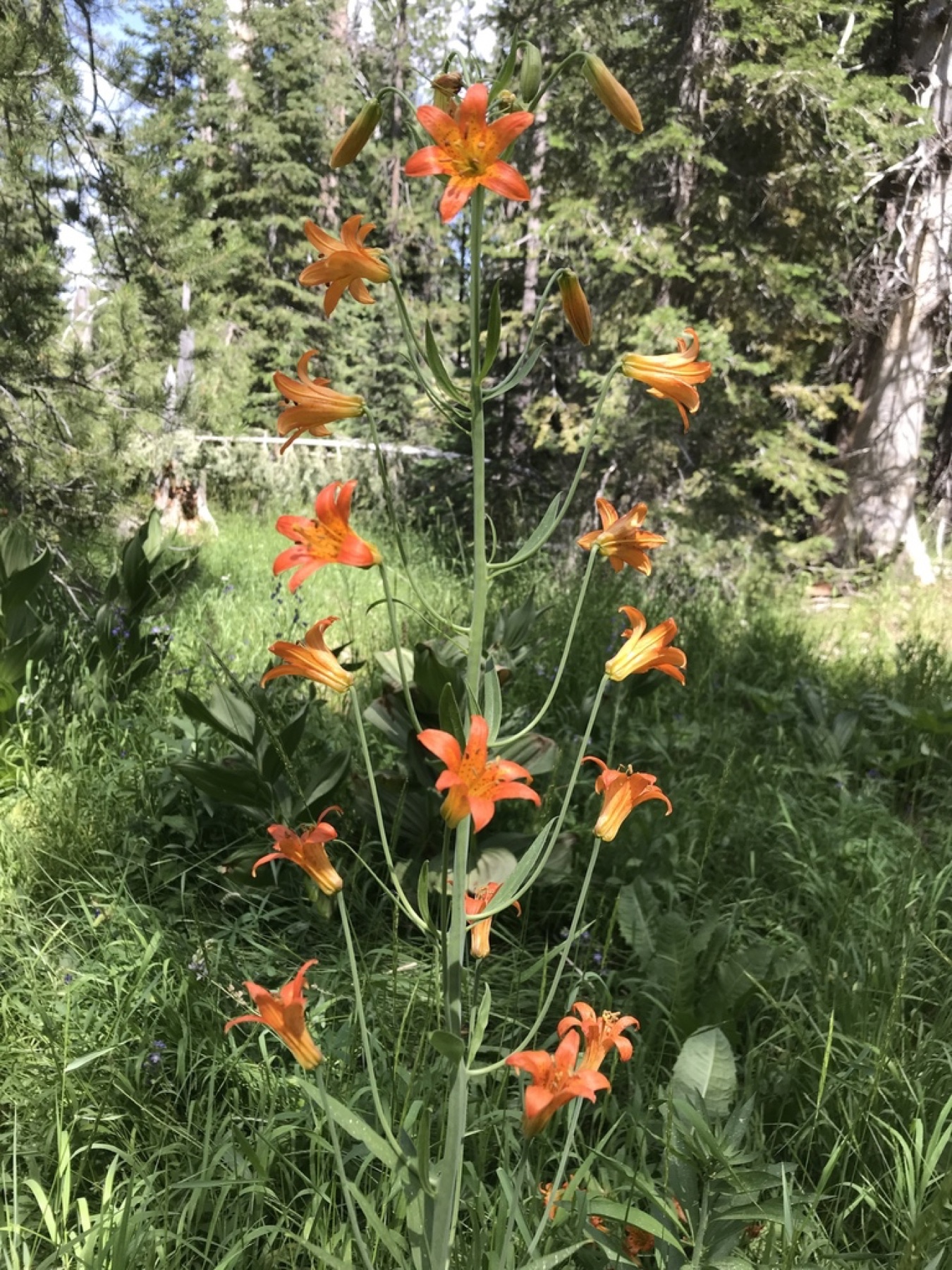
Lewis's Monkeyflower
Erythranthe erubescens · Phrymaceae
- Form
- Perennial
- Height
- 10–36 in
- Sun
- Full Sun
- Water
- High
- Blooms
- Jul, Aug
🌿 California native
Quick facts
- Habitat: Riparian streambanks, seeps, and wet Montane meadows
- Form / size: Sticky-hairy perennial, 10–36 in
- Sun: Full sun · Water: High (constant moisture)
- Blooms: Pink summer trumpets · Pollinator value: High
Description
A showy pink monkeyflower of high-country streambanks. The two-lipped trumpet flowers are about an inch and a half across, pale rose-pink with a paler throat, dark rose spots, and yellow ridges guiding pollinators into the tube. The opposite leaves are stalkless, coarsely toothed, prominently veined, and sticky-hairy to the touch, and the whole plant forms clumps and patches from creeping rhizomes right at the water’s edge. The wet setting is itself an identification cue: this is a plant of seeps, dripping rock, and saturated meadow, not dry ground. The Tahoe and Mammoth plants belong to Erythranthe erubescens, the Sierra species long lumped under the broader name E. lewisii, which in the strict sense is a more northern, deeper-magenta plant that does not reach the central or eastern Sierra.
Ecological role
The pink corolla, the landing platform of a lower lip, and the yellow nectar guides are a textbook bee-pollination package, worked mainly by bumblebees and mason bees. This monkeyflower and its scarlet, hummingbird-pollinated sister, Erythranthe cardinalis, are one of botany’s classic case studies in how flower color splits a lineage: the two are fully interfertile yet stay separate because pollinators choose between them. In field experiments, adding an allele that reddens the petals cut bumblebee visits by about 80 percent. As an obligate wetland plant, its presence flags reliable surface water or a spring at montane to subalpine elevation.
Habitat & range
Streambanks, seeps, wet meadows, and dripping rock the length of the Sierra Nevada and into adjacent western Nevada, roughly 4,500 to 11,500 ft. It grows around Lake Tahoe (El Dorado and Placer counties and the Nevada side) and through the Mammoth Lakes and Eastern Sierra high country in Mono County.
In the garden
A high-country plant that needs cold winters, cool summers, and constantly moist, rich soil, so it suits mountain gardens and bog or streamside plantings rather than hot lowland beds. Site it in full sun to light shade at a pond edge, seep, or irrigated wet bed and never let it dry out. It spreads by rhizome into an attractive summer-blooming pink patch.
Propagation
From the dust-fine seed, surface-sown on moist mix and left uncovered since it needs light to germinate; cold-moist stratification helps seed collected in the mountains. Established clumps can be divided in spring, or soft stem cuttings rooted if kept constantly wet.
Where to see it near you
- iNaturalist — observed across California (map)
- Streambanks and wet meadows around Lake Tahoe and the Eastern Sierra (Hoover Wilderness, the creeks above Bridgeport).
Sources
Commonly confused with
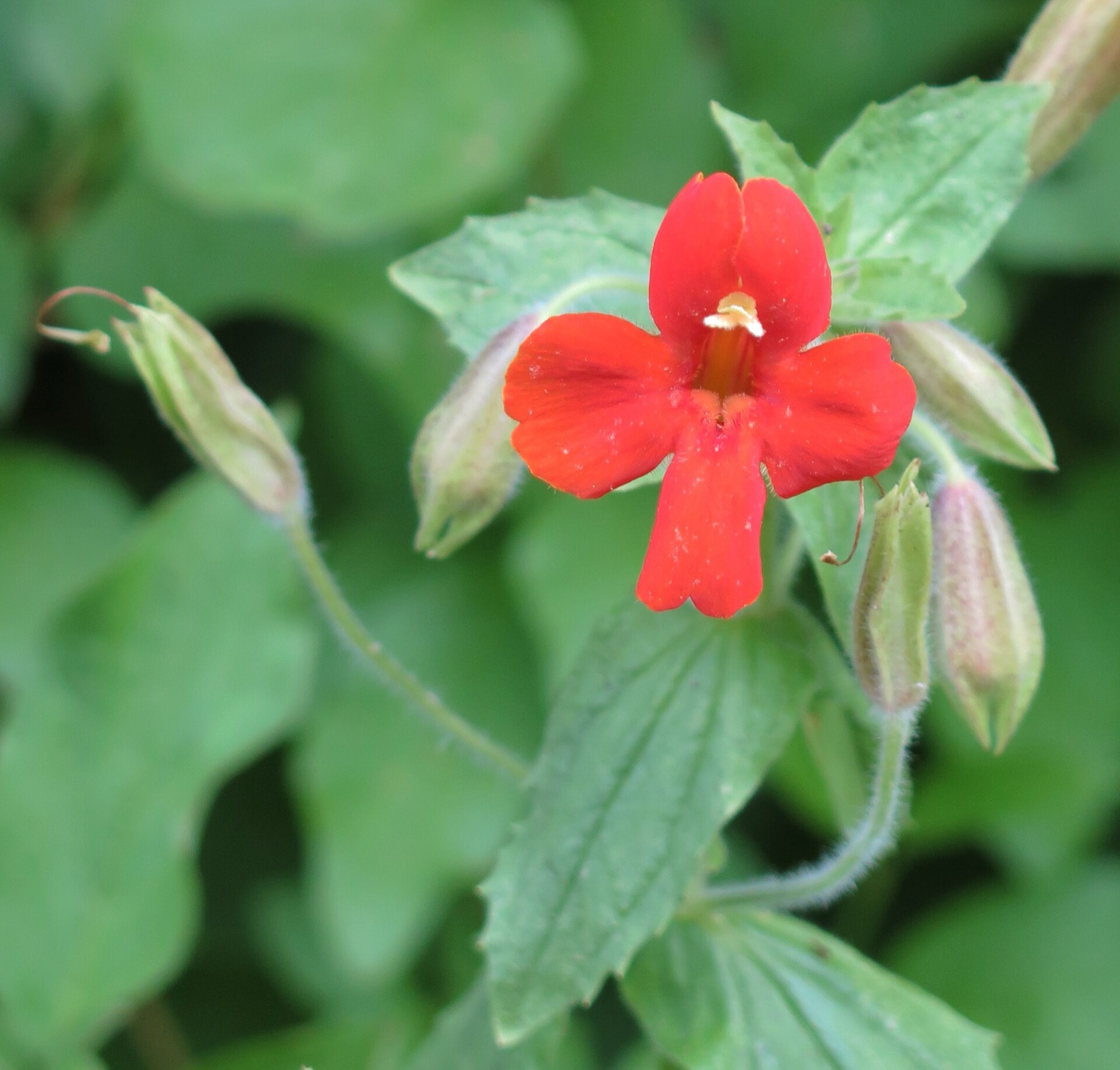 Scarlet Monkeyflower 🌿 Erythranthe cardinalis its flowers are red and tubular with swept-back lobes, built for hummingbirds, and it sits at lower, warmer elevations. If the flower is pink and open-faced, it is this plant.
 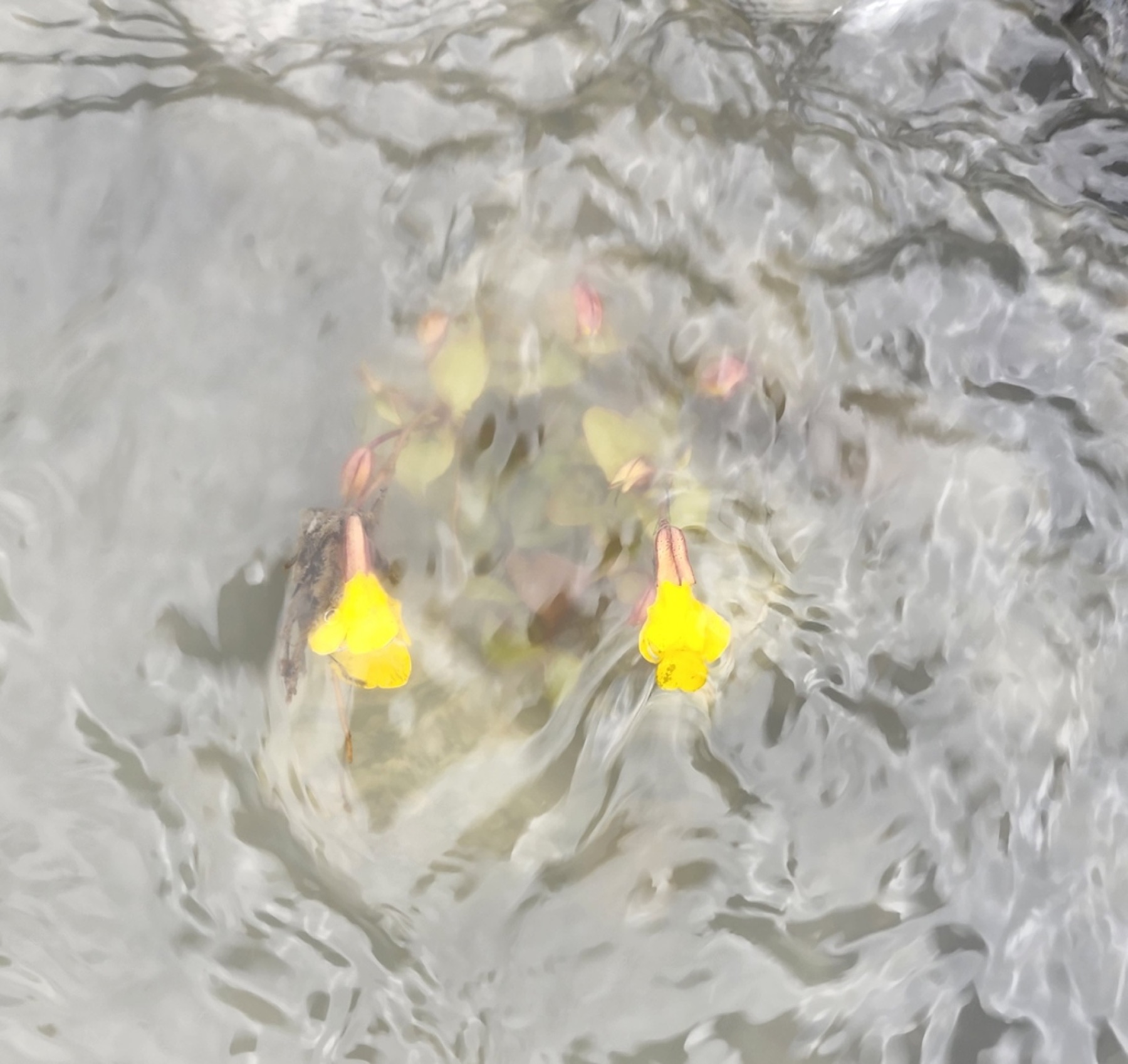 Seep Monkeyflower 🌿 Erythranthe guttata the same wet streambanks, but its flowers are yellow with a red-dotted throat, not pink.