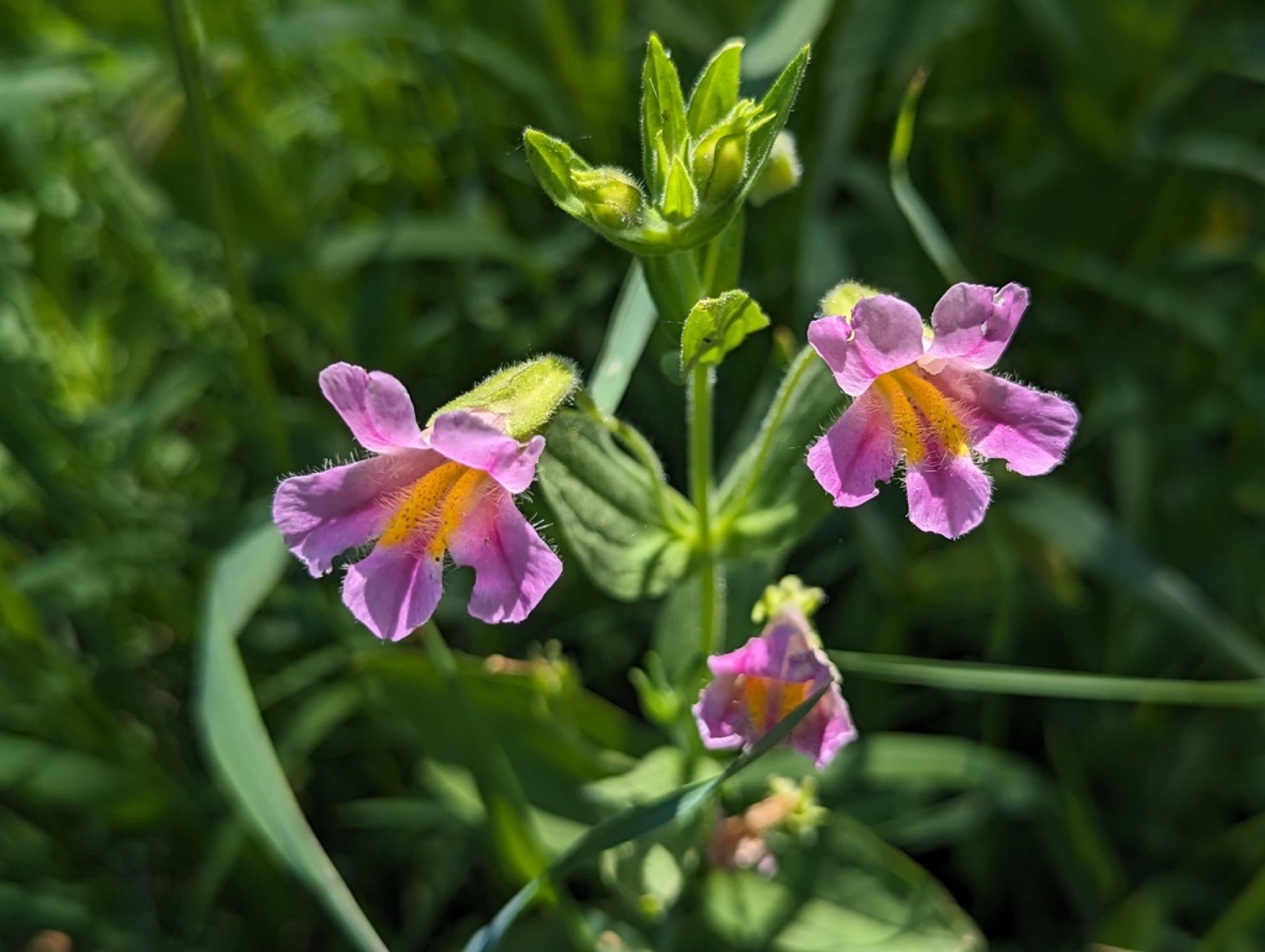
Sierra Tiger Lily
Lilium parvum · Liliaceae
- Form
- Perennial
- Height
- 2–6 ft
- Sun
- Part Shade
- Water
- High
- Blooms
- Jul, Aug
🌿 California native
Quick facts
- Habitat: Streambanks, seeps, and wet meadows of the Montane and Riparian zones
- Form / size: Tall wet-meadow lily, 2–6 ft
- Sun: Part shade · Water: High (saturated soil)
- Blooms: Small orange summer bells · Pollinator value: Moderate
Description
A slender orange lily that stands in wet ground among the willows and alders. An unbranched leafy stem, two to six feet tall, rises in summer from a scaly bulb, carrying narrow lance-linear leaves mostly in whorls up the stem. The flowers are small for a lily and held more or less horizontal, flaring like open bells with only the tepal tips curled back (not the full swept-back Turk’s-cap of the larger lilies). They are orange to red-orange, paler in the throat, and dotted with purple-brown spots, with reddish anthers.
Ecological role
Sierra tiger lily is a wetland plant, rooting in the saturated soil of stream edges, seeps, and boggy meadows and tolerating seasonal flooding. Its orange, flaring flowers are worked by hummingbirds and by long-tongued swallowtail butterflies. Where its range overlaps with other California lilies, such as the leopard lily and Kelley’s lily, it hybridizes readily into intermediate swarms, part of why the Sierra’s wet-meadow lilies can be a puzzle to sort out.
Habitat & range
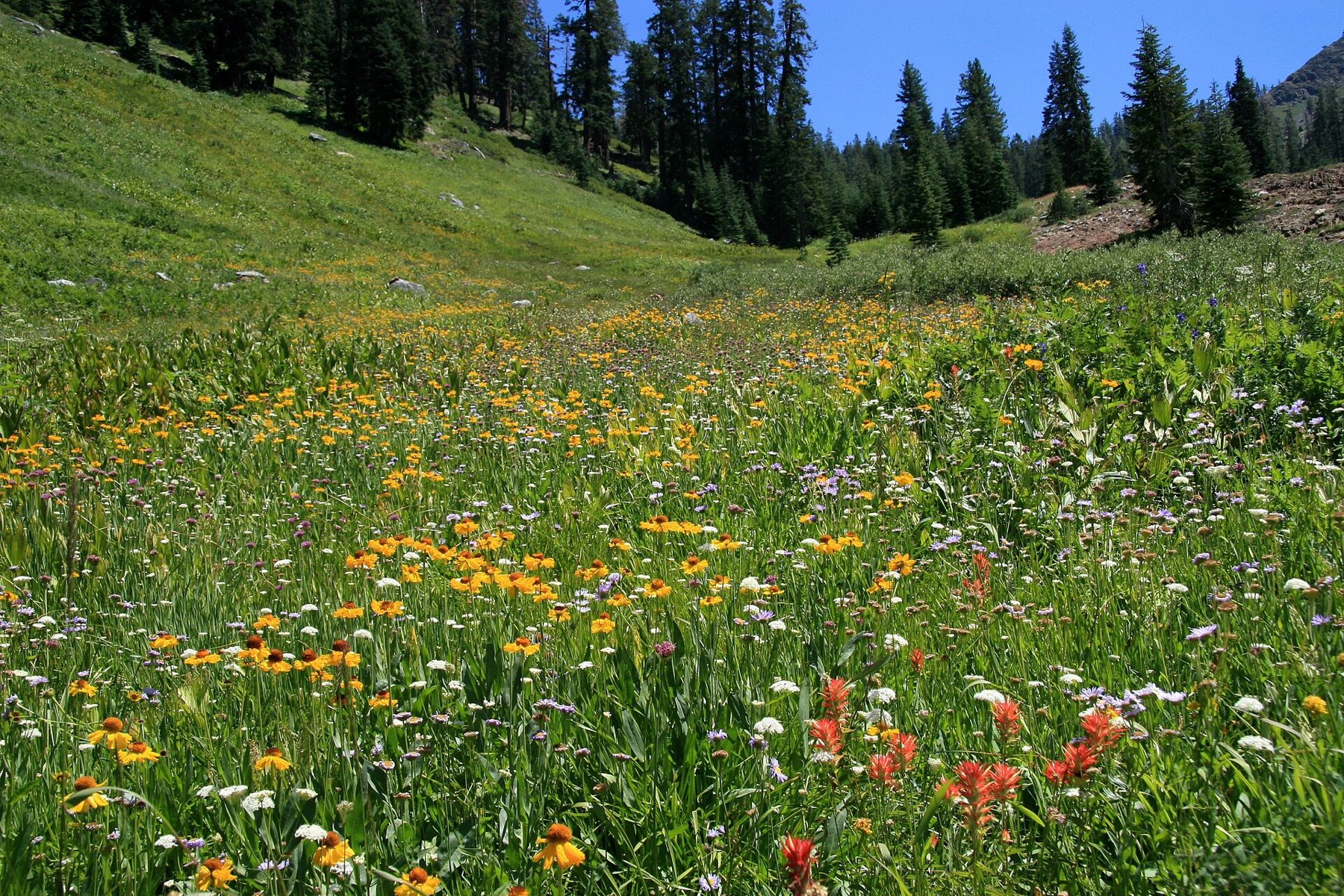
Streambanks, seeps, wet meadows, and willow and alder thickets the length of the Sierra Nevada, roughly 4,500 to 9,000 ft, with peripheral populations reaching the southern Cascades and just into Nevada and Oregon. It grows in the montane meadows and creeks of the Lake Tahoe basin and through the Mammoth Lakes and Eastern Sierra high country.
In the garden
A bog or streamside plant, needing consistently moist to wet, fertile soil that never dries at the root. It does best in dappled to part shade rather than hot full sun, at a pond margin, rain garden, or among willows and sedges. It is not a plant for dry native borders.
Propagation
From seed, though germination is slow and cold-requiring, so sow it fresh and expect several years to first flower. It can also be increased by separating bulb scales or offset bulblets from an established clump. Keep seed pots and young bulbs continuously moist.
Where to see it near you
- iNaturalist — observed across California (map)
- Streamside meadows around Lake Tahoe and the Eastern Sierra high country.
Sources
Commonly confused with
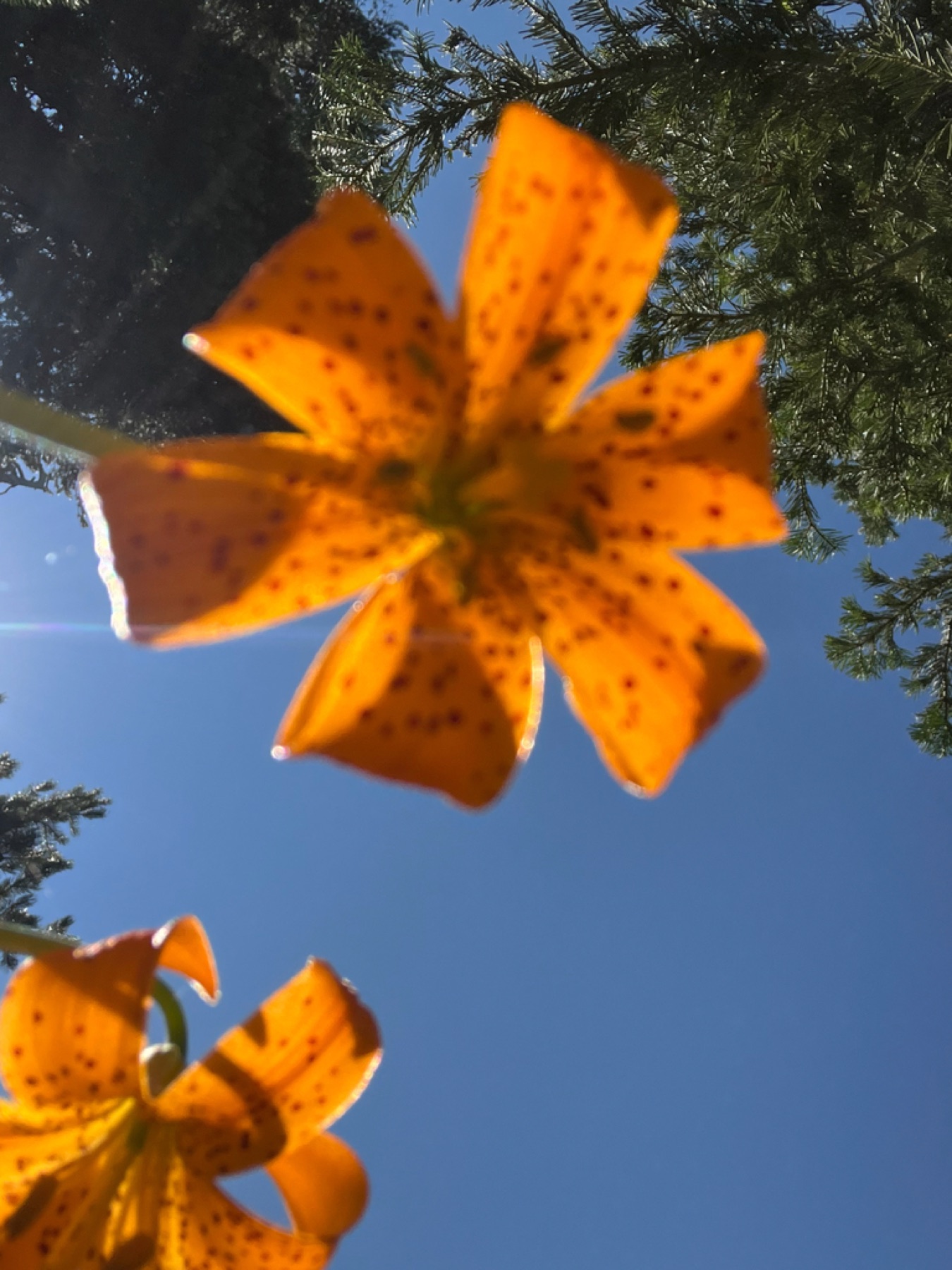 Kelley's Lily 🌿 Lilium kelleyanum a very similar wet-meadow lily, but its flowers are usually more pendent and fragrant with more strongly recurved tepals; check flower angle (Sierra tiger lily held roughly horizontal).
 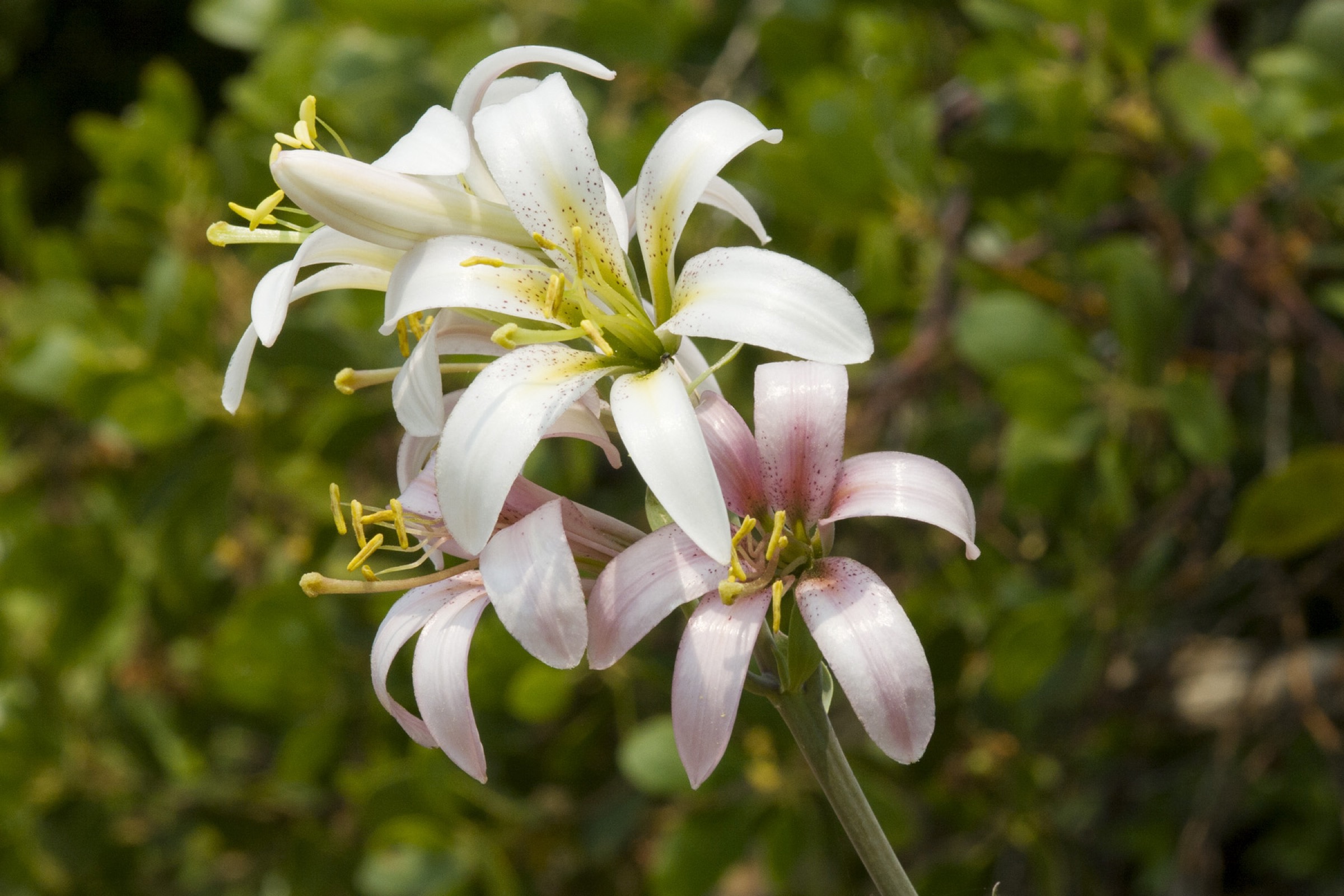 Washington Lily 🌿 Lilium washingtonianum large, white to pinkish, sweetly fragrant funnels held upward on dry slopes, the opposite of this orange streamside bell in color, scent, and habitat.