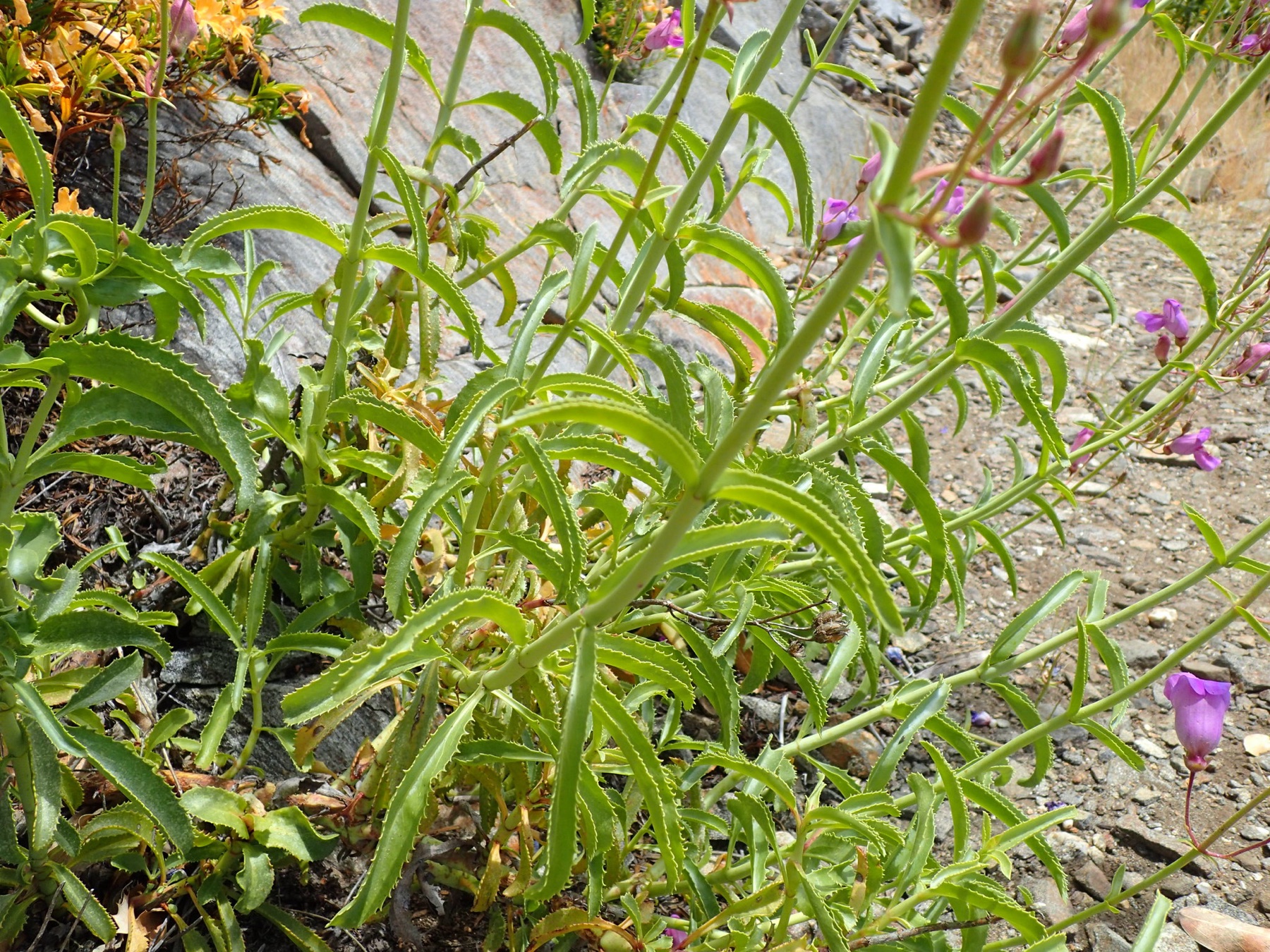
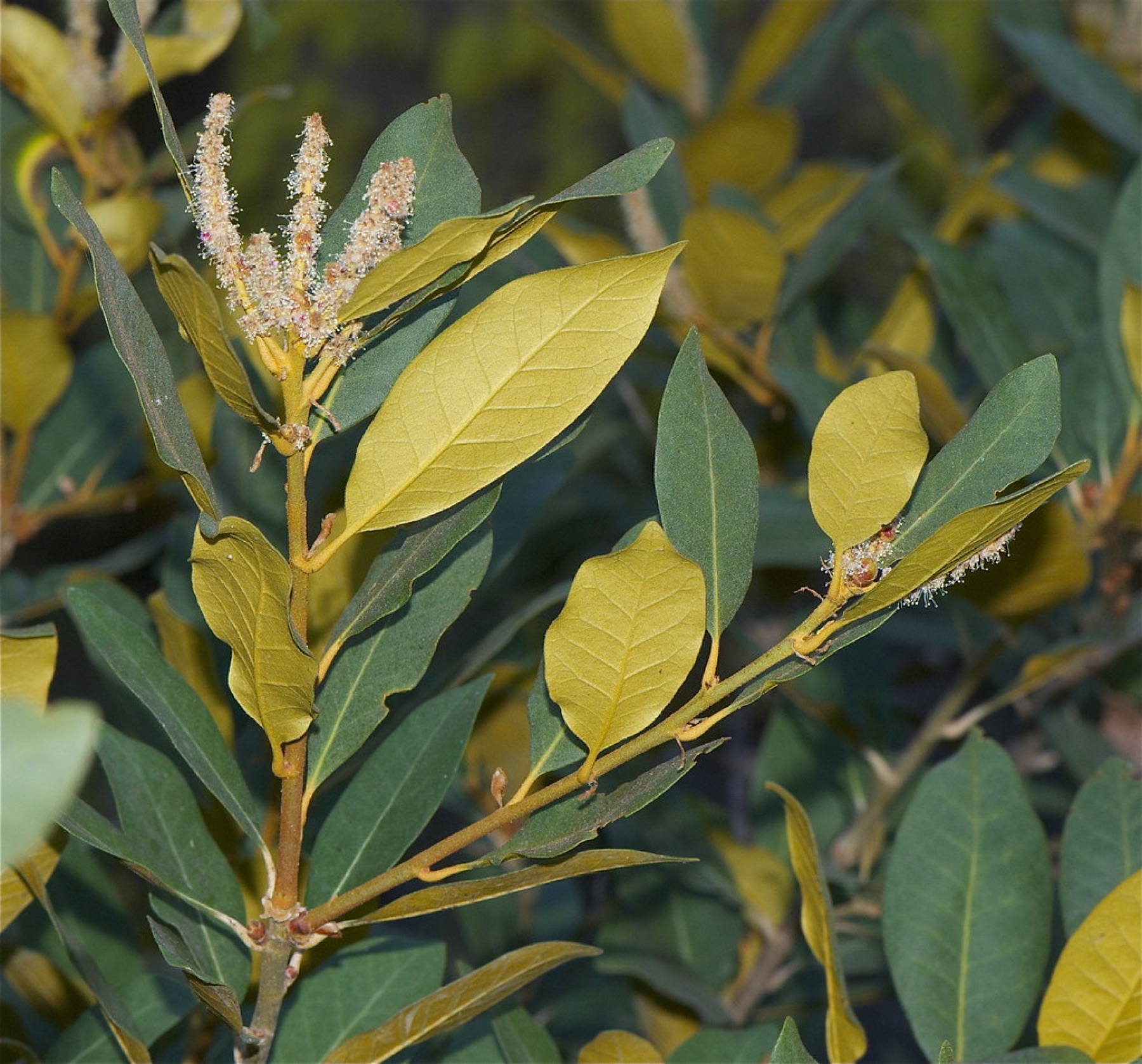
Washington Lily
Lilium washingtonianum · Liliaceae
- Form
- Perennial
- Height
- 3–7 ft
- Sun
- Full Sun
- Water
- Low
- Blooms
- Jun, Jul, Aug
🌿 California native
Quick facts
- Habitat: Dry Montane slopes and Chaparral openings, western Sierra
- Form / size: Tall lily, 3–7 ft
- Sun: Full sun · Water: Low
- Blooms: Large, fragrant white trumpets aging pink · Pollinator value: Moderate
Description
A stately white lily that grows, unusually, on dry ground. From a scaly bulb, an unbranched stem rises three to seven feet, carrying narrow leaves in whorls up its length. The flowers are large, trumpet-shaped, and held more or less horizontal, sometimes just a few and sometimes many to a stem, pure white with fine purple dots and tepals that curl back at the tips. They are intensely sweet-scented, opening toward dusk and slowly aging to pink or lavender. Rising out of dry brush rather than a wet meadow, a blooming Washington lily is one of the surprises of the western Sierra.
Ecological role
Washington lily is a dryland lily, growing on well-drained slopes with little to no summer water, which sets it apart from the Sierra’s other lilies that need saturated ground. It often colonizes recently burned areas, clearcuts, and revegetating openings, and grows among greenleaf and whiteleaf manzanita in montane chaparral. The large, pale, evening-fragrant flowers are built for night-flying moths, with hummingbirds and butterflies also visiting.
Habitat & range
Dry montane slopes, chaparral, and open forest on the western slope of the Sierra Nevada, from the northern ranges south into the central Sierra, roughly 1,300 to 7,200 ft and most common between about 3,500 and 5,500 ft. It reaches the west-slope forests near Lake Tahoe but is a western-slope species and does not grow around Mammoth Lakes or the Eastern Sierra. Its whole range spans just two states, California and Oregon.
In the garden
Site it in full sun to light shade on fast-draining soil and keep it dry in summer once established, the reverse of how most native lilies are grown. It suits higher-elevation or cooler gardens, struggles in hot lowland conditions, and combines well with the dry-slope manzanitas it grows among. The bulbs resent disturbance once planted.
Propagation
From seed, sown outdoors in summer or early fall. Germination is the slow hypogeal type: several weeks warm to form bulblets, then a cold period before growing on, and years from seed to first flower. The bulbs do not like to be moved.
Where to see it near you
- iNaturalist — observed across California (map)
- Dry chaparral and forest openings of the western Sierra, reaching the west-slope forests near Lake Tahoe.
Sources
Commonly confused with
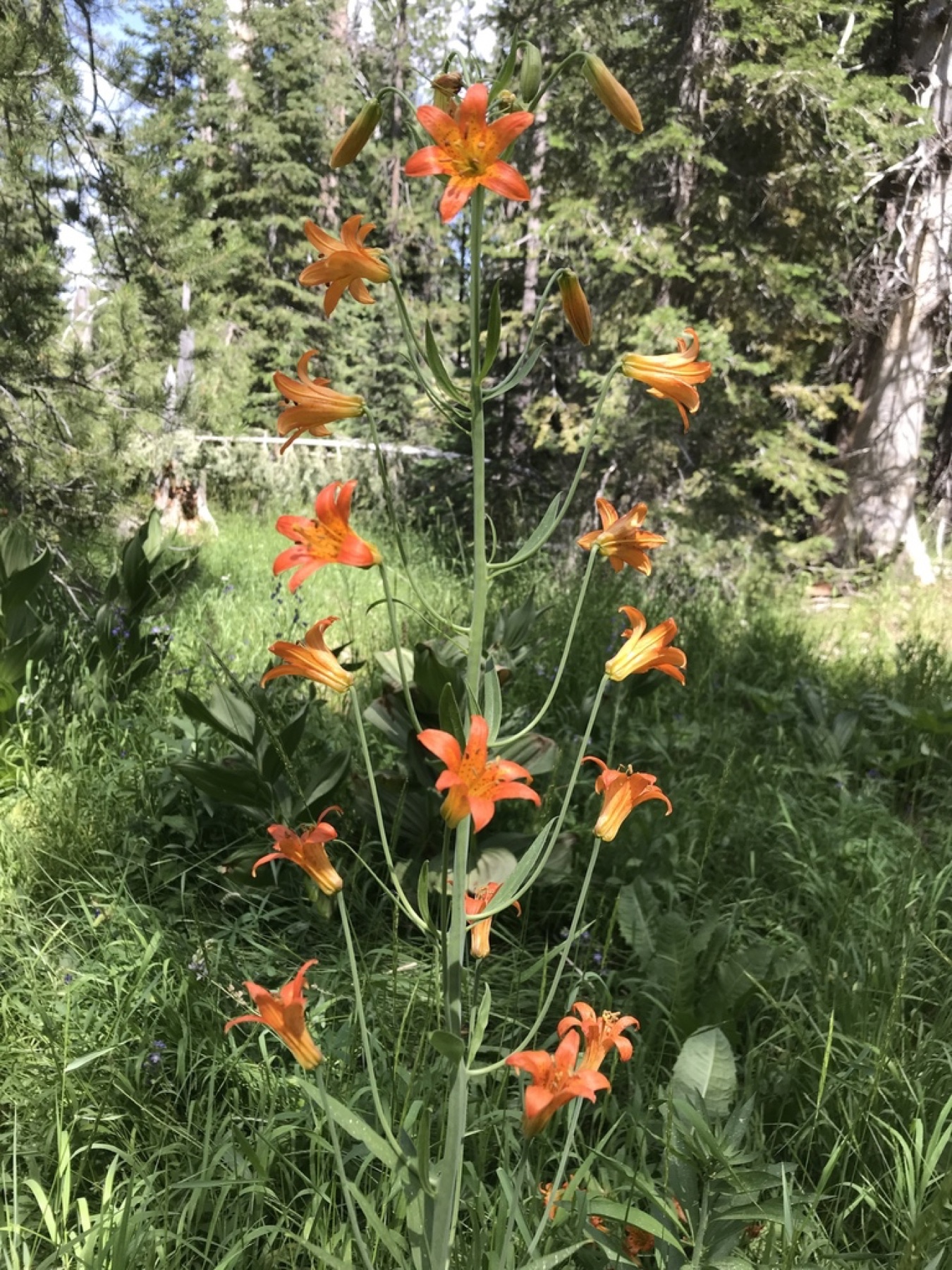 Sierra Tiger Lily 🌿 Lilium parvum those bear nodding, strongly recurved orange-red Turk's-cap flowers in wet seeps. Washington lily has outward-facing white trumpets on dry slopes.