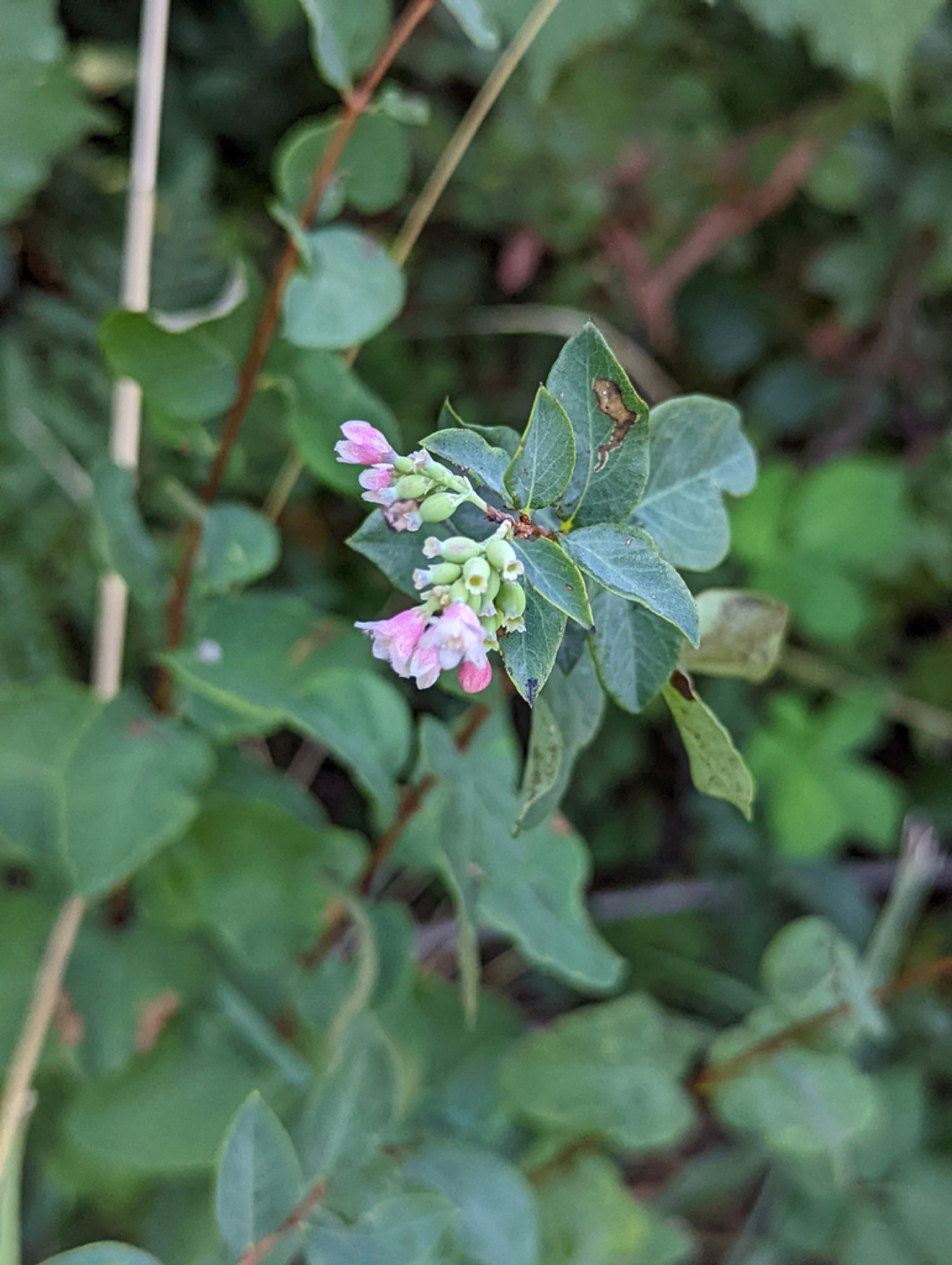
Bush Chinquapin
Chrysolepis sempervirens · Fagaceae
- Form
- Shrub
- Height
- 2–8 ft
- Sun
- Part Shade
- Water
- Low
- Blooms
- Jul, Aug, Sep
🌿 California native
Quick facts
- Habitat: Montane and Subalpine chaparral, rocky slopes and ridges
- Form / size: Dense evergreen shrub, 2–8 ft
- Sun: Full sun to part shade · Water: Low
- The tell: flip a leaf — the underside is coated in gold-to-rusty scales; fruit is a spiny chestnut-like bur
Description
A low, dense, rounded evergreen shrub of rocky Sierra slopes, knee- to head-high on sheltered ground and dwarfed into mats near timberline. The leaves are leathery, oblong, and flat, with untoothed margins and blunt tips, dull green above. The field mark is on the underside: a coating of gold-to-rusty scales that catches the light when you turn a leaf over. It flowers in summer as erect, cream-to-pale-yellow catkins with a strong, rank scent, and the fruit is a densely spiny yellowish bur, an inch or two across, enclosing one to three small, sweet, hazelnut-flavored nuts. The twigs and stems themselves are unarmed; only the bur is prickly.
Ecological role
Bush chinquapin is a defining shrub of Sierra montane chaparral, often co-dominant with huckleberry oak and forming a shade-tolerant understory in the openings of red fir and lodgepole forest. It is top-killed by fire but sprouts vigorously from its root crown, and one post-fire stand was measured at roughly 9,650 stems per acre by the fifth year. Chipmunks, ground squirrels, mountain quail, and birds eat and cache the nuts, spreading the plant, and it is a reported larval host for the Golden Hairstreak butterfly, which breeds on chinquapins and their oak relatives.
Habitat & range
Rocky slopes and ridges the length of the Sierra Nevada, roughly 2,500 to 11,000 ft and most common in the mid-montane zone, extending up to timberline as a mat. It rings the Lake Tahoe Basin as a co-dominant of the huckleberry-oak/chinquapin montane chaparral, and grows on the Eastern Sierra slopes down toward the Owens Valley rim near Mammoth. (Beyond the Sierra it also reaches the Klamath, Cascade, and Southern California ranges.)
In the garden
A slow-growing, long-lived evergreen for cold-winter mountain gardens with excellent drainage on sandy or loamy soil, not clay. Very low summer water once established, and a good choice for a rocky slope, bank, or wildlife shrub. Site it in full sun to part shade at elevation; it is not adapted to hot low-elevation valley heat.
Propagation
From the nuts, sown fresh in fall or cold-stratified, since the seed is recalcitrant and dries out quickly like other oaks and chinquapins. The plant naturally spreads by root-crown and rhizome sprouting, so sprout transplants are possible but slow to establish. It is reputedly difficult from cuttings, so seed is the reliable route.
Where to see it near you
- iNaturalist — observed across California (map)
- Montane chaparral around Lake Tahoe and the Eastern Sierra slopes near Mammoth and the Owens Valley rim.
Sources
Commonly confused with
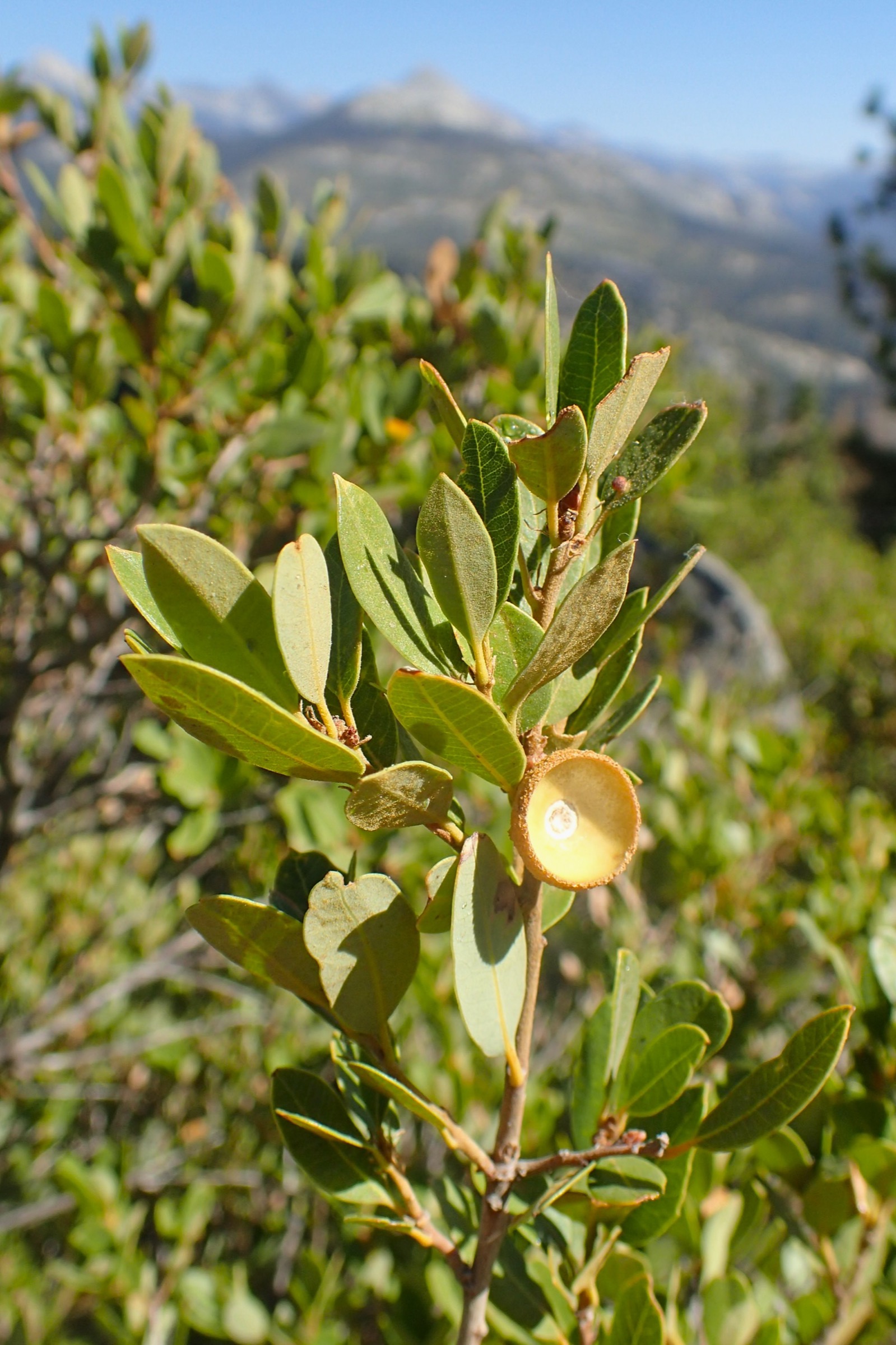 Huckleberry Oak 🌿 Quercus vacciniifolia grows intermixed in the same montane chaparral. Flip a leaf: the chinquapin underside is gold-scaly, huckleberry oak's is dull gray-green, and the oak makes acorns, not spiny burs.
 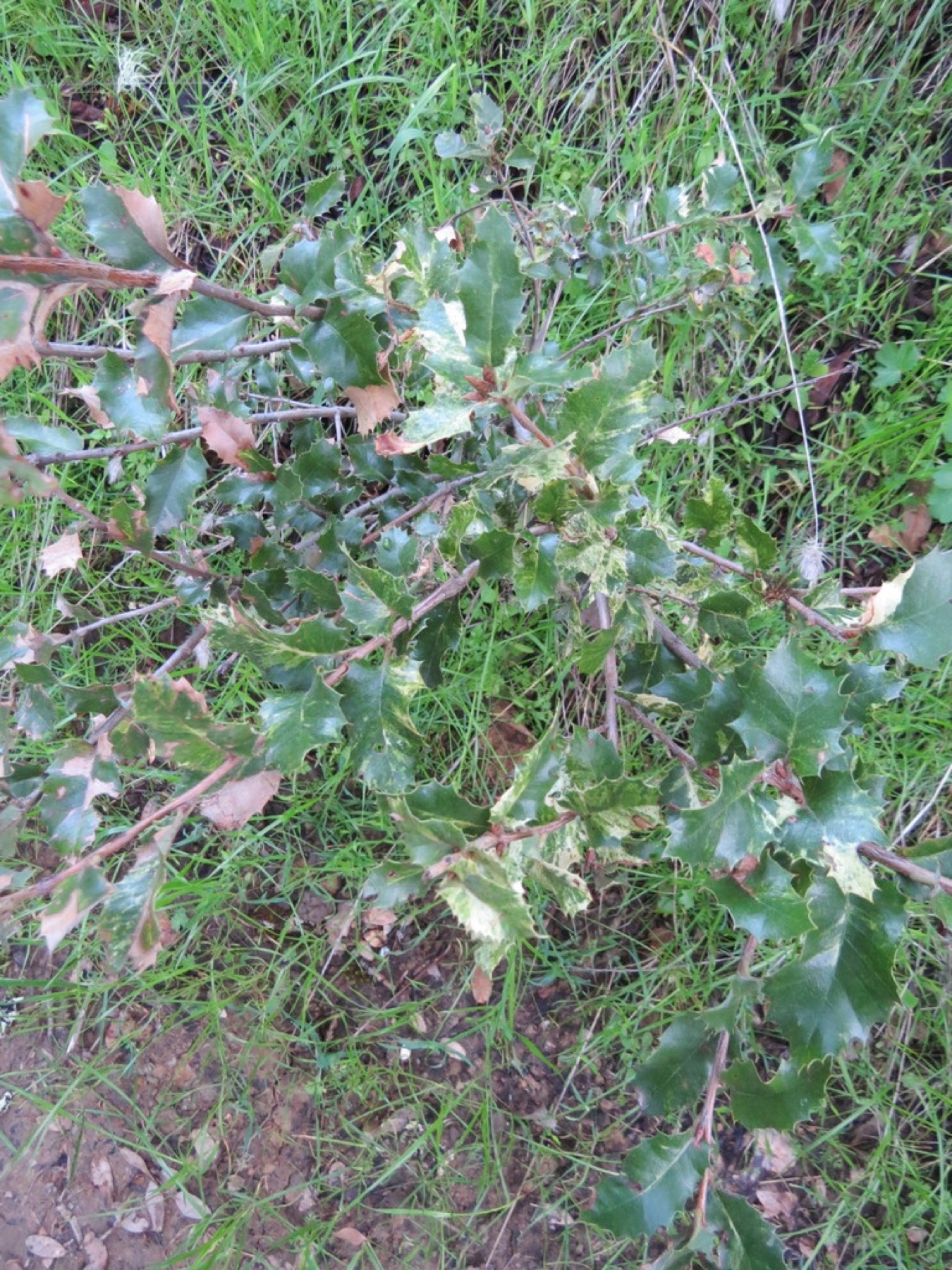 Canyon Live Oak 🌿 Quercus chrysolepis young leaves are also gold-backed, but it is a tree with acorns and often holly-like spine-toothed juvenile leaves, versus the chinquapin's flat, entire-margined leaves.