Canyon Live Oak
Quercus chrysolepis · Fagaceae
- Form
- Tree
- Height
- 20-70 ft
- Sun
- Full Sun
- Water
- Low
- Blooms
- Mar, Apr, May
- Pet toxicity
- Mild
- Habitat
- Montane · Oak Woodland · Chaparral
🌿 California native
Quick facts
- Habitat: Montane, Oak Woodland, canyon slopes
- Form / size: Evergreen oak, often broad and rugged, 20-70 ft
- Sun: Full sun to part shade · Water (established): Low
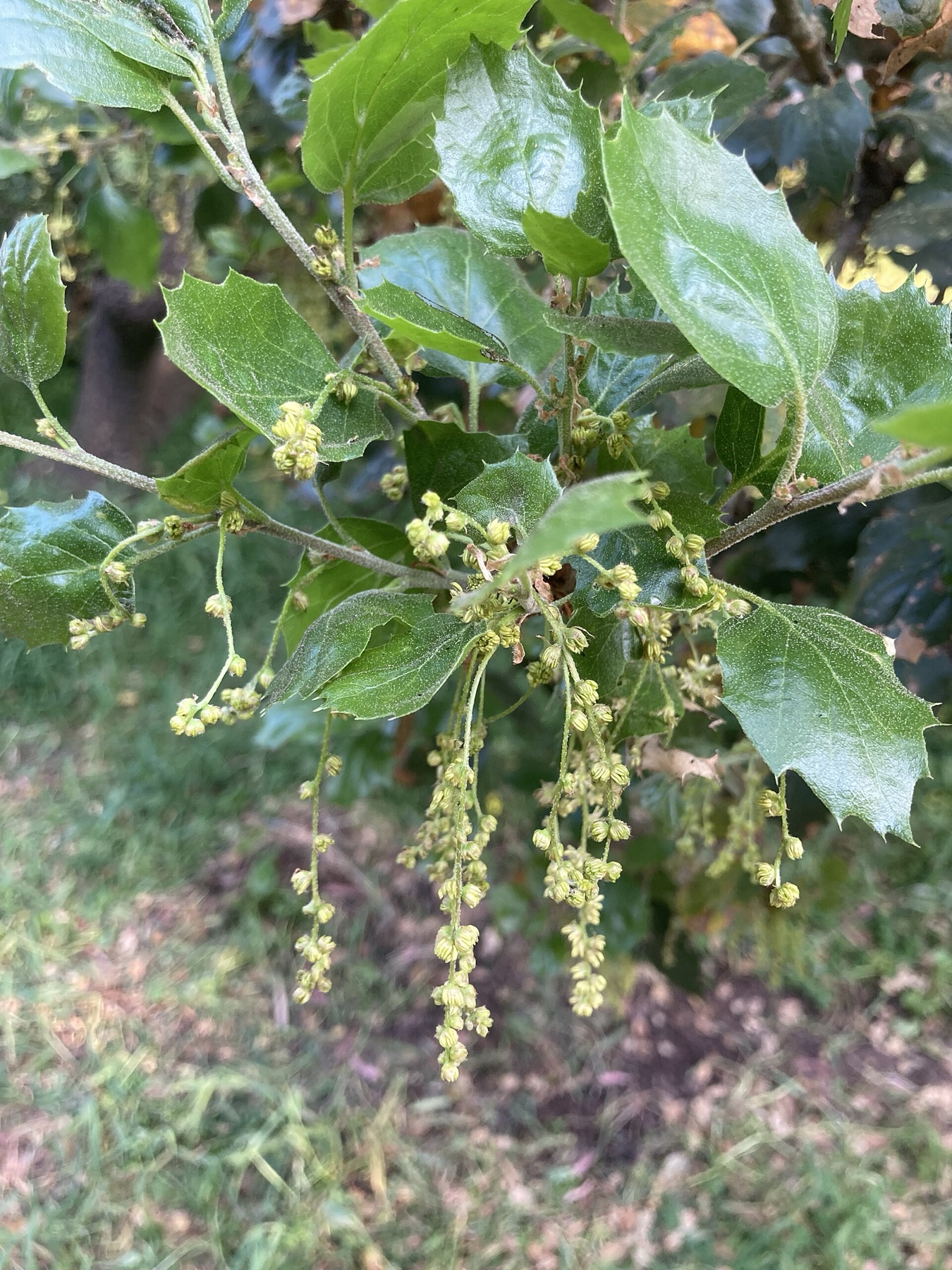
- Blooms: Spring catkins · Pollinator value: Moderate
Description
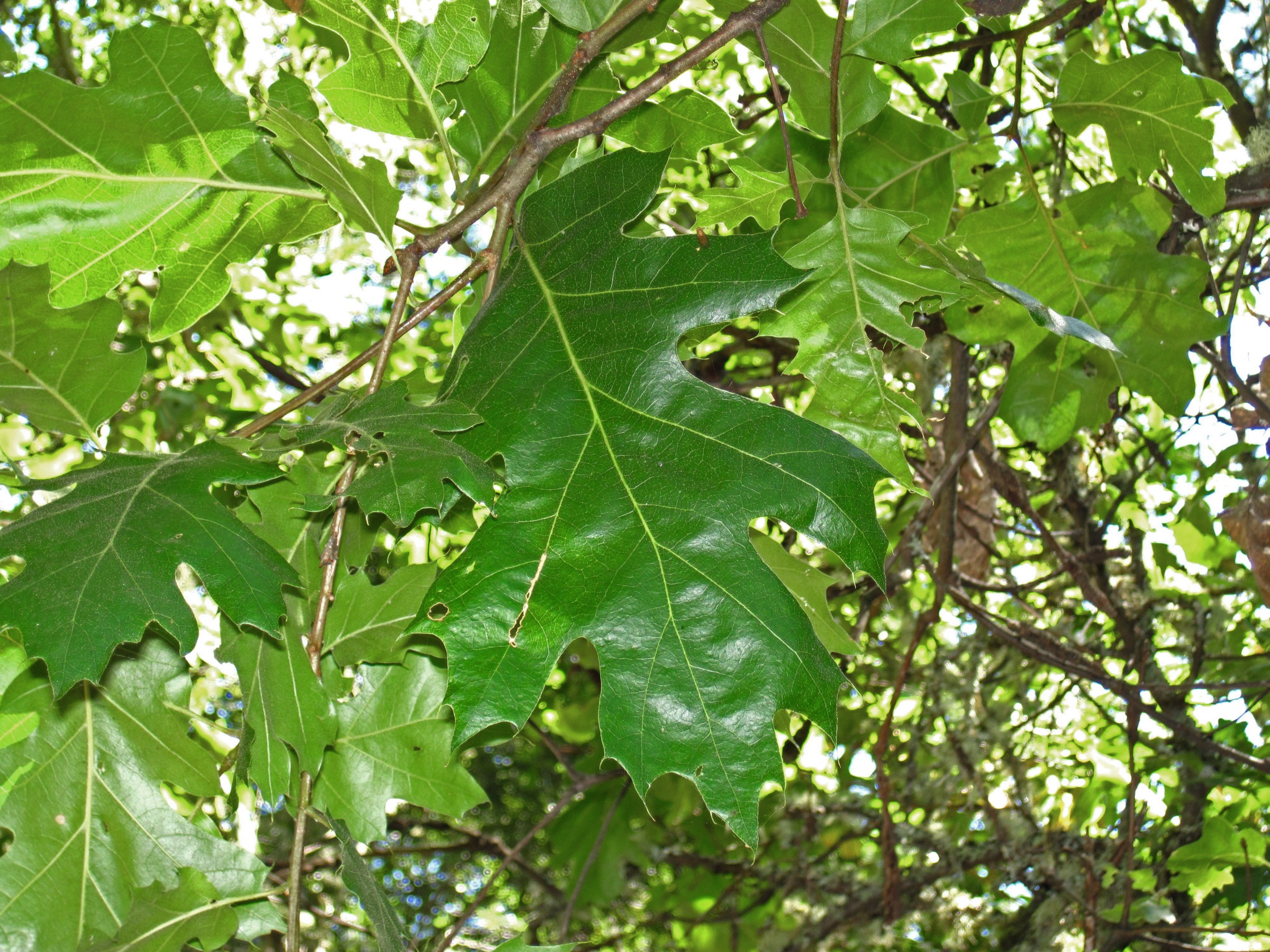
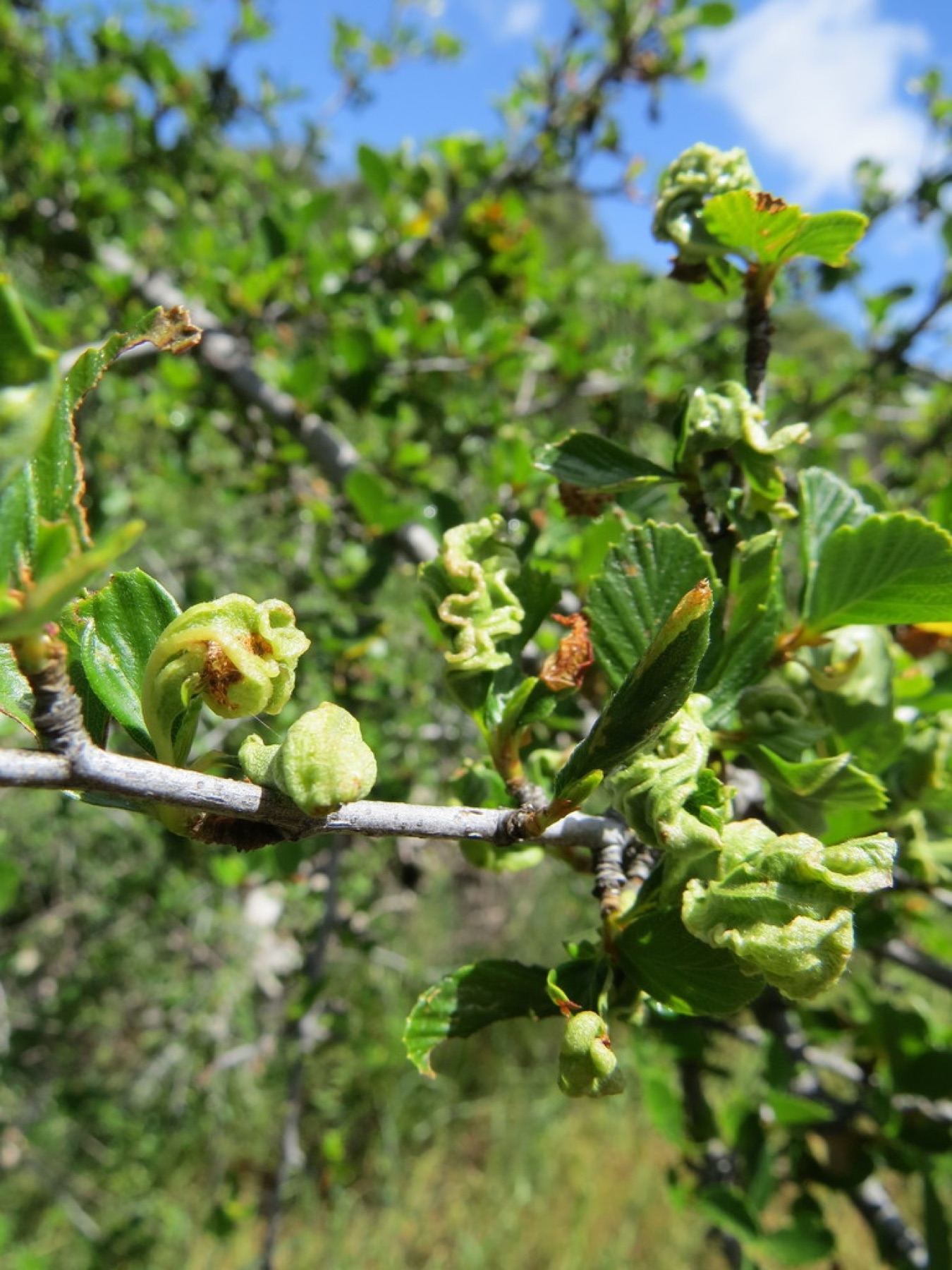
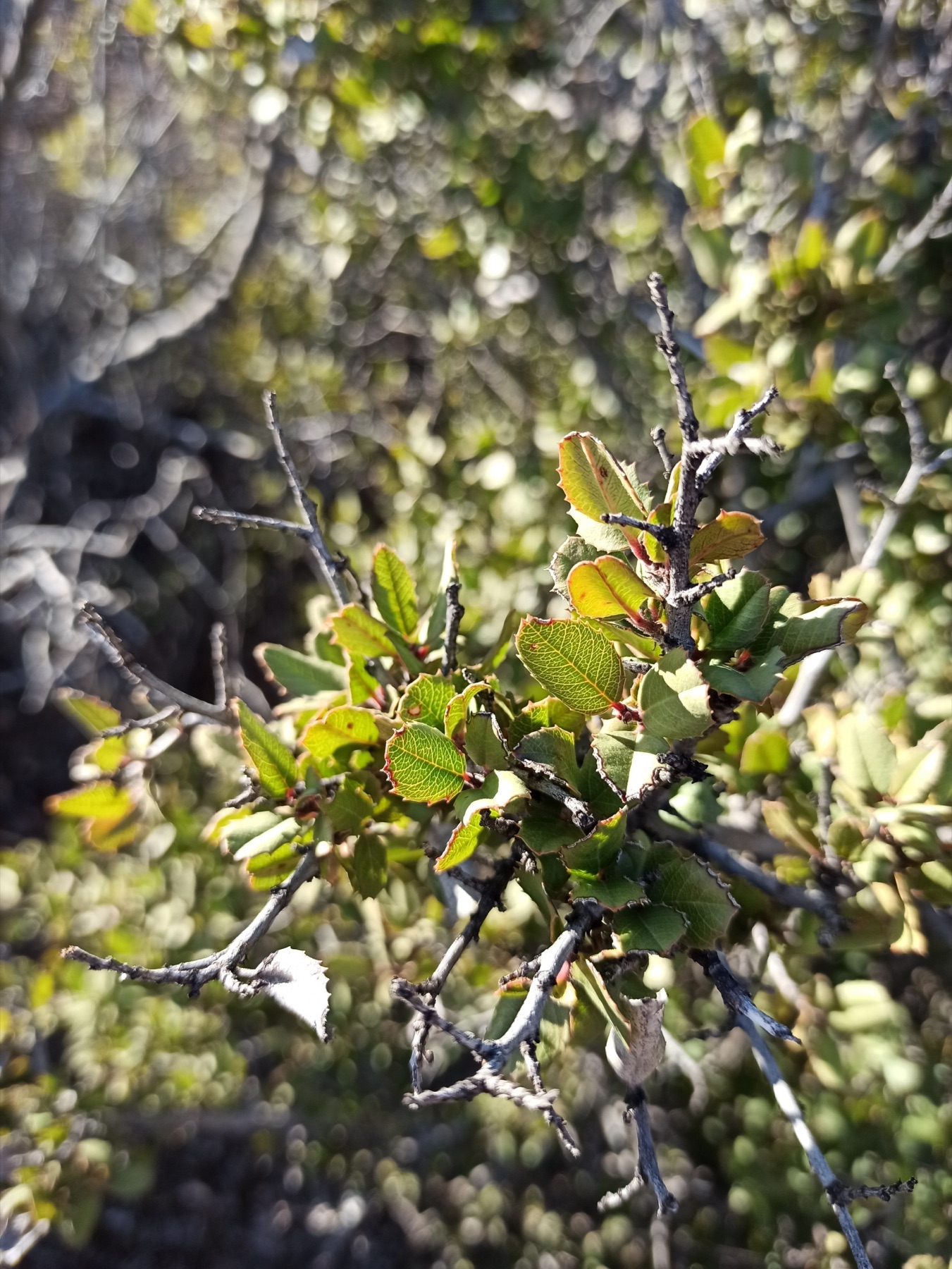
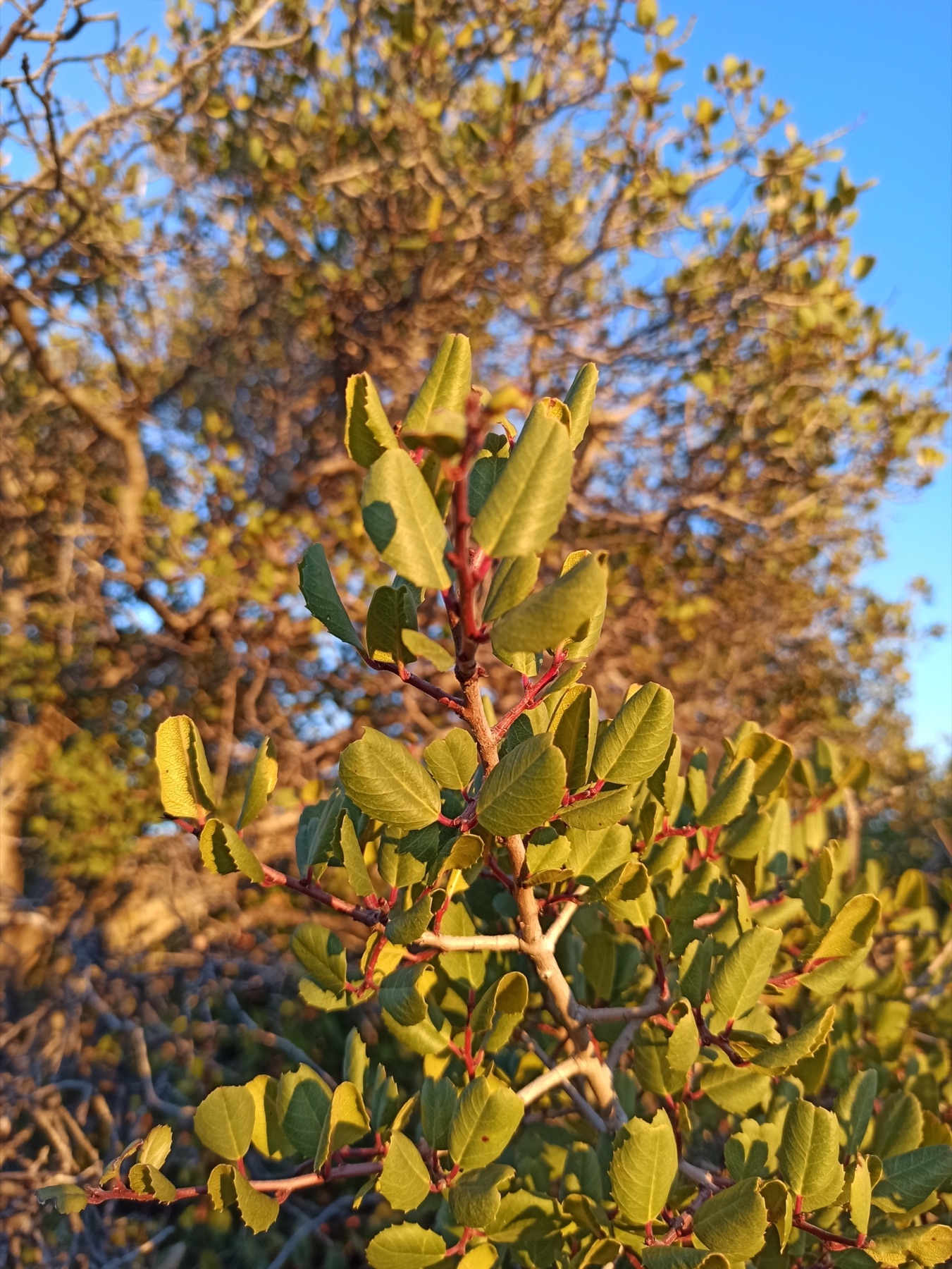
A mountain live oak with leathery evergreen leaves that can be smooth or toothed, dark green above and often paler or golden beneath. Old trees become massive, twisted, and deeply rooted into canyon walls and rocky slopes.
Wildlife & pollinators
Acorns feed birds and mammals; the foliage supports many insects, which in turn feed nesting birds. Mature trees create shade, structure, cavities, and deep duff.
Habitat & range
Common in mountain canyons, steep slopes, north faces, and mixed oak/conifer woodland. It often marks cooler, rockier mountain habitat where Coast Live Oak begins to drop out.
In the garden
A powerful native oak for large inland properties, habitat restoration, and slope stabilization. It is slow and ultimately big, so it belongs where it can become a tree, not a clipped shrub.
Propagation
From fresh acorns, planted soon after collection. Protect seedlings from rodents and browsing. Direct seeding can work where moisture and protection are right.
Where to see it near you
- iNaturalist — observed in Southern California
- Mountain canyons in the San Gabriels, San Bernardinos, San Jacintos, and Palomar region.
Problems
Generally durable. Protect root zones from grading, compaction, and frequent summer water. Oaks can decline when their soil environment changes suddenly.