California Black Oak
Quercus kelloggii · Fagaceae
- Form
- Tree
- Height
- 30–120 ft
- Sun
- Full Sun
- Water
- Low
- Habitat
- Montane · Oak Woodland
🌿 California native
Quick facts
- Habitat: Montane mixed-conifer forest and upper oak woodland, western Sierra
- Form / size: Broad deciduous oak, 30–120 ft
- Sun: Full sun · Water: Low
- The tell: deeply cut, bristle-tipped lobed leaves that color gold in fall; dark, nearly black ridged bark
Description
The great deciduous oak of the Sierra mixed-conifer belt, and the only Sierra oak with strong fall color. Its leaves are large, four to ten inches long, cut into (usually) seven lobes, each tipped with a sharp bristle, the mark of the red-oak group. New spring leaves emerge soft, reddish, and velvety, mature glossy green, and turn yellow to orange-brown in autumn. The bark starts smooth and gray-green and ages to thick, dark, deeply furrowed near-black plates, the source of the name. The acorns are large, oblong, set in a deep scaly cup, and take two seasons to ripen.
Indigenous & historical use
For the Central and Southern Sierra Miwok of the Yosemite region, California black oak acorns, teleli, were the most prized of all. Barrett and Gifford’s 1933 Miwok Material Culture records black oak ranked first among the acorns gathered, pounded, leached, and cooked into meal and mush, and the open black-oak groves that fed people were kept open by deliberate, repeated burning. Where that burning stops, conifers overtop the oaks and shade them out, so the tree’s abundance in the Sierra is partly a record of Indigenous land tending.
Ecological role
Black oak is a keystone mast producer. Its large acorns are a primary fall food for mule deer, acorn woodpeckers, band-tailed pigeons, western gray squirrels, and black bears across the mixed-conifer zone, and the acorn woodpecker’s granary trees are stocked largely from it. Thick mature bark lets the tree survive low-intensity fire, and a top-killed trunk resprouts vigorously from the root crown. As a red-oak species, its acorns take two growing seasons to mature.
Habitat & range
Yellow-pine and mixed-conifer forest and upper oak woodland on the western slope of the Sierra Nevada, roughly 1,000 to 8,000 ft, growing with ponderosa and sugar pine, incense cedar, and Douglas-fir. It reaches the Lake Tahoe basin on the lower west-shore slopes but is essentially absent from the arid Eastern Sierra, so it does not grow around Mammoth Lakes or the Mono Basin.
In the garden
A magnificent large deciduous shade or specimen tree for foothill and montane gardens, with full sun and room for a broad crown. Give it very low summer water once established and keep irrigation away from the trunk, since summer water at the crown invites root rot. It wants well-drained soil and will not thrive in low-desert heat or on the dry east side.
Propagation
From fresh acorns collected in fall; float-test to cull, and sow promptly since acorns die if they dry out. Cold-moist stratify about one to two months, and sow into deep pots to accommodate the fast taproot. It is not reliably grown from cuttings.
Where to see it near you
- iNaturalist — observed across California (map)
- Mixed-conifer forest of the western Sierra, reaching the lower west shore of Lake Tahoe.
Sources
- Calscape · iNaturalist · Wikipedia
- Indigenous use: Barrett, S.A. & E.W. Gifford, Miwok Material Culture (1933), “Oaks and Acorns.”
Commonly confused with
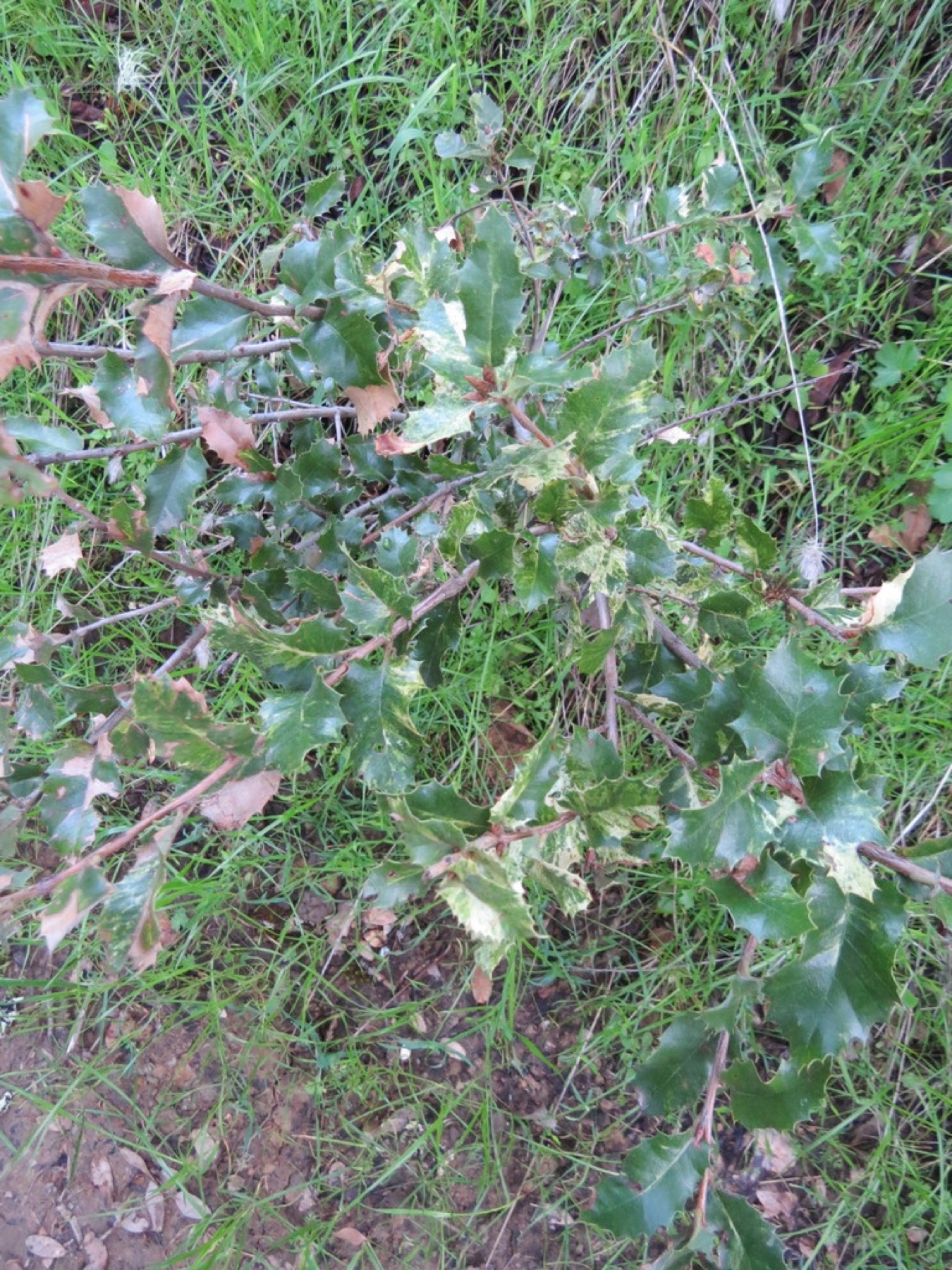 Canyon Live Oak 🌿 Quercus chrysolepis evergreen, with mostly flat, holly-like or entire leaves that are gold-fuzzy beneath when young. Black oak is deciduous with deeply seven-lobed, bristle-tipped leaves.