Cow Parsnip
Heracleum maximum · Apiaceae
- Form
- Perennial
- Height
- 4–8 ft
- Sun
- Part Shade
- Water
- Moderate
- Blooms
- Jun, Jul, Aug
- Pet toxicity
- Mild
🌿 California native
Quick facts
- Habitat: Moist Riparian meadows, streambanks, and open Montane forest
- Form / size: Massive herb, 4–8 ft
- Sun: Part shade · Water: Moderate (moist soil)
- Blooms: Big flat white summer umbels · Pollinator value: High
Description
A giant among wildflowers. Cow parsnip throws up hollow, ridged, densely hairy stems four to eight feet tall, topped by flat white flower umbels the size of a dinner plate, up to a foot across. The leaves are huge as well, divided into three broad, coarsely toothed, maple-like lobes and softly woolly beneath, clasping the stem at an inflated sheathing base. Crush any part and it gives off a strong, pungent celery-parsnip smell. It often forms stout colonies in wet meadows, along streams, and at the foot of avalanche chutes.
Indigenous & historical use
The Kashaya Pomo of northern California, within the plant’s range, peeled and ate the young, tender leaf and flower stalks raw as a spring green. The use is recorded in Kashaya Pomo Plants (Goodrich, Lawson, and Lawson, 1980). The peeling matters: the outer skin and sap carry compounds that can blister skin in sunlight, so this was food that required knowing the plant well.
Ecological role
Cow parsnip is the only Heracleum native to North America, and a keystone summer nectar plant, its broad umbels feeding native bees, hoverflies, and beetles in wet montane meadows. It is a fast perennial of seasonally saturated soils and an early colonizer of avalanche paths, streambanks, and moist meadow edges. Its sap contains furanocoumarins, chemicals that cause blistering only after the skin is exposed to sunlight, a defense that discourages browsing.
Habitat & range
Moist meadows, streambanks, and open forest from foothill woodland up into red fir and subalpine forest through the Sierra Nevada, up to about 10,000 ft. It grows in both the Lake Tahoe basin (Placer and El Dorado counties) and the Mammoth Lakes and Eastern Sierra country (Mono and Inyo counties).
In the garden
A dramatic, architectural plant for the back of a moist border, pond edge, or rain garden in part shade, where its tall bloom stalks have room. It needs consistently moist soil and is not drought-tolerant. Handle it with gloves and long sleeves when cutting, since the sap plus sunlight can burn skin.
Propagation
From fresh seed sown in fall, with a month or two of cold-moist stratification to break dormancy. Established plants can be divided from the crown in early spring. It self-sows where the soil stays moist; move seedlings while young because of the deep taproot.
Where to see it near you
- iNaturalist — observed across California (map)
- Wet meadows and streambanks around Lake Tahoe and the Eastern Sierra (Mammoth-area meadows).
Problems
The sap contains furanocoumarins that cause phytophotodermatitis: skin that contacts the sap and is then exposed to sunlight can blister and darken. Wear gloves and long sleeves when cutting it, and keep the sap off skin.
Sources
- Calscape · iNaturalist · Wikipedia
- Indigenous use: Goodrich, J., C. Lawson & V.P. Lawson, Kashaya Pomo Plants (1980).
Commonly confused with
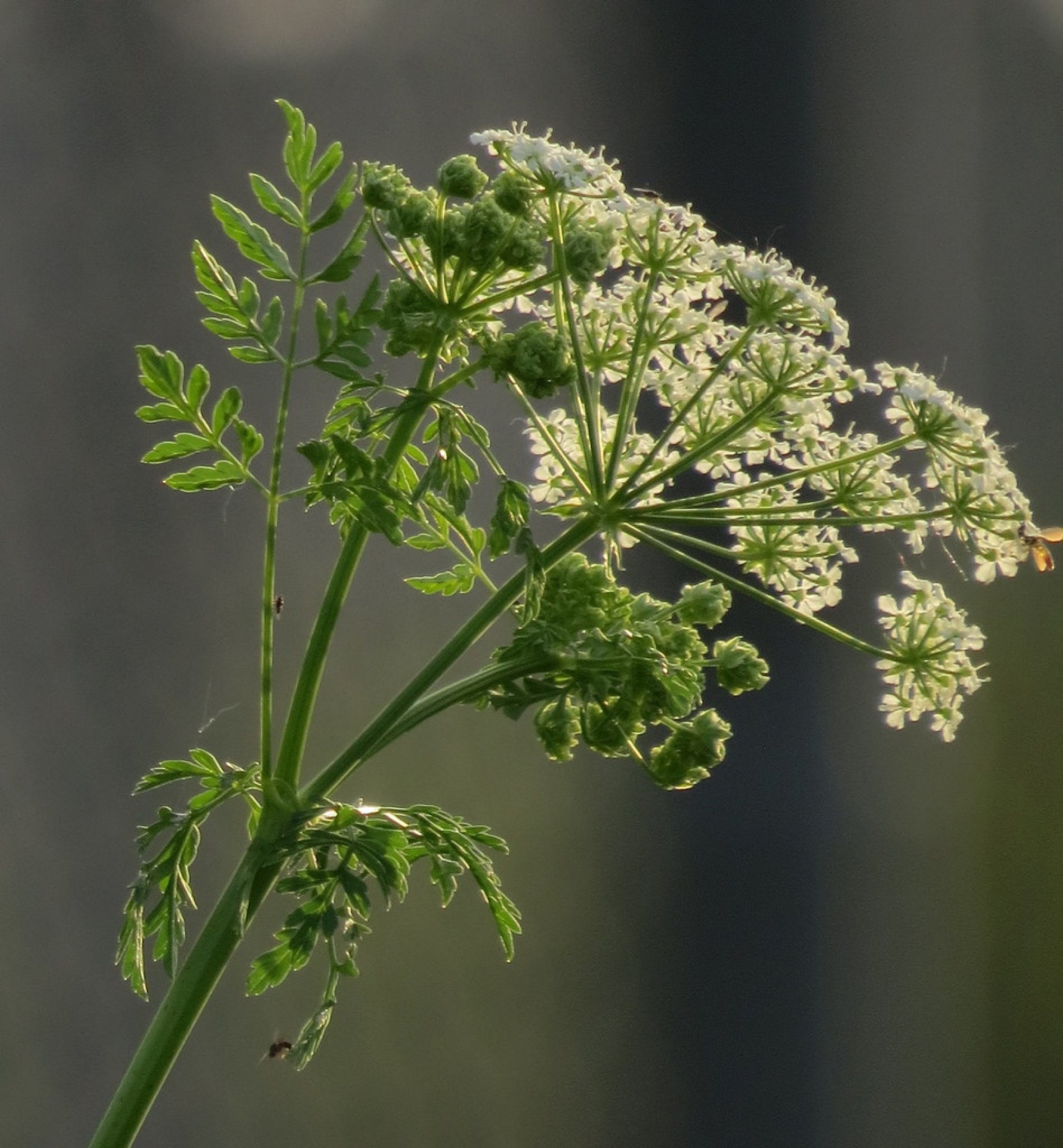 Poison Hemlock 🚫⚠️ Conium maculatum deadly, with purple-spotted, hairless stems and lacy, fern-like leaves. Cow parsnip has hairy stems and broad, three-lobed, maple-like leaves. Learn this pair cold before handling either.