Sierra Columbine
Aquilegia pubescens · Ranunculaceae
- Form
- Perennial
- Height
- 1–3 ft
- Sun
- Part Shade
- Water
- Moderate
- Blooms
- Jun, Jul, Aug
- Pet toxicity
- Mild
🌿 California native
Quick facts
- Habitat: Cool Subalpine slopes, cliffs, and moist high-country pockets
- Form / size: Perennial wildflower, 1–3 ft
- Sun: Light shade to sun · Water: Moderate
- Blooms: Summer pale columbine flowers · Pollinator value: Moderate
Description
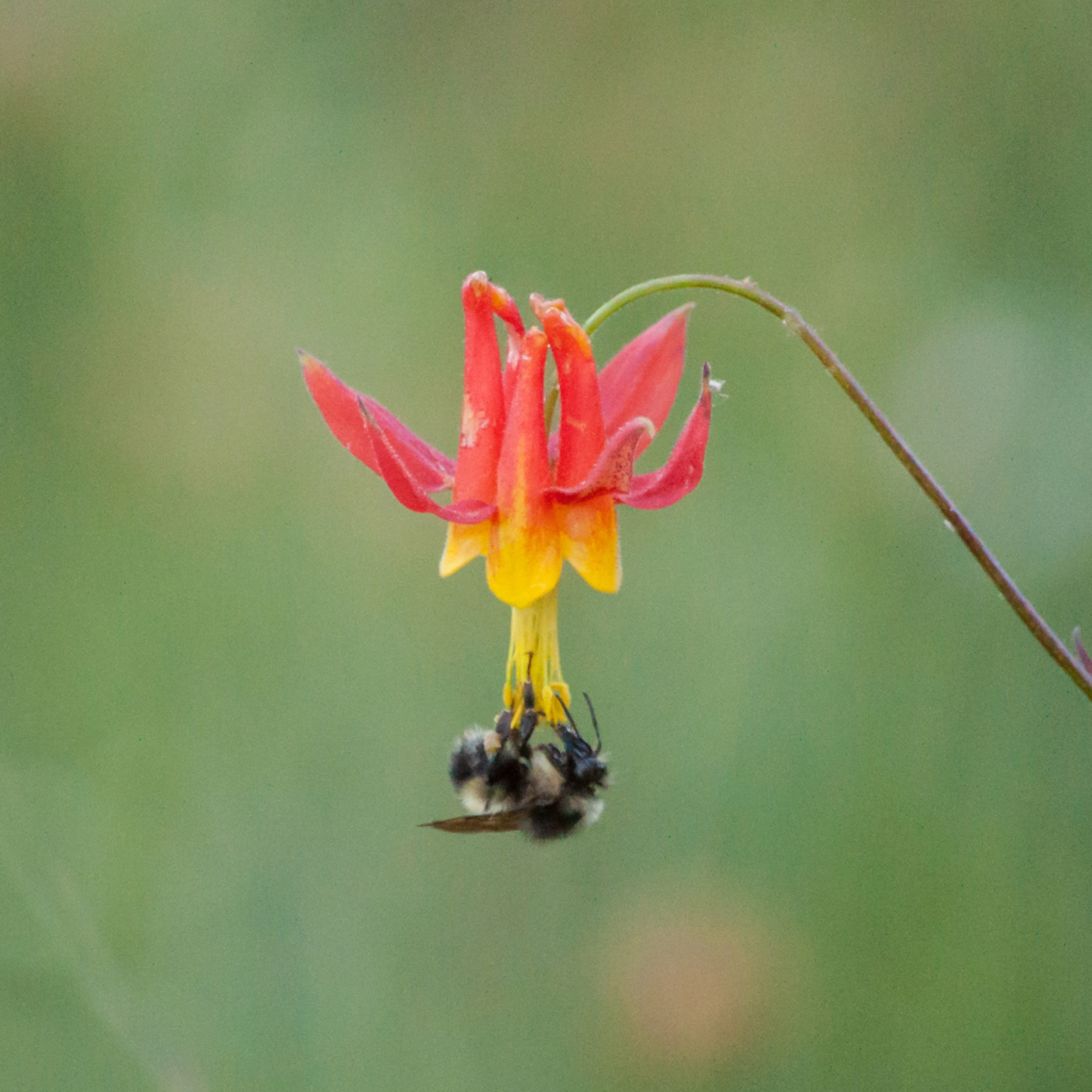
A high-country columbine with pale cream to whitish flowers and long spurs, usually growing in cooler, rockier, or more alpine-feeling places than the red-and-yellow western columbine. It has a cleaner, moonlit look compared with its brighter cousin.
Wildlife & pollinators
Often associated with long-tongued pollinators; also visited by bees.
Habitat & range
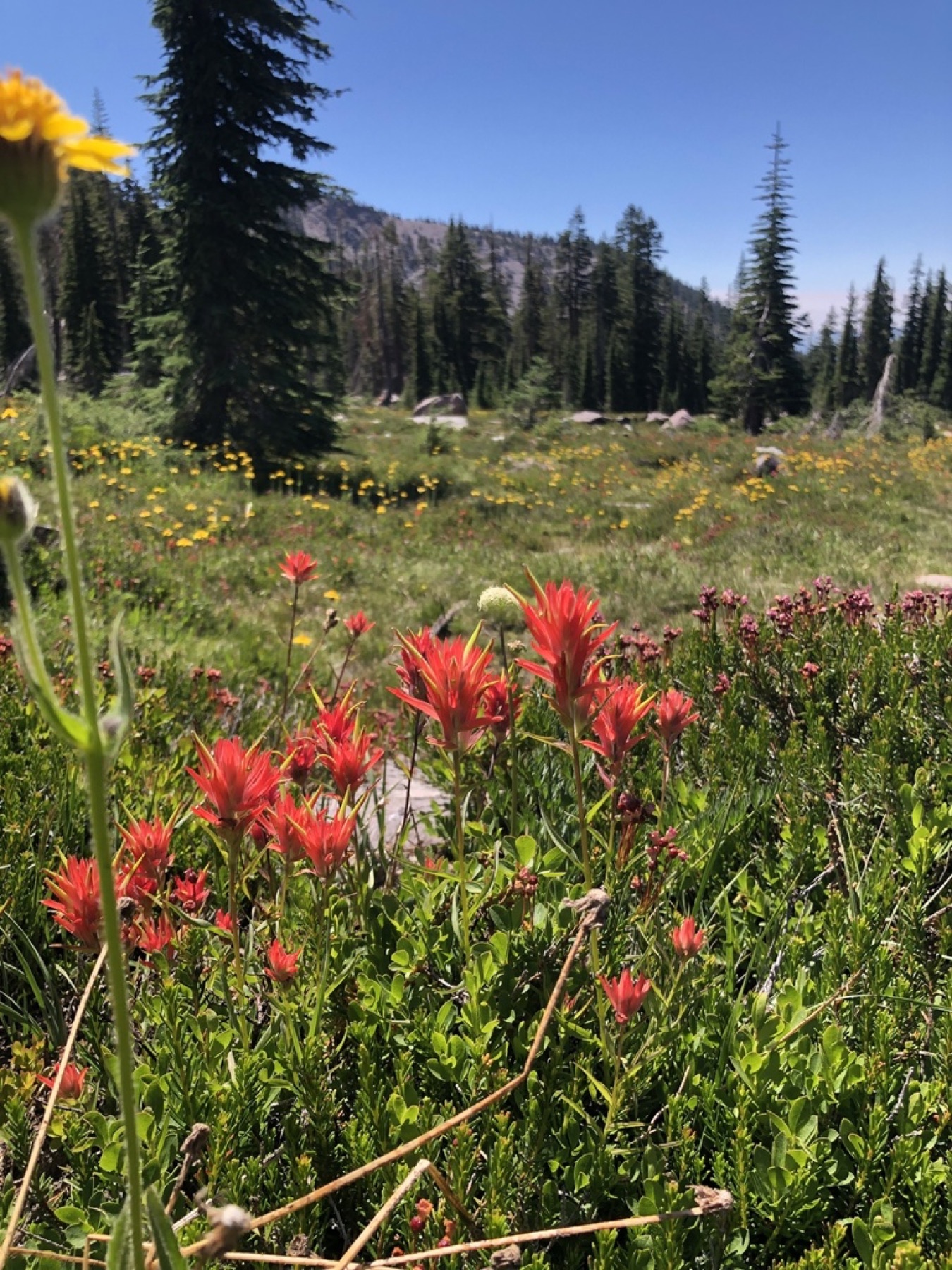
Higher Sierra ledges, talus edges, moist subalpine ground, and cool rocky drainages, including Mammoth high-country terrain.
In the garden
More difficult than Western Columbine, wanting cool roots, drainage, and mountain conditions.
Propagation
From seed, usually with cold conditions and patience.
Where to see it near you
- iNaturalist — observed across California (map)
- Best in cooler Mammoth-adjacent high-country settings of the Eastern Sierra.