Mountain Bluebells
Mertensia ciliata · Boraginaceae
- Form
- Perennial
- Height
- 1–4 ft
- Sun
- Part Shade
- Water
- High
- Blooms
- Jun, Jul, Aug
🌿 California native
Quick facts
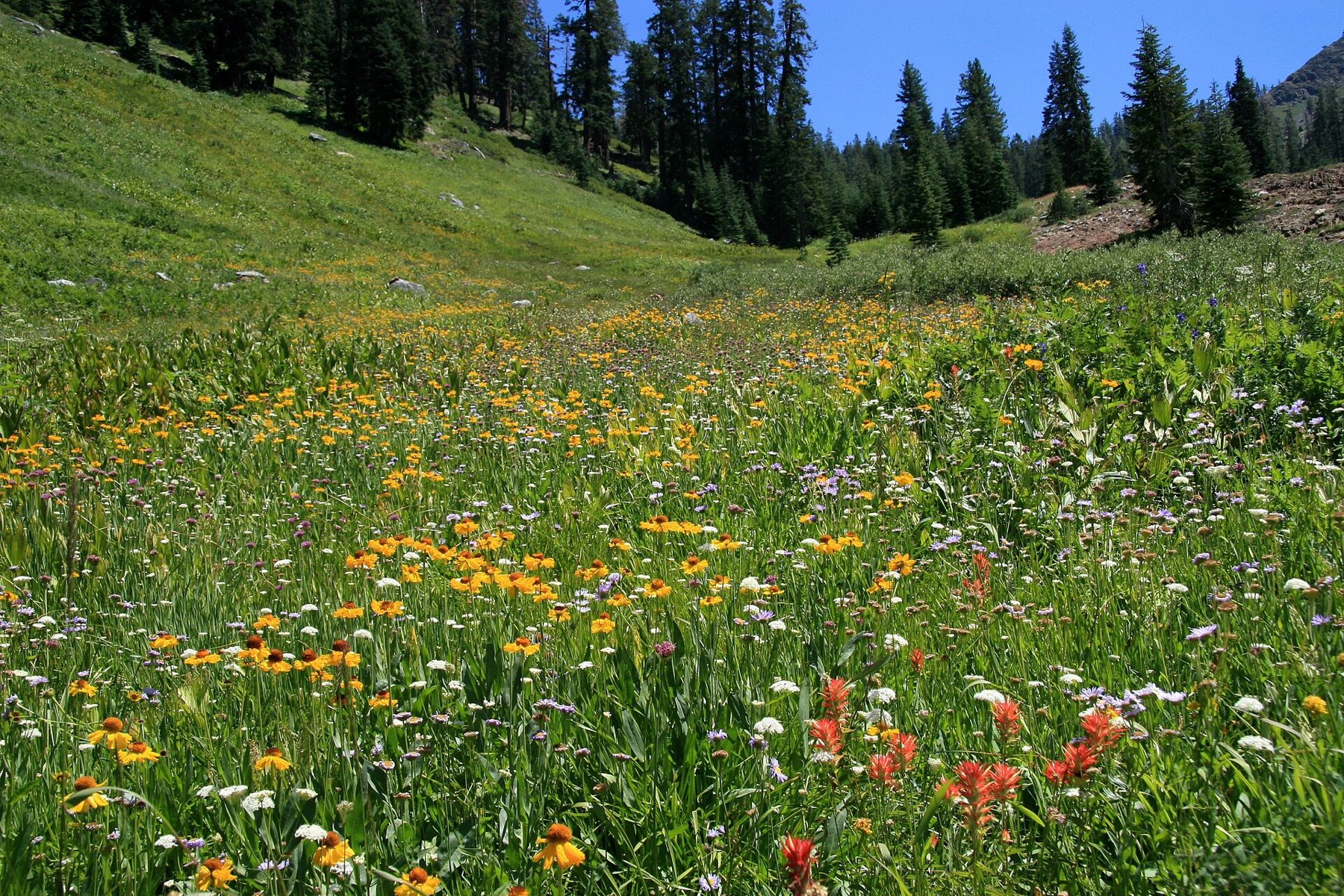
- Habitat: Cold streamsides, seeps, and wet Subalpine meadows
- Form / size: Lush streamside perennial, 1–4 ft
- Sun: Part shade · Water: High (cold running water)
- Blooms: Nodding blue bells with pink buds, summer · Pollinator value: High
Description
A soft, lush, blue-flowered herb of cold wet mountain ground. Clumps of erect leafy stems, often more than three feet tall, rise from a branching rootstock and can carpet a streambank. The leaves are oval to lance-shaped, prominently veined, mostly hairless and slightly waxy, with finely fringed margins that give the plant its species name (ciliata). The flowers hang in nodding clusters of tubular bells about a half-inch to an inch long, and the mix of colors on one cluster is characteristic: the buds and aging flowers flush pink, while the fresh ones open sky-blue.
Ecological role
Mountain bluebells is a plant of perennial cold water, a reliable sign of a stream, seep, or wet subalpine meadow that stays wet through the summer. Its nodding tubular flowers are pollinated by bumblebees and visited by hummingbirds, and Calscape lists it as host support for checkerspot butterflies. Across its montane-to-alpine band it can carpet large stretches of meadow and streamside, part of the lush green ribbon that follows Sierra snowmelt water downhill.
Habitat & range
Streamsides, seeps, and wet subalpine meadows the length of the Sierra Nevada, roughly 4,000 to 12,000 ft; California plants are the variety stomatechoides. It grows in the moist meadows and creek banks of the Lake Tahoe basin and east into the wet drainages of the White Mountains above the Owens Valley.
In the garden
For consistently moist, cool, well-drained soil at a pond edge, bog garden, or stream margin in part shade; it will not tolerate drought or heavy clay. It does best in cooler high-elevation or coastal gardens and struggles through hot, dry lowland summers. Keep the soil damp through establishment.
Propagation
From seed, which generally needs cold-moist stratification (winter chilling) to break dormancy, mimicking snowmelt. Established clumps can be divided in spring while the soil is cool and wet. Keep young plants continuously moist.
Where to see it near you
- iNaturalist — observed across California (map)
- Cold streamsides and wet meadows around Lake Tahoe and the high drainages of the eastern ranges.