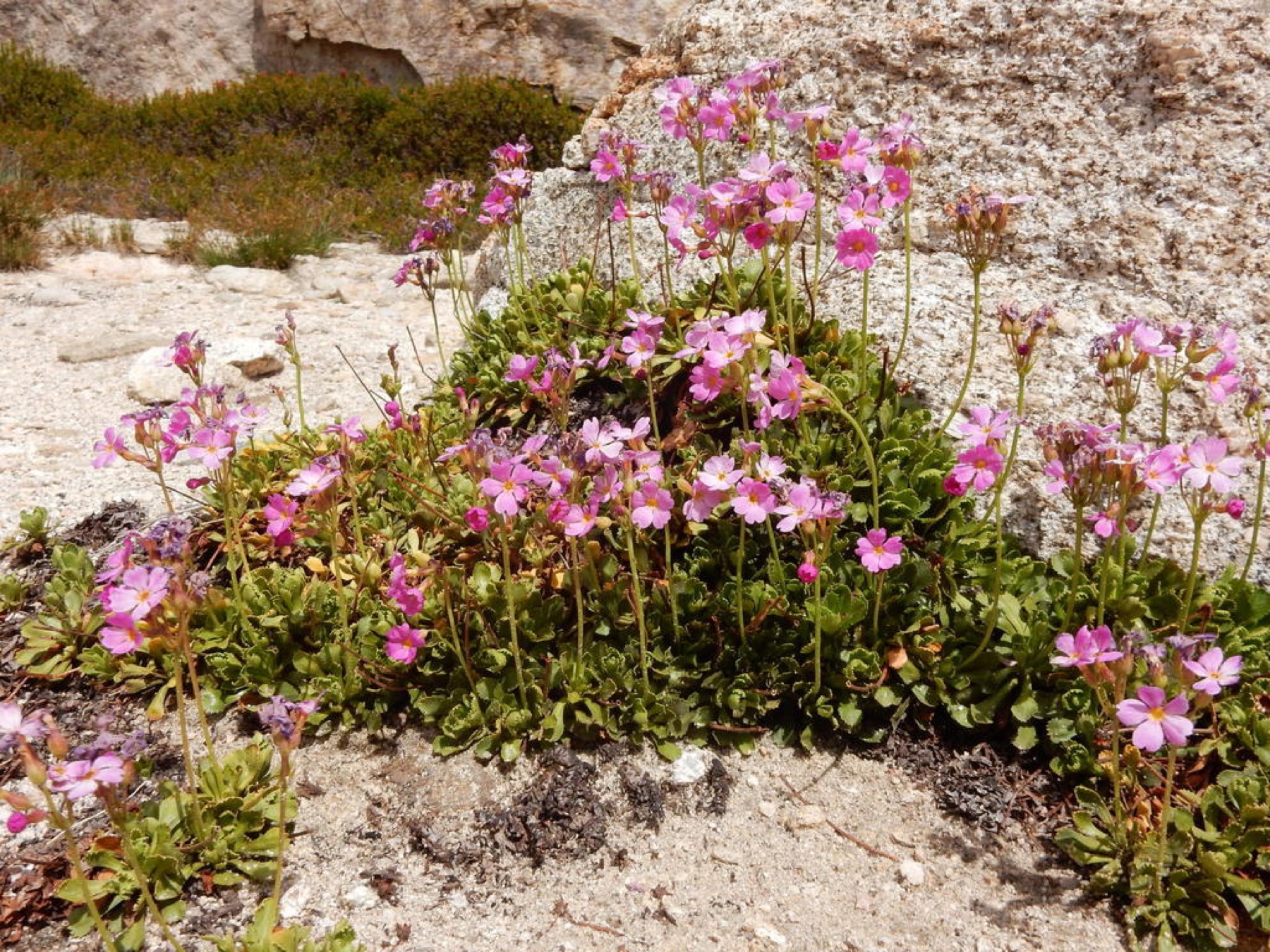
Giant Red Paintbrush
Castilleja miniata · Orobanchaceae
- Form
- Perennial
- Height
- 1–3 ft
- Sun
- Full Sun
- Water
- High
- Blooms
- Jun, Jul, Aug
🌿 California native
Quick facts
- Habitat: Wet Montane and Subalpine meadows, streambanks, and moist forest openings
- Form / size: Erect wet-meadow perennial, 1–3 ft
- Sun: Full sun · Water: High
- Blooms: Scarlet summer “brushes” · Pollinator value: High
Description
The scarlet paintbrush of Sierra wet meadows, brushing knee-high spikes of vivid red across the green. As with all paintbrushes, the color is not in the petals but in the bracts: broad, finger-lobed, and bright scarlet to orange-red. The true flowers are slender greenish tubes tipped in red that poke just past the bracts. The stems are mostly unbranched and leafy, the leaves lance-linear, flat, green, and smooth-margined (the uppermost sometimes with a pair of small side lobes). It grows in wet meadows, along streambanks, and in moist forest openings, which separates it from the drier-country paintbrushes.
Indigenous & historical use
The Ramah Navajo of New Mexico, within the plant’s interior range, used giant red paintbrush as a protective ceremonial medicine, taken as a drink and applied as a lotion. The use is recorded by Paul Vestal in his 1952 Ethnobotany of the Ramah Navaho.
Ecological role
Like other paintbrushes, this is a hemiparasite: it photosynthesizes but also taps the roots of neighboring plants, often willows and meadow perennials, which is part of why it is so hard to transplant. The long red tubular flowers are a classic hummingbird design and a major nectar source for migrating and breeding hummingbirds in Sierra meadows. It is also a larval host for checkerspot butterflies, whose caterpillars pick up defensive compounds from the paintbrush foliage.
Habitat & range
Wet mountain meadows, streambanks, and moist openings from the montane to the subalpine zone, roughly 4,000 to 11,000 ft, common throughout the Sierra Nevada. It is well documented in the Mammoth Lakes and Eastern Sierra meadows of Mono and Inyo counties, and it ranges north through the Sierra, including the Tahoe region.
In the garden
A meadow or streamside plant, not a dry-garden one; it needs consistently moist, well-drained soil and full sun. Because it parasitizes roots, it establishes best sown alongside a compatible host such as a native bunchgrass or a perennial. As an isolated specimen it is short-lived and finicky, so it belongs in a native meadow or pond-edge planting.
Propagation
From seed, surface-sown onto moist soil; cold-moist stratification can improve germination. Sow it near or with an established host plant so the seedling can attach early. Division and cuttings are unreliable given the root-parasitic habit, so seeding alongside a host is the standard method.
Where to see it near you
- iNaturalist — observed across California (map)
- Wet meadows of the Eastern Sierra (the Mammoth and Mono Basin meadows) and streamside openings around Lake Tahoe.
Sources
- Calscape · iNaturalist · Wikipedia
- Indigenous use: Vestal, P.A., Ethnobotany of the Ramah Navaho (1952).
Commonly confused with
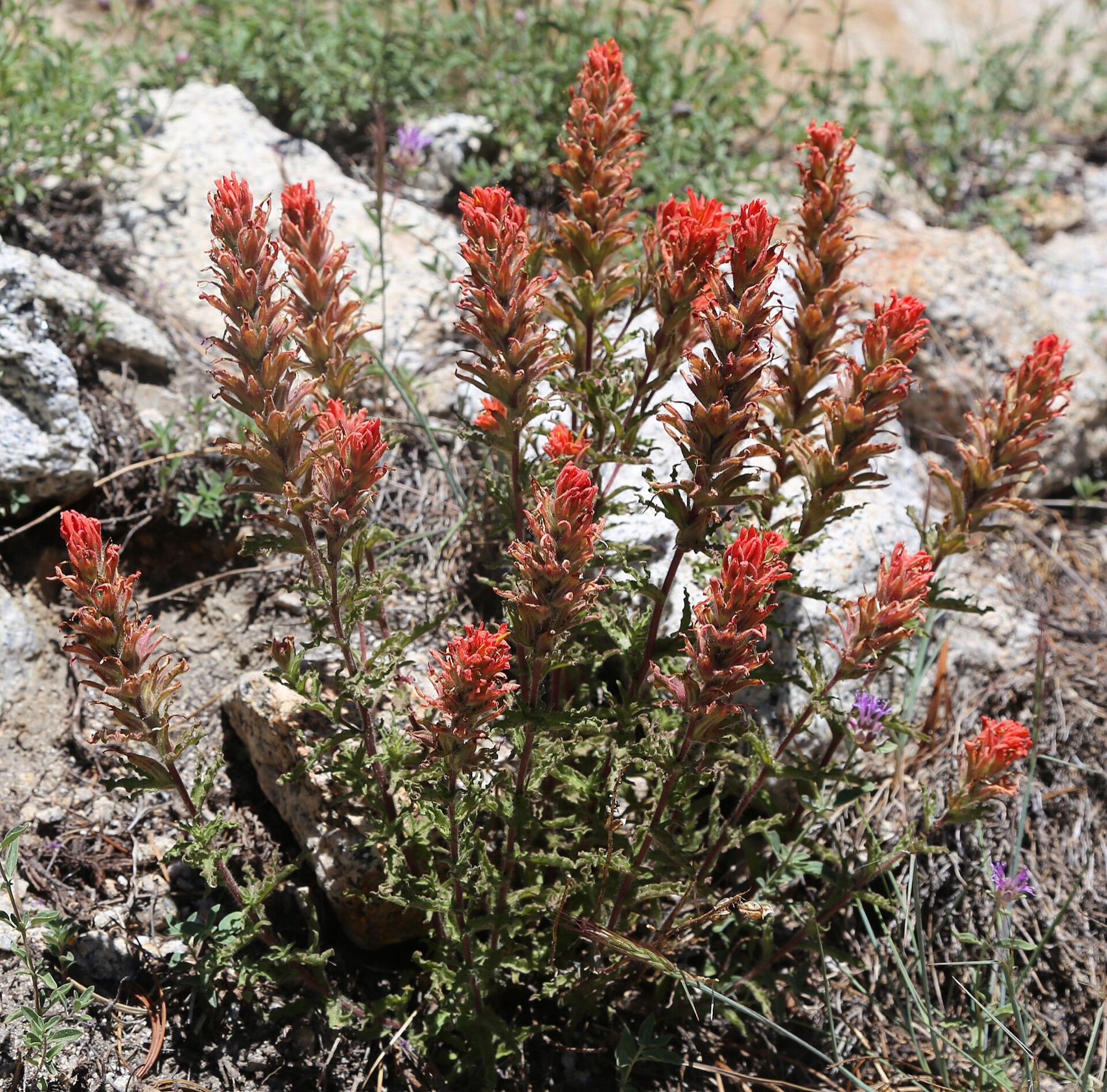 Wavyleaf Paintbrush 🌿 Castilleja applegatei its leaves have wavy, curled margins and are sticky, and it grows on dry rocky slopes. This species has flat, smooth leaves in wet meadows.
 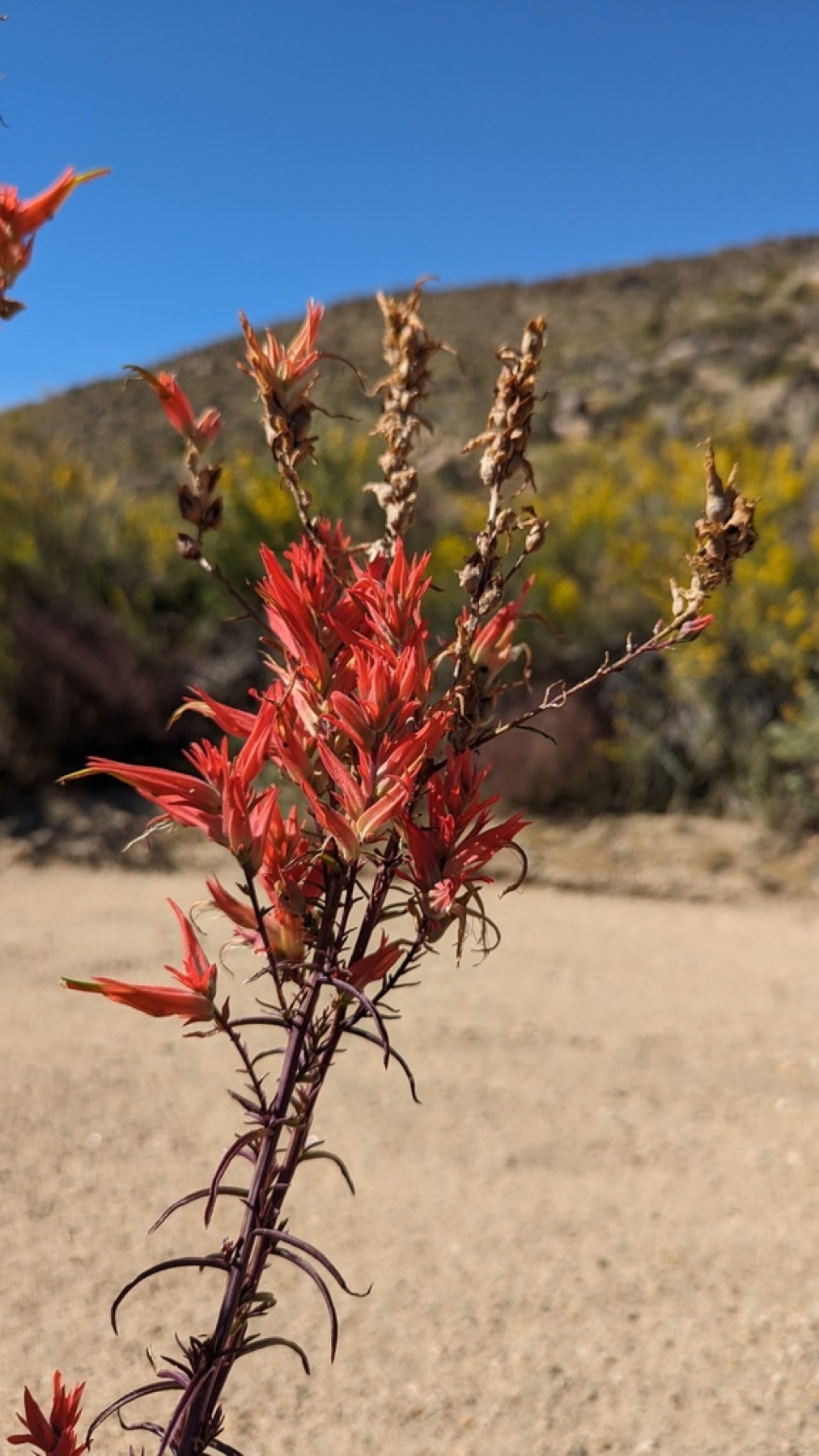 Wyoming Paintbrush 🌿 Castilleja linariifolia narrow, threadlike leaves whose upper ones split into three lobes, a plant of the drier sagebrush belt.
 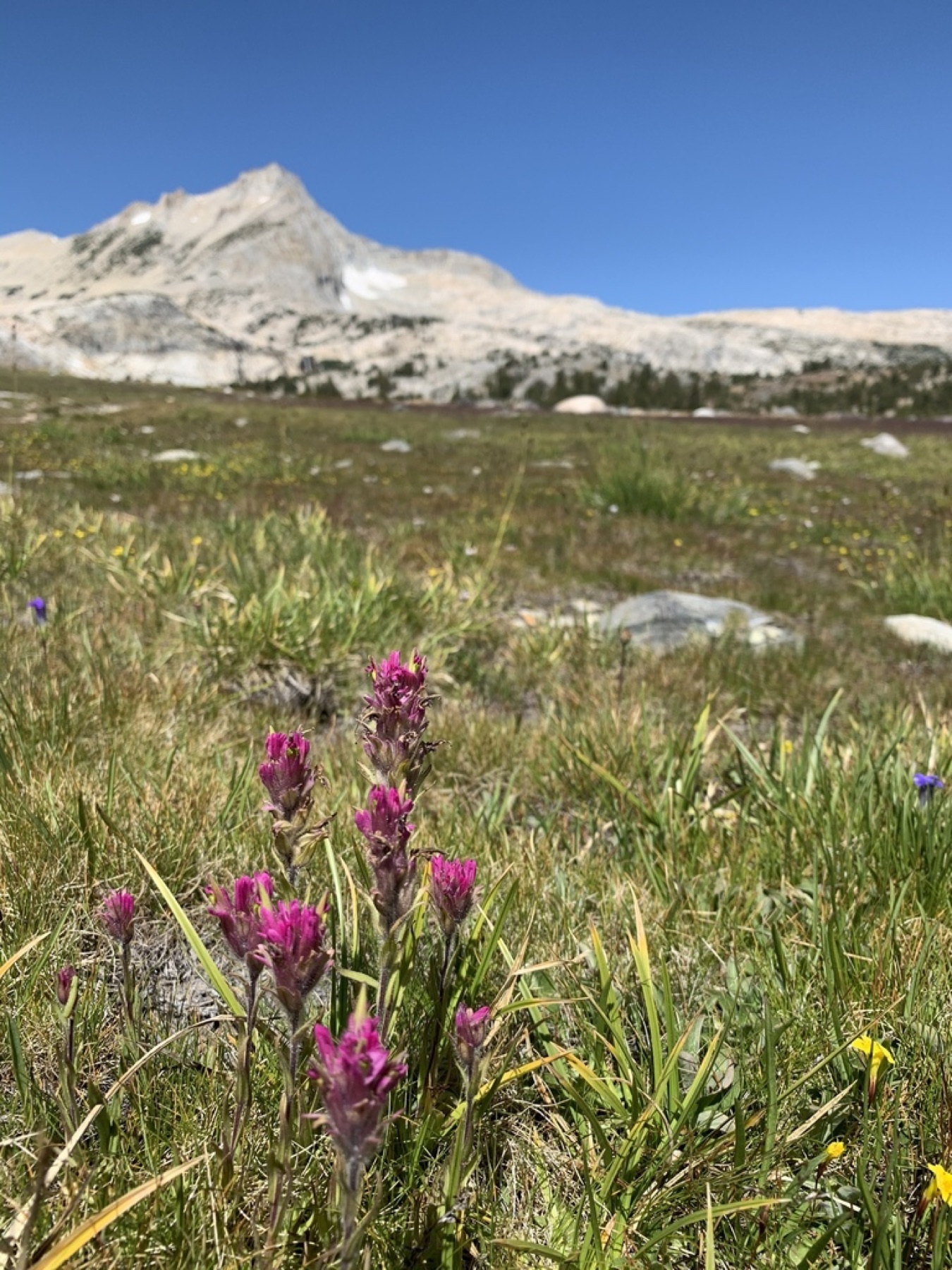 Lemmon's Paintbrush 🌿 Castilleja lemmonii a dwarf subalpine-meadow species usually under 8 inches with rose-purple, not scarlet, bracts.