Lodgepole Pine
Pinus contorta · Pinaceae
- Form
- Tree
- Height
- 40–80 ft
- Sun
- Full Sun
- Water
- Moderate
🌿 California native
Quick facts
- Habitat: Upper Montane and Subalpine (Mammoth, June Lake basins, lake margins)
- Form / size: Slender conifer, 40–80 ft
- Sun: Full sun · Water: Moderate (often near water/snowmelt)
- The tell: needles in bundles of two; thin, flaky bark
Description
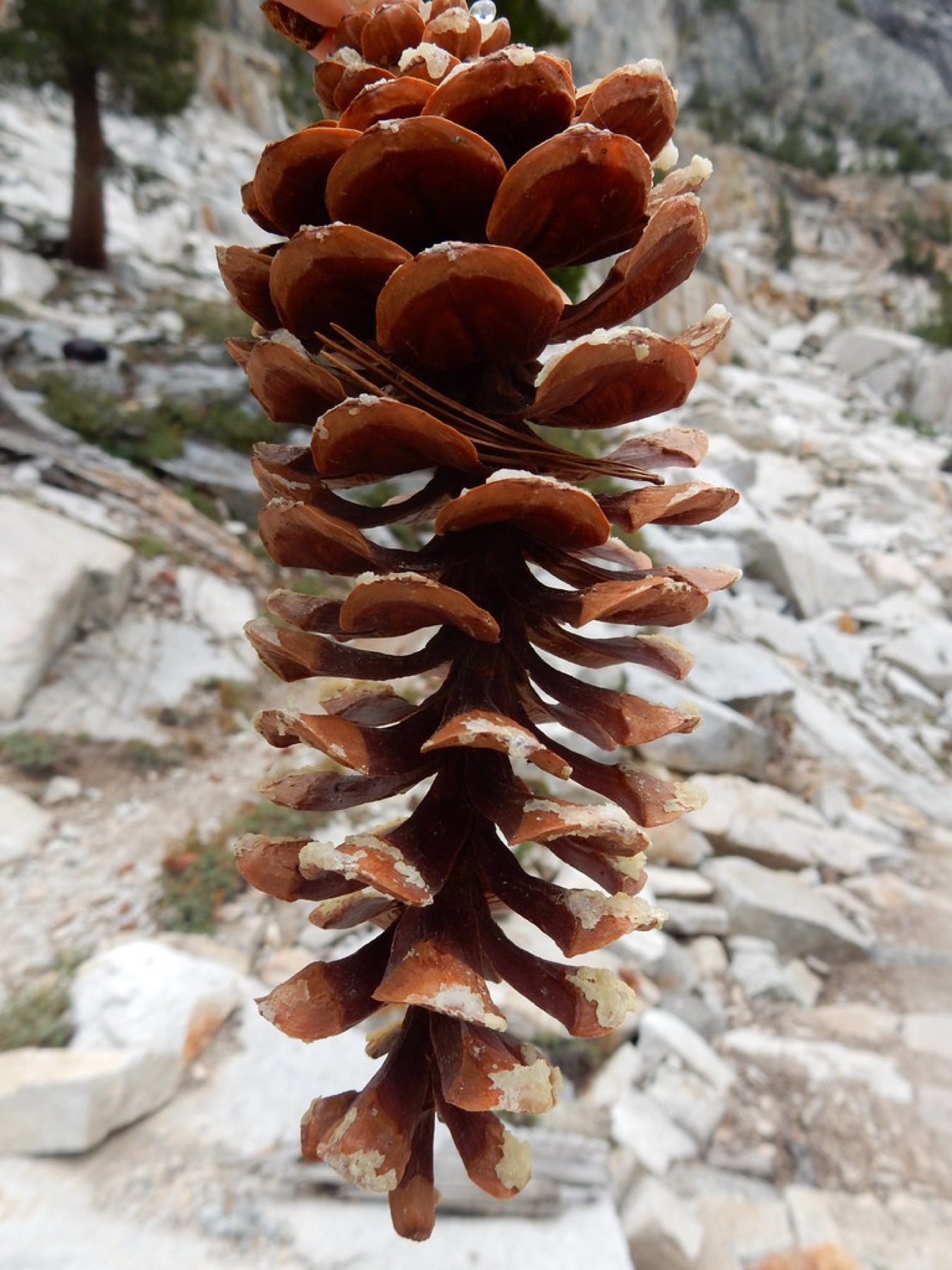
The slim, straight pine that rings Sierra lakes and meadows — needles in bundles of two (unusual among our pines, most of which have three or five), small egg-shaped cones, and thin, finely scaly bark. Forms dense, even-aged stands, especially after fire or around wet basins. The defining tree of the Mammoth/June Lake lake country.
Wildlife & pollinators
Wind-pollinated; seeds feed squirrels and birds; dense stands shelter wildlife.
Habitat & range
Upper montane to Subalpine zones of the Sierra and high Cascades; abundant around lakes, meadows, and snowmelt basins.
Propagation
From seed; cold-moist stratify. Establishes readily in disturbed/burned ground (a pioneer).
Where to see it near you
- iNaturalist — observed across California (map)
- Ringing the lakes of the Eastern Sierra.
In the landscape
A clean, narrow conifer for cold mountain gardens with adequate moisture. Full sun; tolerates wet feet better than most pines.