Pussypaws
Calyptridium umbellatum · Montiaceae
- Form
- Perennial
- Height
- 2–6 in
- Sun
- Full Sun
- Water
- Low
- Blooms
- Jun, Jul, Aug
🌿 California native
Quick facts
- Habitat: Open granitic sand and gravel, Montane to Subalpine fell-fields
- Form / size: Ground-hugging rosette, 2–6 in
- Sun: Full sun · Water: Low
- The tell: flat rosette of fleshy leaves with radiating stems, each tipped by a papery pink “paw”
Description
A flat little plant of bare Sierra granite. From one or more basal rosettes of thick, fleshy, spoon-shaped leaves (often reddish-tinged), leafless flowering stems radiate outward, lying against the ground and turning up at the tips. Each stem ends in a dense, spherical “paw” an inch or two wide of rounded, papery sepals in pink to white. The individual flowers are minute; the pom-pom look comes entirely from the crowded, translucent sepals. The whole plant hugs the grit and rarely stands more than a few inches high. It is also treated under the name Cistanthe umbellata.
Ecological role
Pussypaws is a pioneer of harsh, open, fast-draining granitic sand and alpine fell-fields where little else can hold on, tolerating full sun and thin soils. Its prostrate flowering stems are thermally responsive: they lie flat when the ground is cool and lift off the surface during the midday heat, a movement tied to soil-surface temperature that also helps the wind carry the fine seed on warm afternoons. Small native bees and flies work the papery flowers, and ants and seed-eating birds gather and move the seed.
Habitat & range
Open granitic sand, gravel, and rocky flats from the montane zone to alpine fell-fields, common the length of the Sierra Nevada, roughly 5,000 to 12,000 ft. It grows on the Tahoe-basin granite and in the Desolation Wilderness, and through the Mammoth Lakes high country and the surrounding wildernesses.
In the garden
A rock-garden or trough plant for full sun and sharp, gritty drainage, best treated as a lean-soil alpine rather than a border perennial. Give it very little summer water once established, since rot in rich or wet ground is the main risk. It does best on granitic sand, decomposed granite, or gravel scree that mimics its wild footing.
Propagation
From seed surface-sown on a fast-draining mix and given cold-moist stratification to mimic snowmelt germination. The short-stemmed rosettes resent disturbance, so start it in place or in deep containers and transplant young. It is not usually grown from cuttings.
Where to see it near you
- iNaturalist — observed across California (map)
- Open granite around Lake Tahoe and the high country of the Eastern Sierra (Mammoth-area domes and passes).
Sources
Commonly confused with
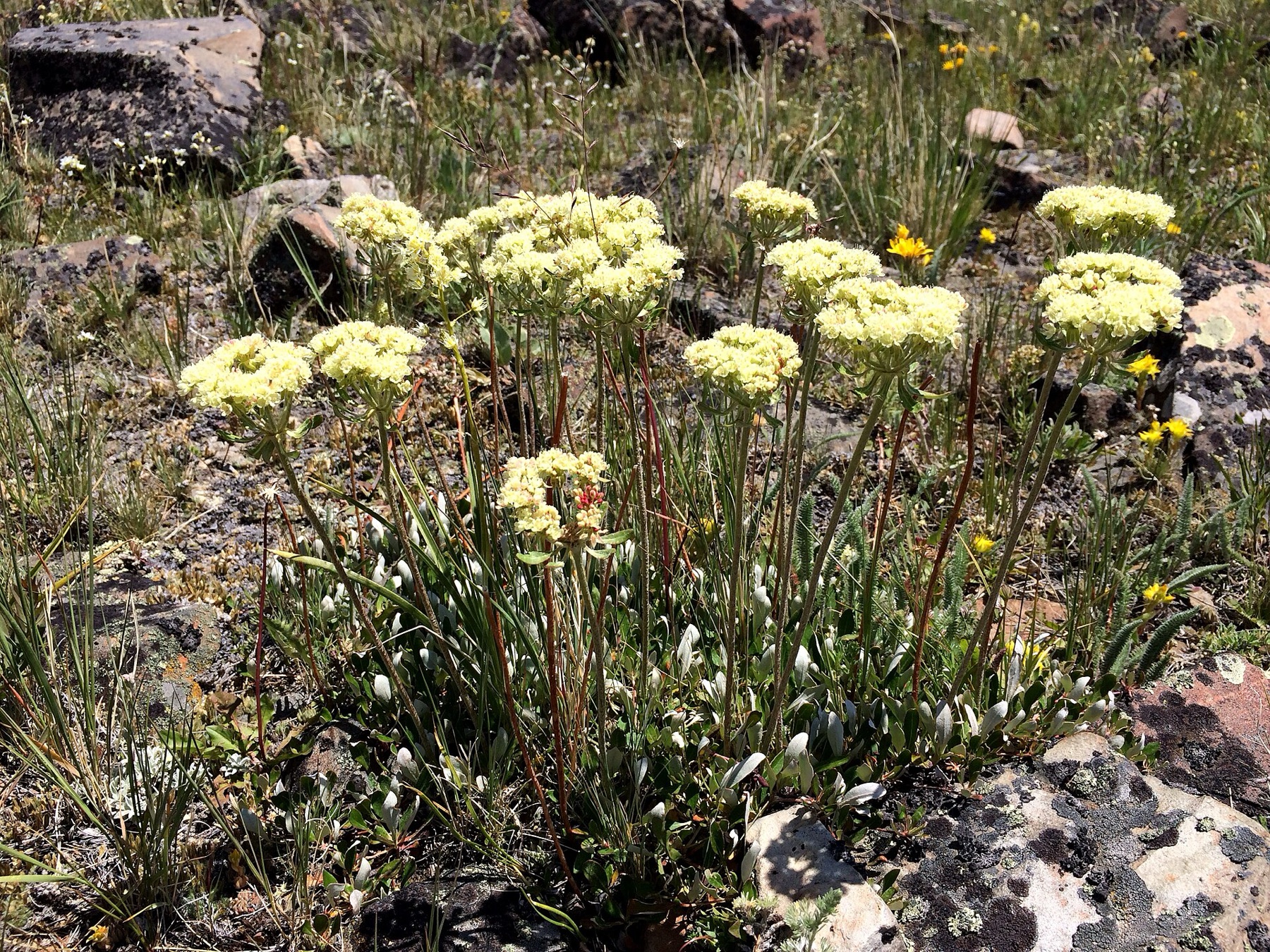 Sulphur Buckwheat 🌿 Eriogonum umbellatum also a flat rosette with umbel-like heads on open granite, but its flowers are true six-tepal buckwheat blooms, often yellow, on taller upright stalks, not papery pink globes lying on the ground.