Fireweed
Chamaenerion angustifolium · Onagraceae
- Form
- Perennial
- Height
- 2–6 ft
- Sun
- Full Sun
- Water
- Moderate
- Blooms
- Jun, Jul, Aug
🌿 California native
Quick facts
- Habitat: Sunny Montane and Subalpine openings, burns, and roadsides
- Form / size: Tall perennial, 2–6 ft
- Sun: Full sun · Water: Moderate
- Blooms: Summer magenta spikes · Pollinator value: High
Description
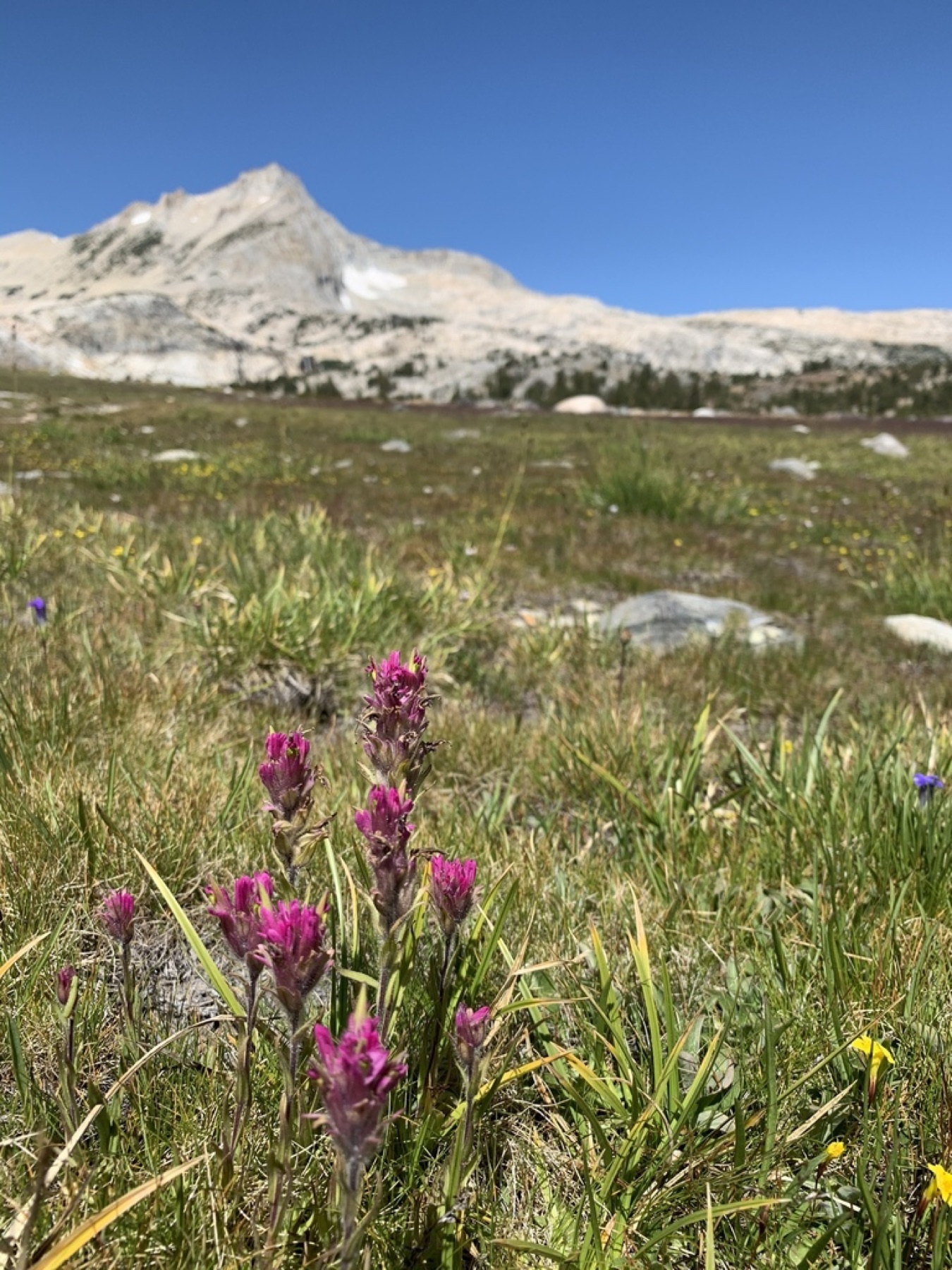
A tall colony-forming wildflower with narrow leaves and long spikes of bright magenta-pink flowers. It is especially famous for appearing after fire or disturbance, where whole slopes can go pink.
Wildlife & pollinators
Excellent for bees, butterflies, and other summer pollinators.
Habitat & range
Mountain clearings, roadsides, burns, stream edges, and other open moist-to-fresh sites across the Sierra and northern mountains.
In the garden
Best in cooler mountain-style plantings with decent moisture. Too aggressive or thirsty for many dry gardens.
Propagation
From seed or rhizome division. Spreads readily where it likes the conditions.
Where to see it near you
- iNaturalist — observed across California (map)
- Common in open mountain country around Mammoth Lakes and other parts of the Eastern Sierra.
Commonly confused with
- Willowherbs (Epilobium spp.) — same family, but fireweed is much taller and showier, with long bold flower spikes.