Mountain Hemlock
Tsuga mertensiana · Pinaceae
- Form
- Tree
- Height
- 60–130 ft
- Sun
- Full Sun
- Water
- Low
🌿 California native
Quick facts
- Habitat: Subalpine and high Montane forest near the Sierra crest
- Form / size: Slender conifer, 60–130 ft
- Sun: Full sun · Water: Low (deep snow)
- The tell: short blue-green needles radiating star-like all around the twig; a drooping top shoot
Description
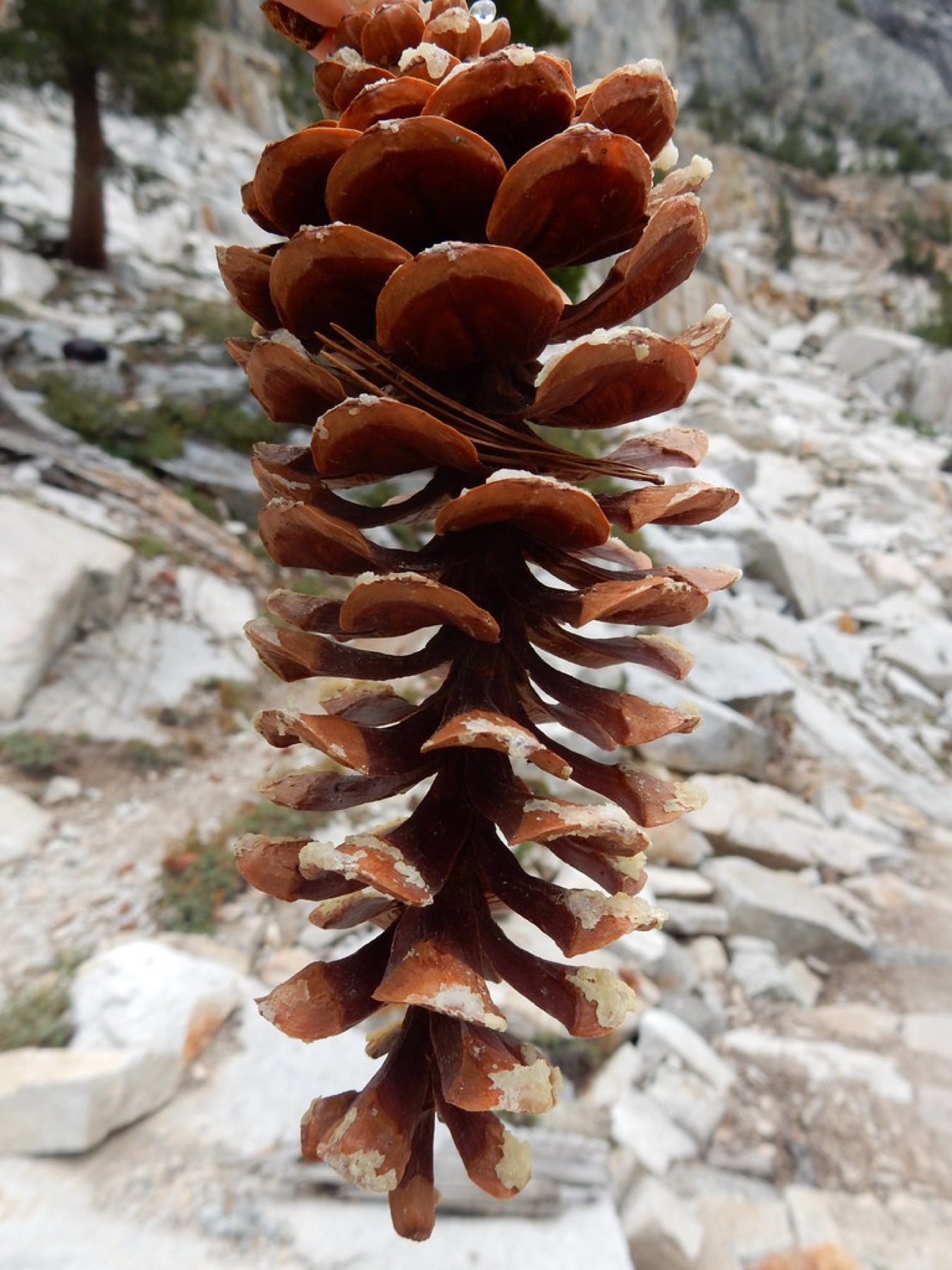
A graceful high-country conifer with a nodding top: the leading shoot bends over, and the branch tips droop, giving the tree an unmistakable soft-shouldered silhouette against the sky. The needles are short and blunt and radiate all the way around the twig in dense star-like tufts, unlike the flat, comb-like ranks of other hemlocks, and they are pale blue-green with whitish bands on both surfaces. The cones are cylindrical and pendulous, 1 to 3 inches long, the longest of any hemlock, purple when young and ripening red-brown. Slow-growing and long-lived, mountain hemlock can exceed 800 years.
Ecological role
Mountain hemlock defines the upper subalpine forest on the coldest, snowiest sites, favoring north-facing slopes and lake margins where the snowpack lasts longest. Its flexible, pendulous branches shed heavy snow, and it tolerates deep shade, forming both closed-canopy stands and the open “parkland” clumps that dot fell-fields and wet meadows near treeline. Around Lake Tahoe, seedlings in the Desolation Wilderness are now establishing several hundred feet higher than they did eighty years ago, one of the clearer local signals of a warming climate pushing the tree line upslope.
Habitat & range
The high Sierra Nevada crest, in the subalpine zone from the Tahoe region south to its southern limit near Silliman Lake in Tulare County, roughly 8,000 to 10,000 ft. It grows around Lake Tahoe in the Desolation Wilderness and on peaks such as Mount Rose, and the crest population extends through the high country near Mammoth Lakes.
In the garden
A cold-climate ornamental for high-elevation gardens with cool summers and excellent drainage, ideally on sandy soil; it struggles in hot lowland heat. Low water once established, deer-resistant, and useful for holding a slope. Give its tall, slow, conic form room in full sun to shade.
Propagation
From seed, improved by one to three months of cold-moist stratification for the small winged seeds. Germination and early growth are slow, in keeping with the tree’s naturally unhurried habit. Semi-hardwood cuttings are difficult to root, so seed is the usual route.
Where to see it near you
- iNaturalist — observed across California (map)
- The high country above Lake Tahoe (Desolation Wilderness, Mount Rose) and near the Sierra crest around Mammoth Lakes.
Sources
Commonly confused with
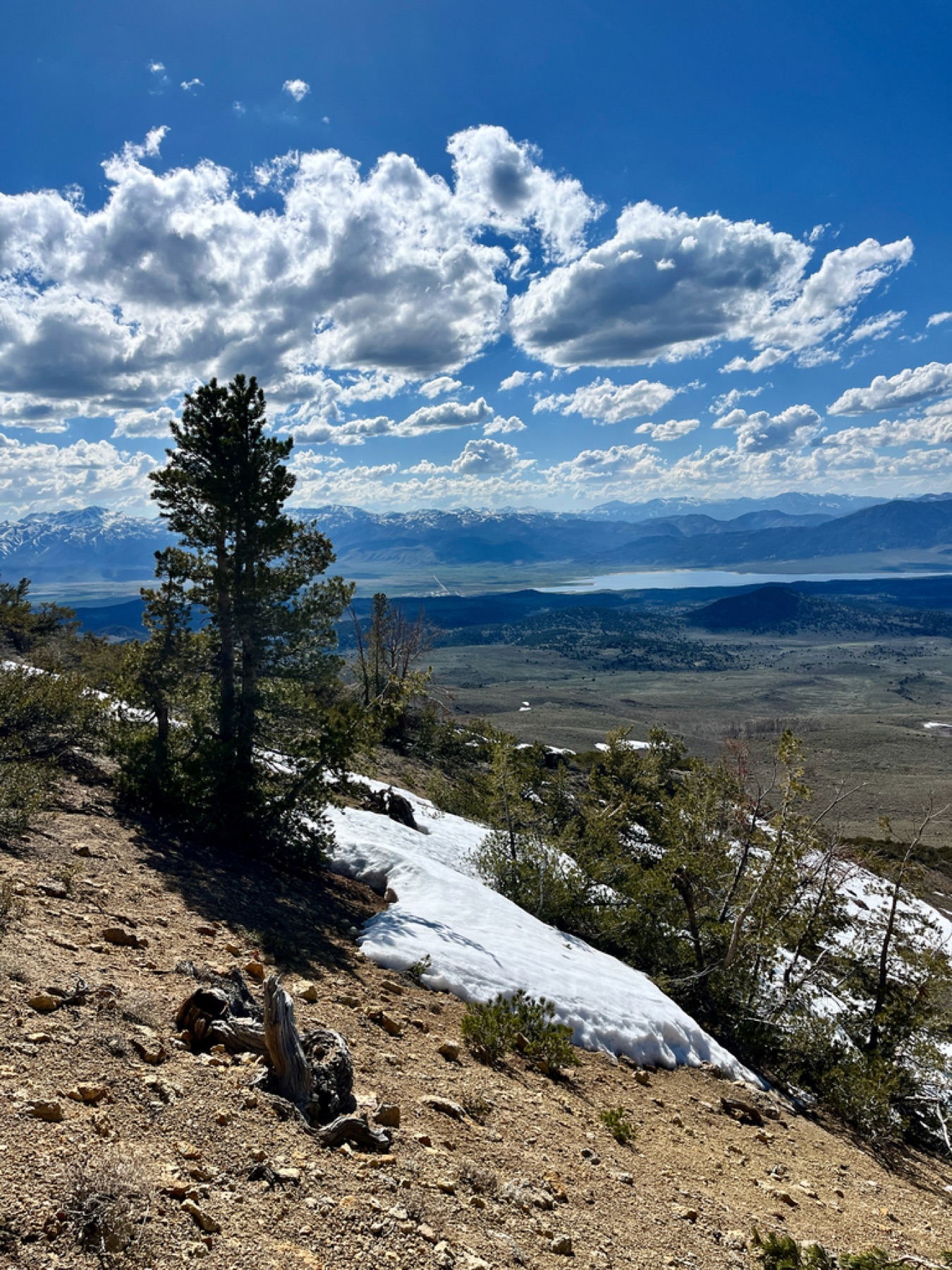 Whitebark Pine 🌿 Pinus albicaulis a co-occurring treeline conifer, but it bears needles in bundles of five and stout upright cones. Mountain hemlock has single needles and long, hanging cones.