Spreading Phlox
Phlox diffusa · Polemoniaceae
- Form
- Subshrub
- Height
- 2–6 in
- Sun
- Full Sun
- Water
- Very Low
- Blooms
- May, Jun, Jul, Aug
🌿 California native
Quick facts
- Habitat: Dry rocky slopes and gravelly flats, Montane to Subalpine fell-fields
- Form / size: Ground-hugging cushion, 2–6 in
- Sun: Full sun · Water: Very low
- The tell: a tight mat smothered in flat, five-lobed starry flowers on open rock
Description
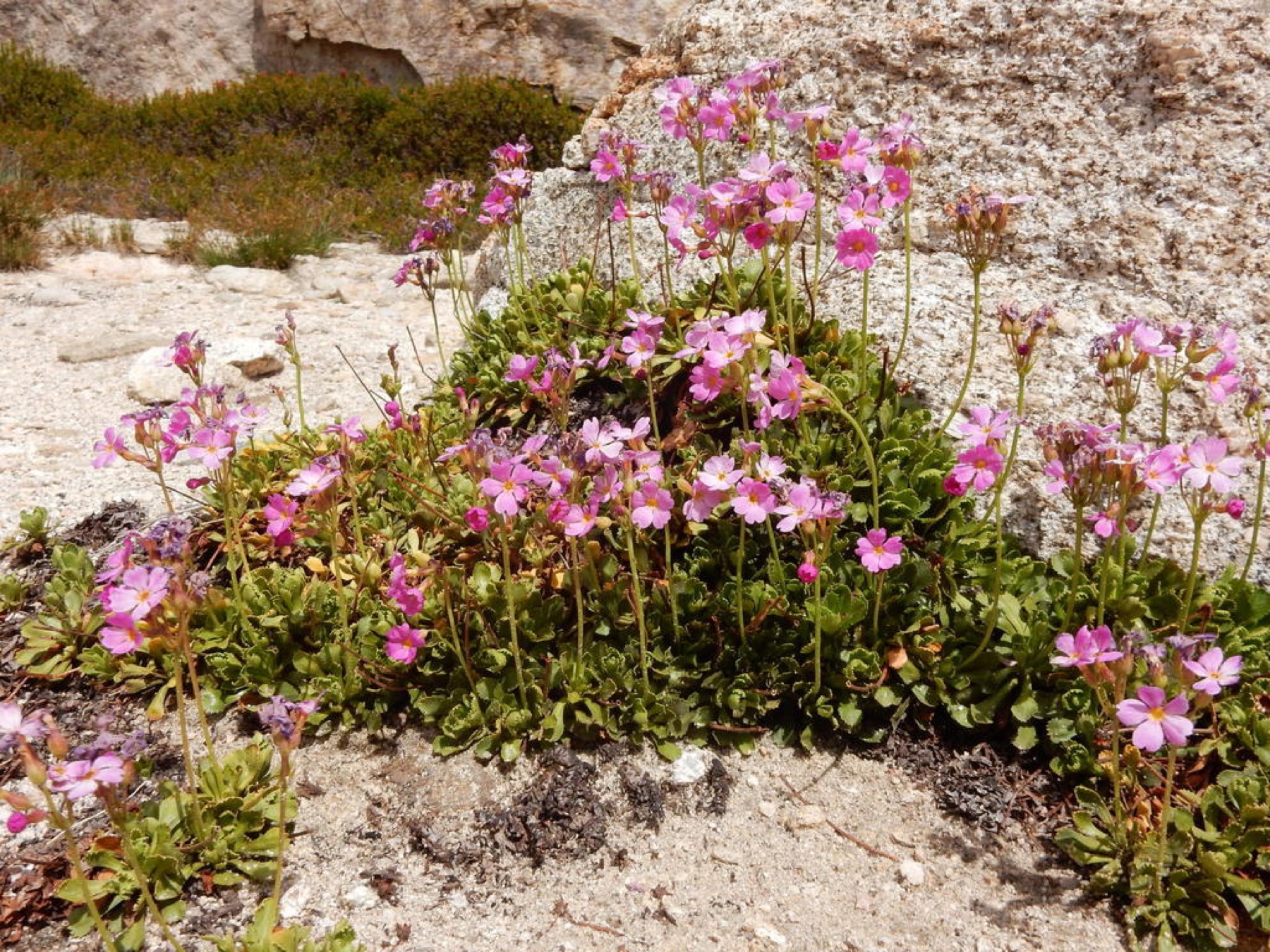
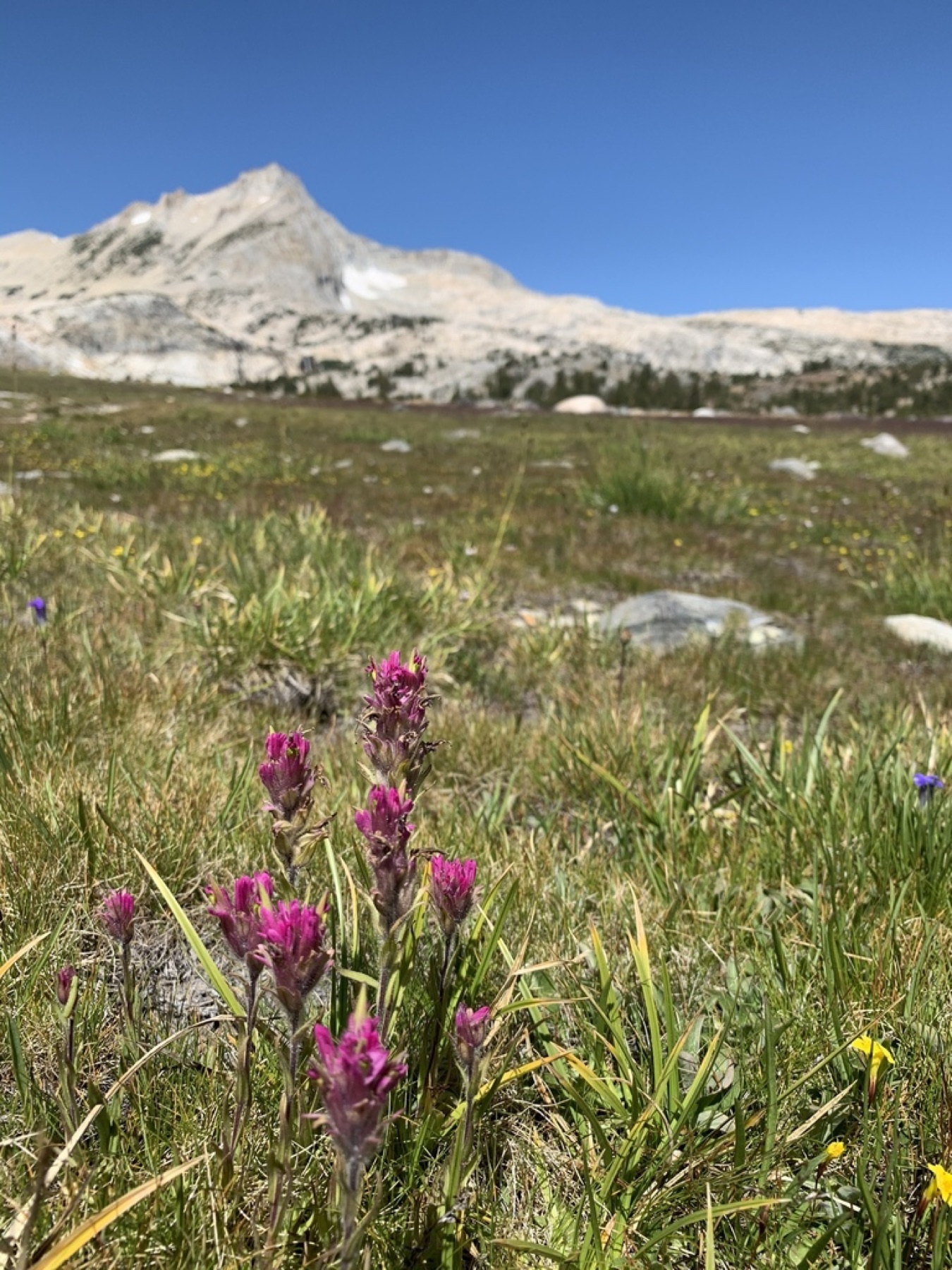
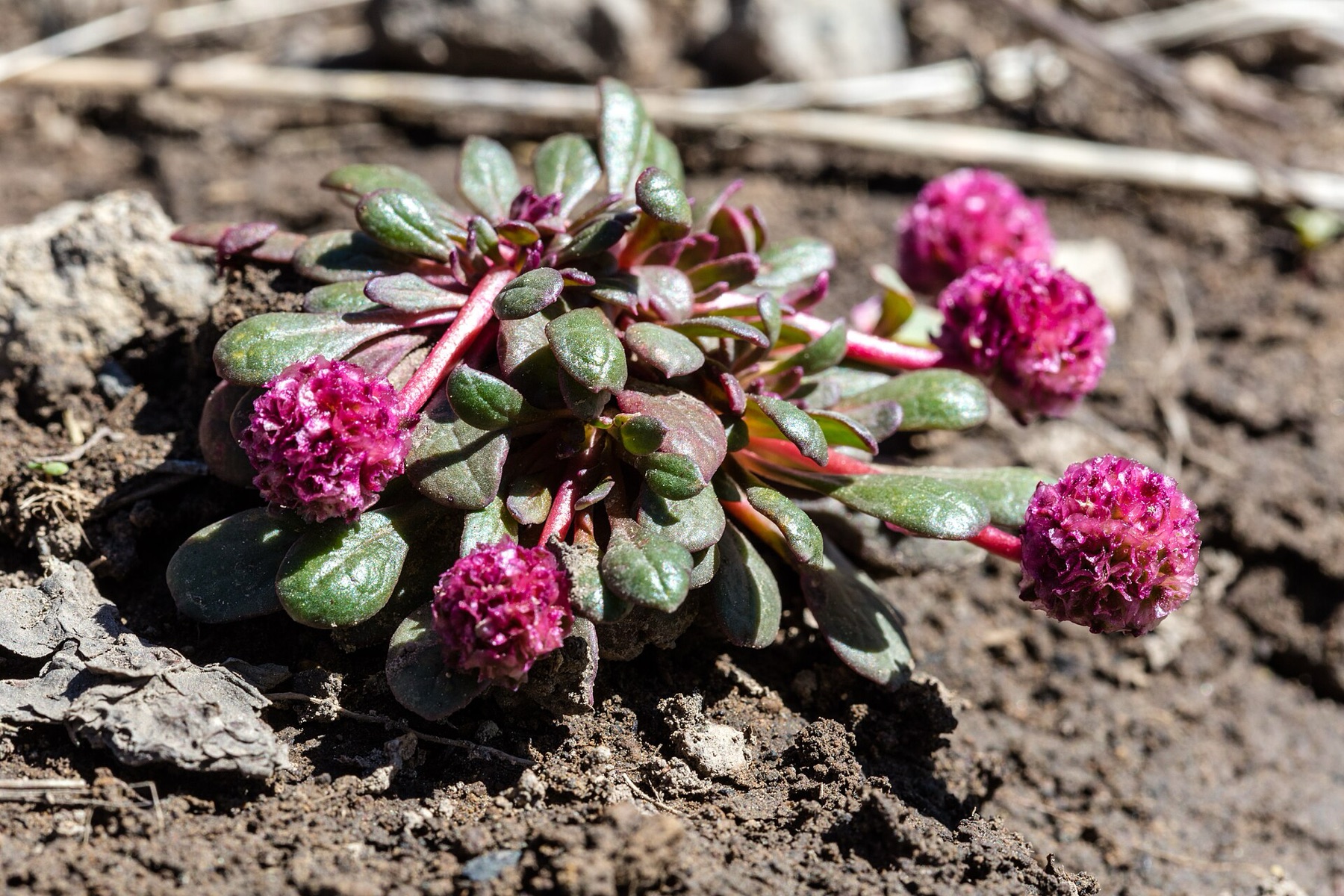
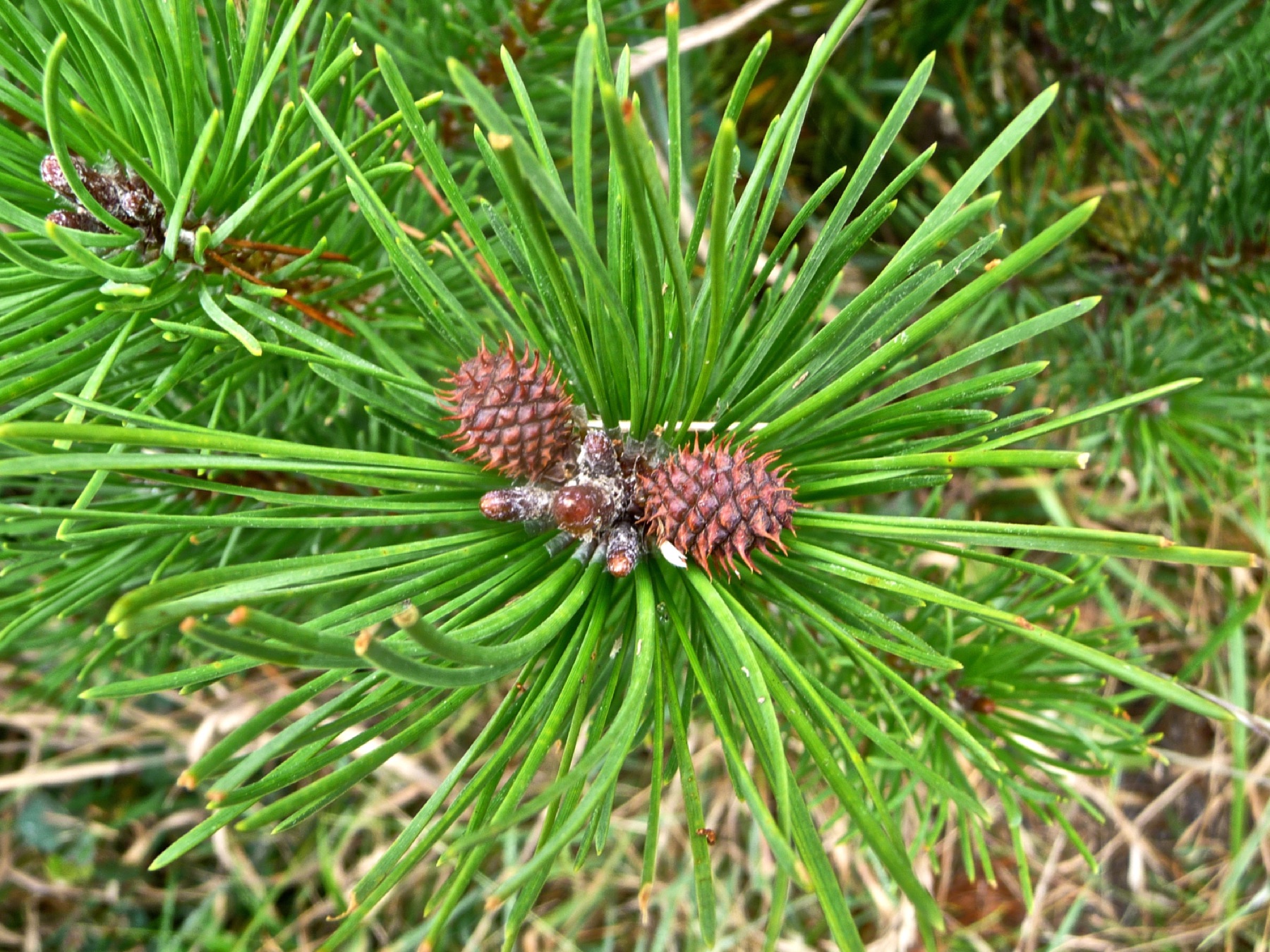
A cushion plant that all but disappears under its own bloom. Spreading phlox forms a dense low mat, only two to six inches tall but spreading into patches across rock and gravel, on a woody base with herbaceous flowering shoots. The leaves are narrow and needle- to awl-like, stiff and somewhat leathery, set in opposite pairs and crowded along the stems. The flowers are solitary, about a third to a half inch across, a slender tube flaring into a flat five-lobed face of white, pale pink, or pale blue-lavender, and at peak bloom they nearly hide the foliage.
Ecological role
Spreading phlox is a characteristic cushion plant of Sierran subalpine and alpine fell-fields and the open gravel of red fir and lodgepole forest. The tight mat form is an adaptation to cold, wind, and thin rocky soil, trapping warmth and holding a little moisture close to the ground. Its pale, flat, tubular flowers are worked mainly by bumblebees and butterflies, with syrphid and other flies as minor visitors, and it pioneers open, well-drained gravel where a closed plant canopy cannot form.
Habitat & range
Dry rocky slopes, ridges, and gravelly flats from the upper montane zone into alpine fell-fields through the Sierra Nevada, roughly 4,000 to 12,000 ft. It grows around Lake Tahoe (in Alpine, El Dorado, and Placer counties) and continues south through the high country into the Eastern Sierra around Mammoth Lakes.
In the garden
An excellent low-water groundcover for a rock garden, trough, or crevice planting in full sun with sharp drainage. It needs very lean, gritty, fast-draining soil; heavy or wet ground and summer overwatering rot the crown. It does best in cooler-summer or higher-elevation gardens and struggles through prolonged lowland heat.
Propagation
From seed, which generally needs cold-moist stratification to break dormancy. It also grows from soft cuttings of the trailing stems taken after flowering, or by carefully dividing or layering rooted sections of the mat. Establish young plants in a gritty mix and avoid overwatering.
Where to see it near you
- iNaturalist — observed across California (map)
- Open rocky slopes around Lake Tahoe and the Eastern Sierra high country.
Sources
Commonly confused with
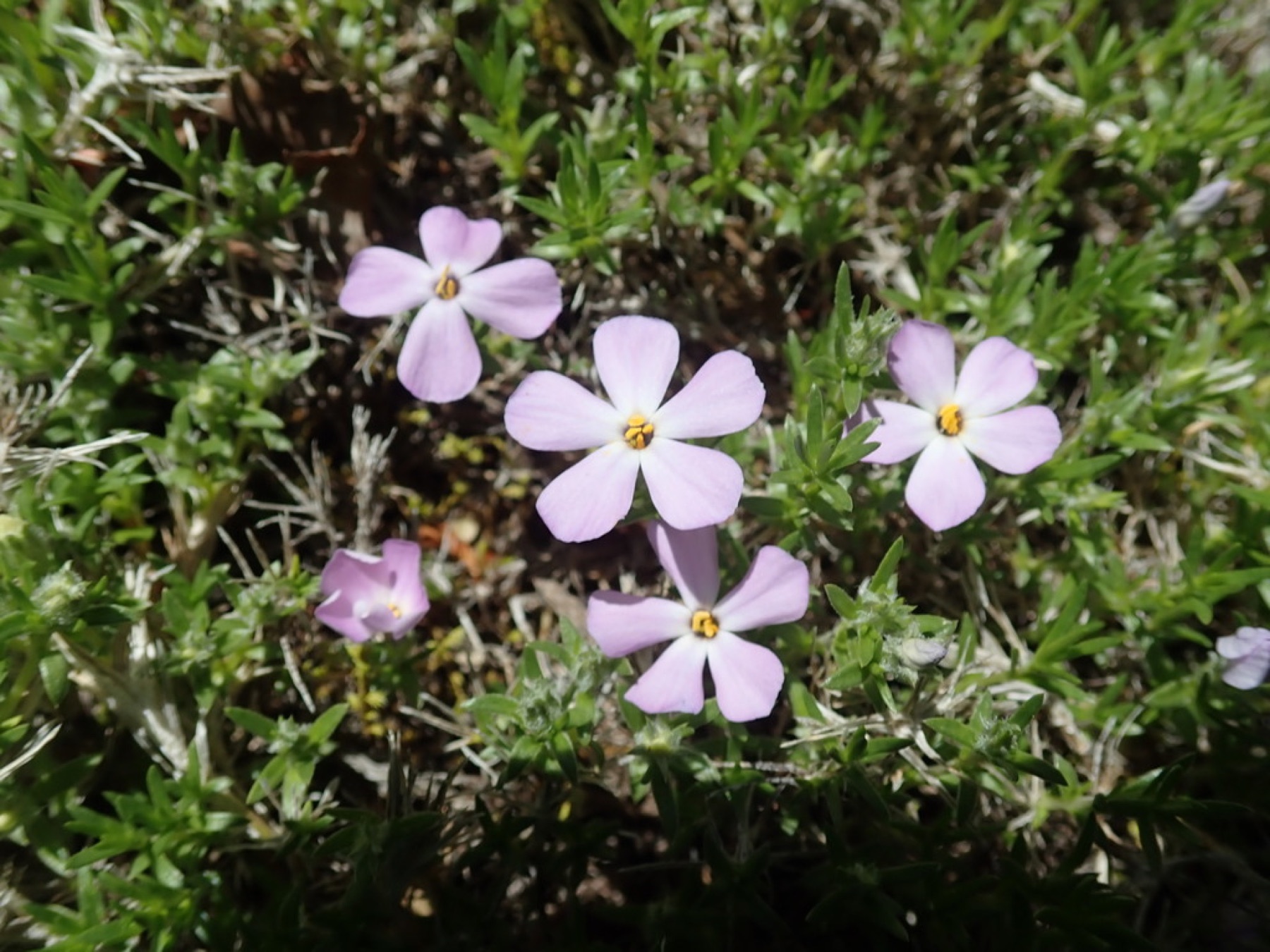 Spreading Phlox 🌿 Phlox diffusa an even tighter, tinier alpine bun with very short crowded leaves and near-stemless flowers; spreading phlox has looser, longer trailing stems and larger flowers.