Western White Pine
Pinus monticola · Pinaceae
- Form
- Tree
- Height
- 100–200 ft
- Sun
- Full Sun
- Water
- Low
🌿 California native
Quick facts
- Habitat: High Montane and Subalpine forest near the Sierra crest (Tahoe, Mammoth)
- Form / size: Tall five-needle pine, 100–200 ft
- Sun: Full sun · Water: Low
- The tell: needles in bundles of five; long, slender hanging cones; bark in small regular checkered plates
Description
A tall, straight five-needle pine of the high Sierra, with soft blue-green needles bundled in fives and long, slender, hanging cones 4 to 10 inches long. The mature bark is the giveaway: gray and broken into small, regular rectangular plates, a checkered look no other Sierra pine quite matches. It grows in cold upper-montane and subalpine forest, often mixed with red fir, lodgepole, mountain hemlock, and whitebark pine along the crest.
Indigenous & historical use
In the interior of British Columbia, within the northern part of the tree’s range, the Nlaka’pamux (Thompson) and St’át’imc (Lillooet) chewed the resin, wove baskets from the bark, dressed wounds with a poultice made from the pitch, and gathered the sweet inner bark in spring for food. The uses are recorded by the ethnobotanist Nancy Turner in her 1988 study of Interior Salish conifer use.
Ecological role
Western white pine is a component of the cold subalpine forest, growing among red fir, lodgepole, mountain hemlock, whitebark, and foxtail pine on the Sierra crest. Its seeds feed red squirrels, deer mice, and Clark’s nutcrackers, and its foliage is winter browse for black-tailed deer and a favorite of blue grouse. Across the West it was hit hard by an introduced fungus, white pine blister rust, which killed roughly 90 percent of the species in the wettest parts of its range, though California trees have fared better; because a tree rarely bears much seed before about 70 years old, good cone years matter a great deal to its future.
Habitat & range
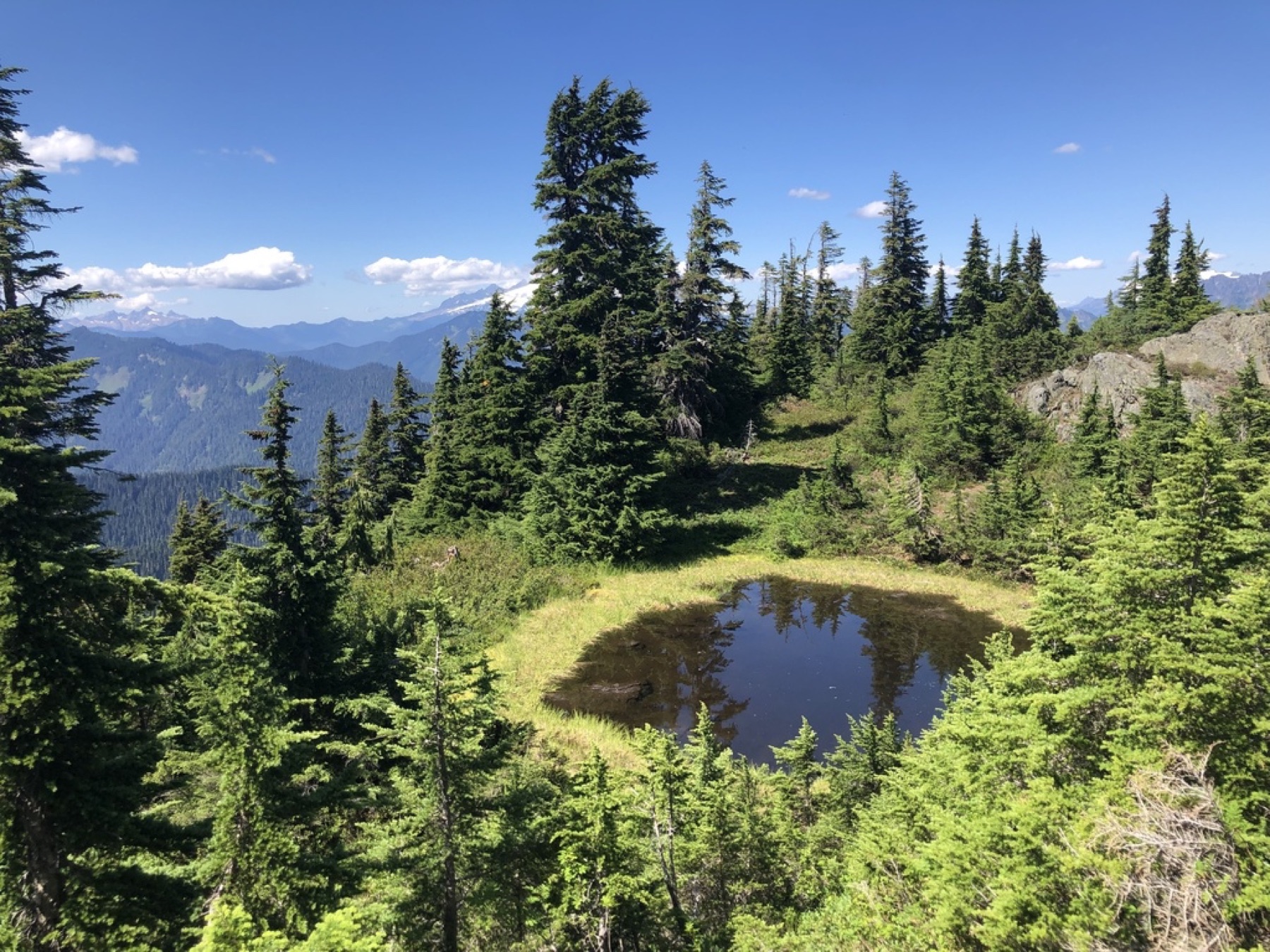
Upper-montane and subalpine forest the length of the Sierra Nevada, roughly 6,000 to 11,000 ft, south to the headwaters of the Kern River. It grows around Lake Tahoe at the higher basin elevations and is a common associate of mountain hemlock in the Mammoth Lakes high country.
In the garden
A cold-climate, high-elevation native best suited to mountain gardens with full sun and sandy or loamy, well-drained soil; it does poorly in clay or lowland heat. Low water once established, and fast-growing into a handsome, symmetrical pyramid. Where blister rust is a concern, plant rust-resistant seed sources.
Propagation
From seed, given one to four months of cold-moist stratification. Sow the stratified seed in spring in deep containers to accommodate the taproot, in a lean, gritty mix. It is not grown from cuttings.
Where to see it near you
- iNaturalist — observed across California (map)
- The high country above Lake Tahoe and near the crest around Mammoth Lakes (Lake George).
Sources
- Calscape · iNaturalist · Wikipedia
- Indigenous use: Turner, N.J., “Ethnobotany of coniferous trees in Thompson and Lillooet Interior Salish of British Columbia,” Economic Botany 42(2):177–194 (1988).
Commonly confused with
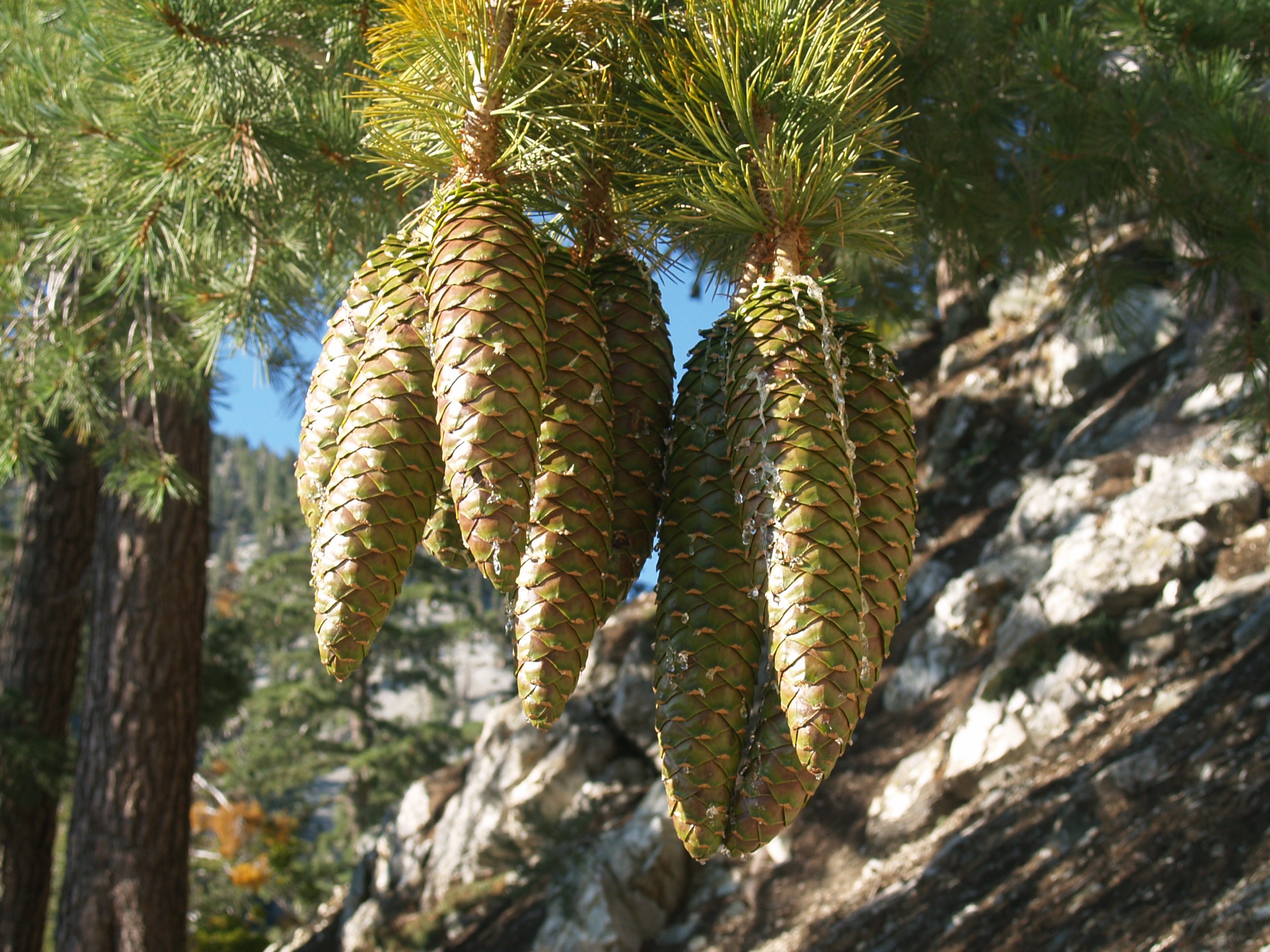 Sugar Pine 🌿 Pinus lambertiana also five needles, but its cones are enormous (up to 20 in) with thick woody scales. Western white pine's cones are shorter and slimmer.
 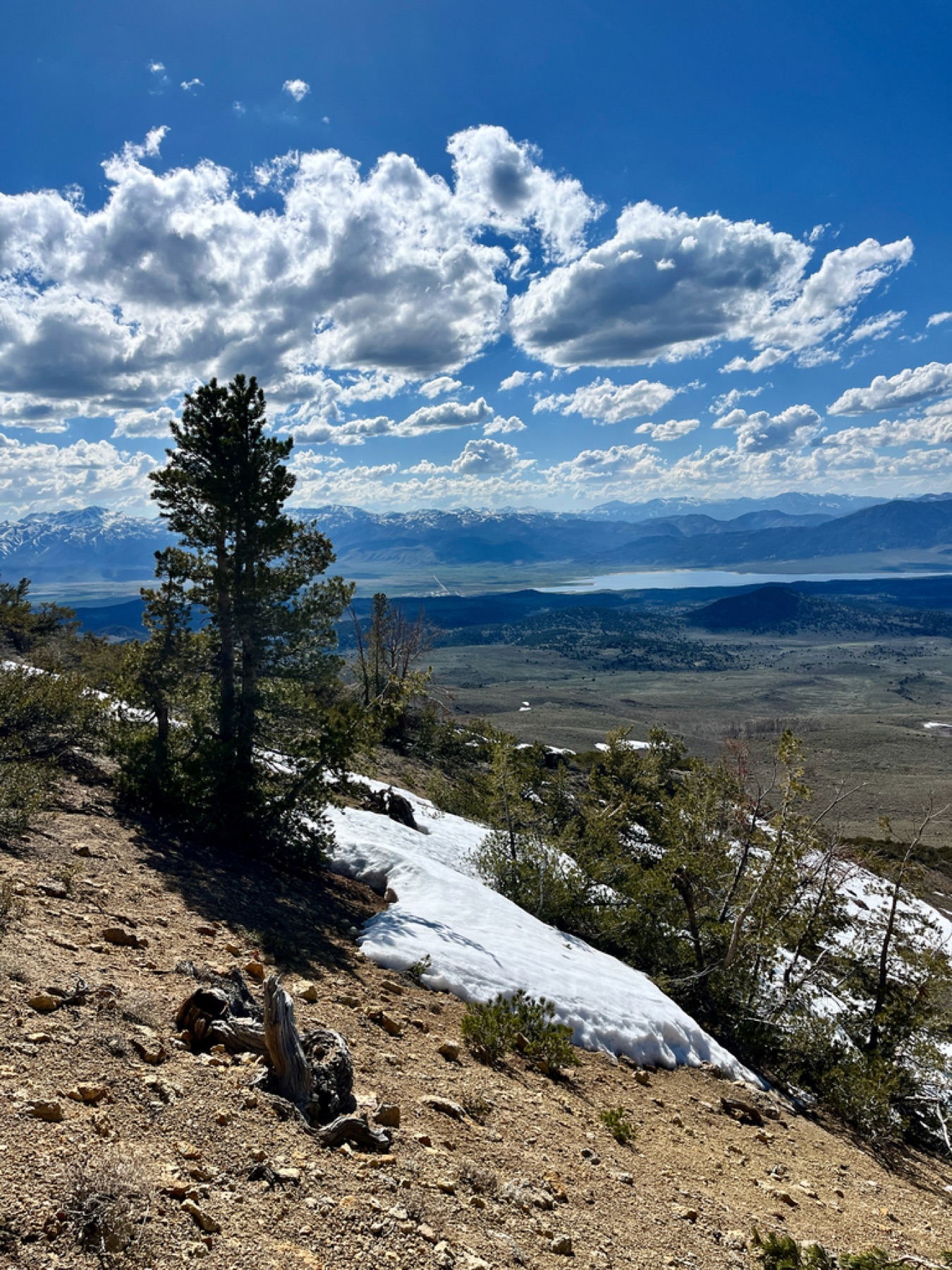 Whitebark Pine 🌿 Pinus albicaulis five needles too, but with smooth (not minutely toothed) margins, and its egg-shaped cones stay closed and fall apart on the tree rather than opening and dropping.