Whitebark Pine
Pinus albicaulis · Pinaceae
- Form
- Tree
- Height
- 15–50 ft (often krummholz)
- Sun
- Full Sun
- Water
- Low
- Habitat
- Subalpine
🌿 California native
Quick facts
- Habitat: Subalpine — at and near treeline (Mammoth high country)
- Form / size: 15–50 ft, often a wind-flagged shrub (krummholz) near treeline
- Sun: Full sun · Water: Low
- The tell: needles in bundles of five; cones stay closed and are torn apart by birds
Description
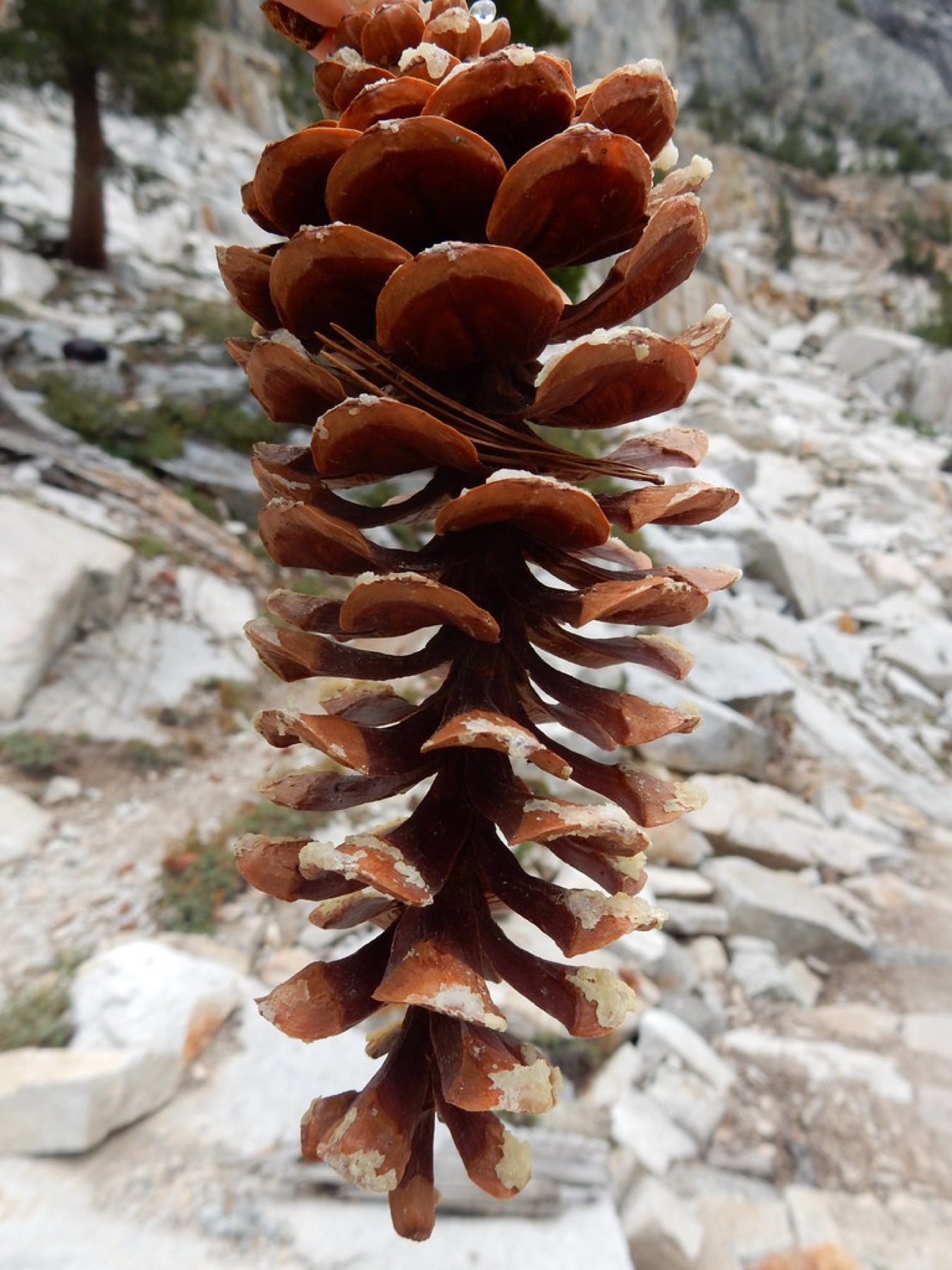
A hardy treeline pine, often sculpted by wind into low, twisted, multi-stemmed forms (krummholz) at the very top of the forest. Needles come in bundles of five. Its purplish cones don’t open on their own — the Clark’s nutcracker pries them apart, caches the seeds, and forgotten caches grow into new trees (a tight mutualism). An important high-elevation species now threatened by white pine blister rust and climate change.
Wildlife & pollinators
Wind-pollinated; the Clark’s nutcracker is its essential seed disperser; bears and squirrels raid the caches.
Habitat & range
Subalpine ridges and basins of the Sierra and northern mountains, near treeline; the high country above Mammoth.
Propagation
From seed (cold stratification), but slow and specialized; rarely grown.
Where to see it near you
- iNaturalist — observed across California (map)
- Treeline above the Eastern Sierra.
In the landscape
A specialist for cold, exposed, high sites — challenging in cultivation. Mostly admired in the wild.
Sources
Commonly confused with
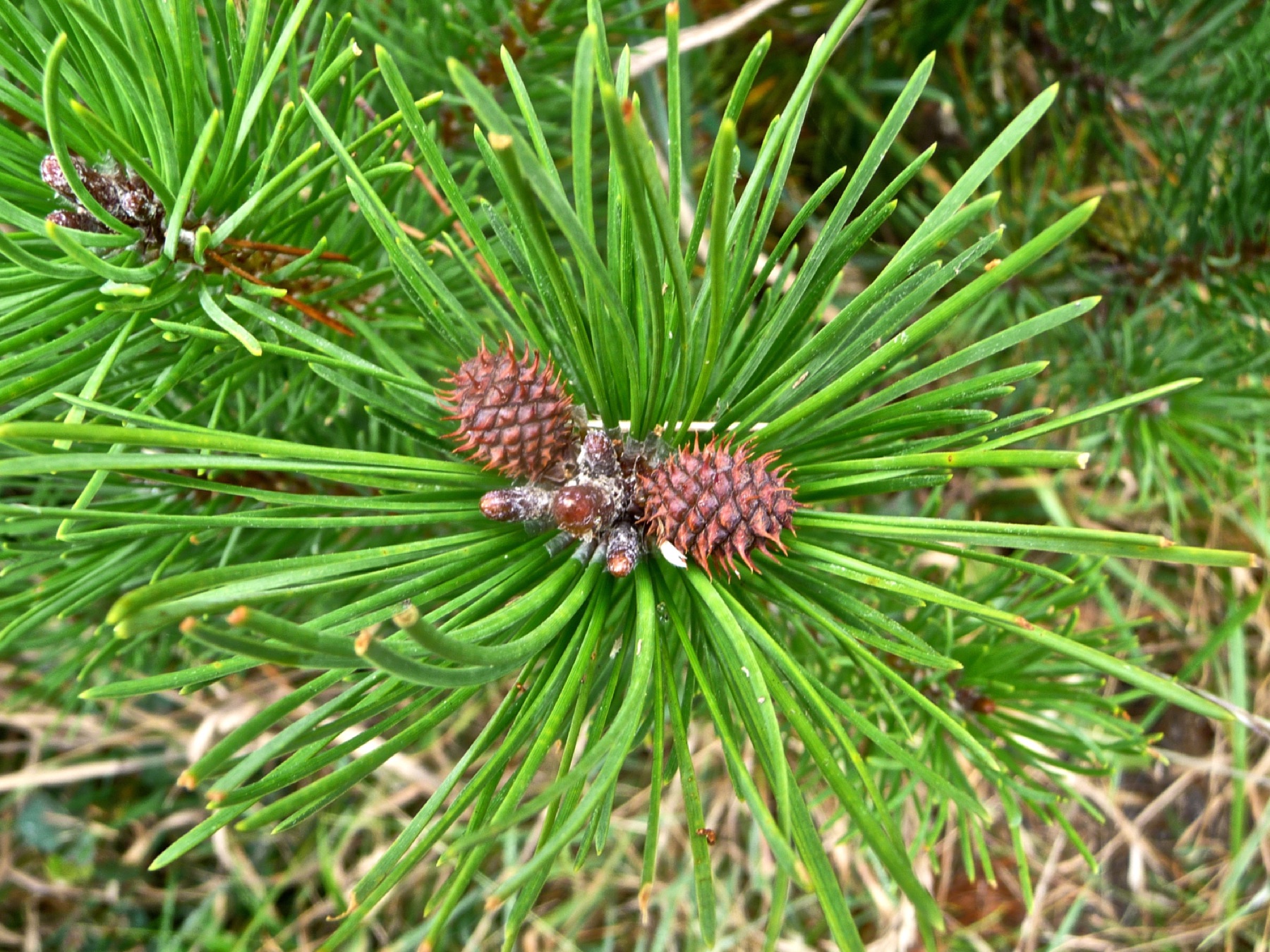 Lodgepole Pine 🌿 Pinus contorta only two needles per bundle; grows lower, around lakes.