Pinemat Manzanita
Arctostaphylos nevadensis · Ericaceae
- Form
- Shrub
- Height
- 0.5–2 ft
- Sun
- Part Shade
- Water
- Very Low
- Blooms
- May, Jun, Jul
🌿 California native
Quick facts
- Habitat: Conifer-forest understory, Montane to Subalpine
- Form / size: Prostrate mat, 0.5–2 ft tall (to ~8 ft wide)
- Sun: Part shade · Water: Very low
- Blooms: White-to-pink urn flowers in early summer · Pollinator value: Moderate
Description
A manzanita that lies down. Where the familiar manzanitas stand waist- to head-high, pinemat spreads flat, a dense low carpet under two feet tall that hugs the ground beneath red firs and pines and can reach eight feet across. Its larger stems carry the smooth, dull-red manzanita bark, and the bright green, glossy, oval leaves have smooth margins and a small pointed tip. The flowers are the family’s little white-to-pink urns, hanging in short clusters, followed by reddish-brown “little apple” berries (the meaning of manzanita).
Indigenous & historical use
In the northern part of the plant’s range, in Oregon, the Northern Paiute of the Warm Springs area used pinemat manzanita as a smoke plant, roasting and drying the leaves to mix with tobacco. The use is recorded by James Mahar in his 1953 study of Warm Springs Paiute ethnobotany.
Ecological role
Pinemat manzanita is an obligate seeder: it has no burl, so fire kills the plant outright, and it returns from long-lived seed stored in the soil, germinating in the first season after a burn. Its berries are eaten and scattered by black bears, coyotes, deer, birds, and rodents, and its early flowers give bumblebees nectar at the start of the mountain season. It is a characteristic understory carpet in red fir, lodgepole, and yellow-pine forest, often growing with bush chinquapin, and its dense low mats are used in Lake Tahoe erosion-control plantings.
Habitat & range
Conifer-forest understory the length of the Sierra Nevada, roughly 2,000 to 10,000 ft and most common above about 5,000 ft. It is abundant around Lake Tahoe and grows in the Eastern Sierra around Mammoth Lakes, including the Mammoth Crest above Lake George.
In the garden
An excellent low, spreading groundcover or lawn alternative for high, cold gardens (hardy to about −10°F). It wants sharp-draining, somewhat acidic soil and part shade, and no summer water once established. Best in mountain and foothill gardens; it resents lowland heat and rich, wet soil.
Propagation
The seed is deeply dormant behind a hard coat, so it needs a fire-like heat or acid scarification plus cold stratification, and germinates slowly and unevenly. Semi-hardwood tip cuttings taken in fall are the reliable route for selected forms. Because it has no burl and does not resprout, division is not an option.
Where to see it near you
- iNaturalist — observed across California (map)
- Conifer understory around Lake Tahoe and the Eastern Sierra high country (the Mammoth Crest).
Sources
- Calscape · iNaturalist · Wikipedia
- Indigenous use: Mahar, J.M., Ethnobotany of the Oregon Paiutes of the Warm Springs Indian Reservation (1953).
Commonly confused with
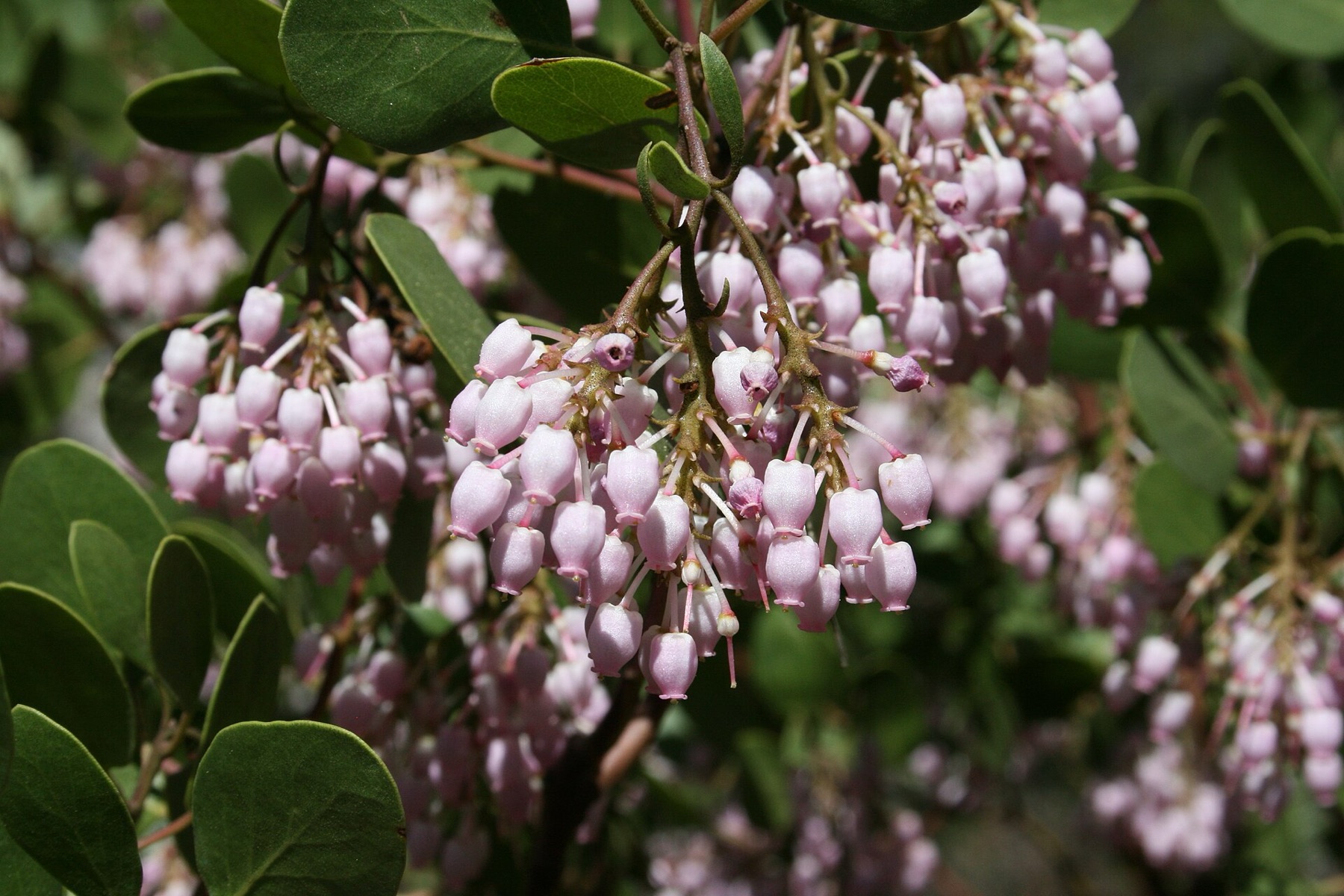 Greenleaf Manzanita 🌿 Arctostaphylos patula grows in the same forests but is an erect, waist- to head-high shrub with rounded leaves. Pinemat stays a flat carpet under two feet.