Red Fir
Abies magnifica · Pinaceae
- Form
- Tree
- Height
- 60–200 ft
- Sun
- Full Sun
- Water
- Low
🌿 California native
Quick facts
- Habitat: High Montane and Subalpine forest (Tahoe, Mammoth high country)
- Form / size: Large conifer, 60–200 ft
- Sun: Full sun · Water: Low (mountain snow)
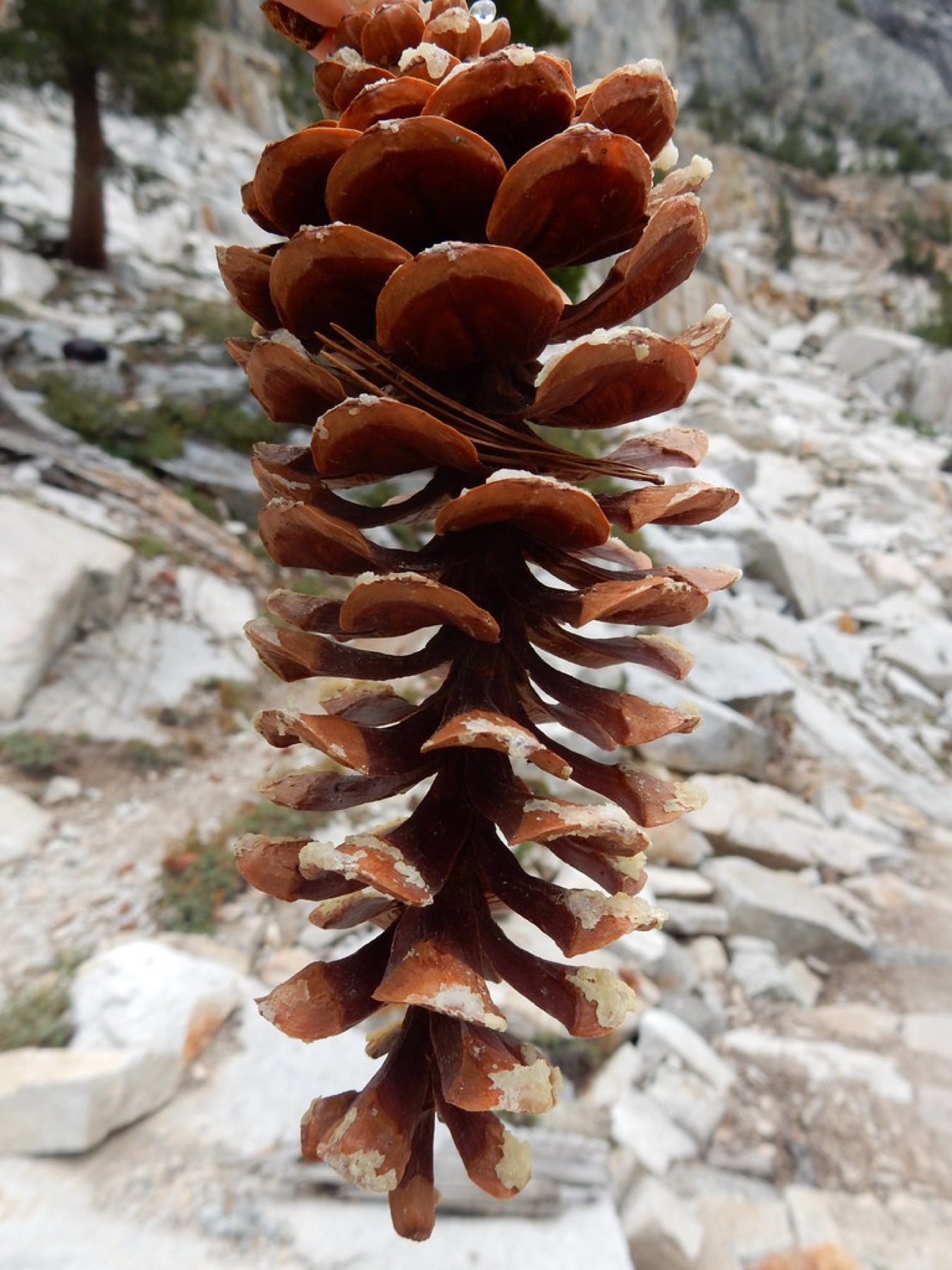
- The tell: short, four-sided blue-green needles curling up to crowd the twig; cones stand upright and fall apart on the tree
Description
A high-mountain true fir with short (1–1.5 in), four-sided blue-green needles that curve upward and crowd the top of each twig, giving the crown a frosted, silvery cast that earns the tree its nickname, silvertip. The cones stand upright like barrels near the top of the tree and disintegrate on the branch, so you almost never find a whole one on the ground. On old trees the bark thickens into deep orange-red furrows. Red fir forms vast, nearly pure stands at the cold, snowy elevations just below treeline, from Tahoe south through the Mammoth high country.
Ecological role
Red fir defines a whole forest belt. At these elevations the snowpack piles three to five meters deep and lingers late into summer, and red fir is the tree built to carry it, casting shade so dense that little grows beneath a mature stand. Its seeds are a staple for chickarees and Douglas squirrels, which cut and cache the cones, and for red crossbills that pry the scales apart; insects alone take an estimated 18 to 45 percent of the seed crop in most years. Old snags and fallen logs give denning cover to pine marten and fisher, and the largest trees hold the nests of great gray owls. Shade-tolerant and commonly 250 to 350 years old, red fir regenerates slowly in canopy gaps rather than after fire.
Habitat & range
High montane and subalpine forest the length of the Sierra Nevada, roughly 6,000 to 9,000 ft and dropping lower in the colder north. Common around Lake Tahoe and through the Mammoth Lakes high country, often in nearly pure “red fir belt” stands or mixed with lodgepole and western white pine.
In the garden
A magnificent but demanding tree that wants cold winters, deep snow, and cool summers, so it belongs in high mountain gardens rather than the hot lowlands. Full sun, sharp drainage, and low summer water once established. Slow-growing and eventually very large, so give it generous room overhead and to the sides.
Propagation
From seed. Collect it in fall as the cones break apart on the tree, since they never drop whole, then give the seed four to eight weeks of cold-moist stratification before spring sowing. Fill and viability are often low, so sow generously. Firs do not root reliably from cuttings.
Where to see it near you
- iNaturalist — observed across California (map)
- The subalpine forests around Mammoth Lakes and above Lake Tahoe (Mount Rose, the Desolation Wilderness rim).
Sources
Commonly confused with
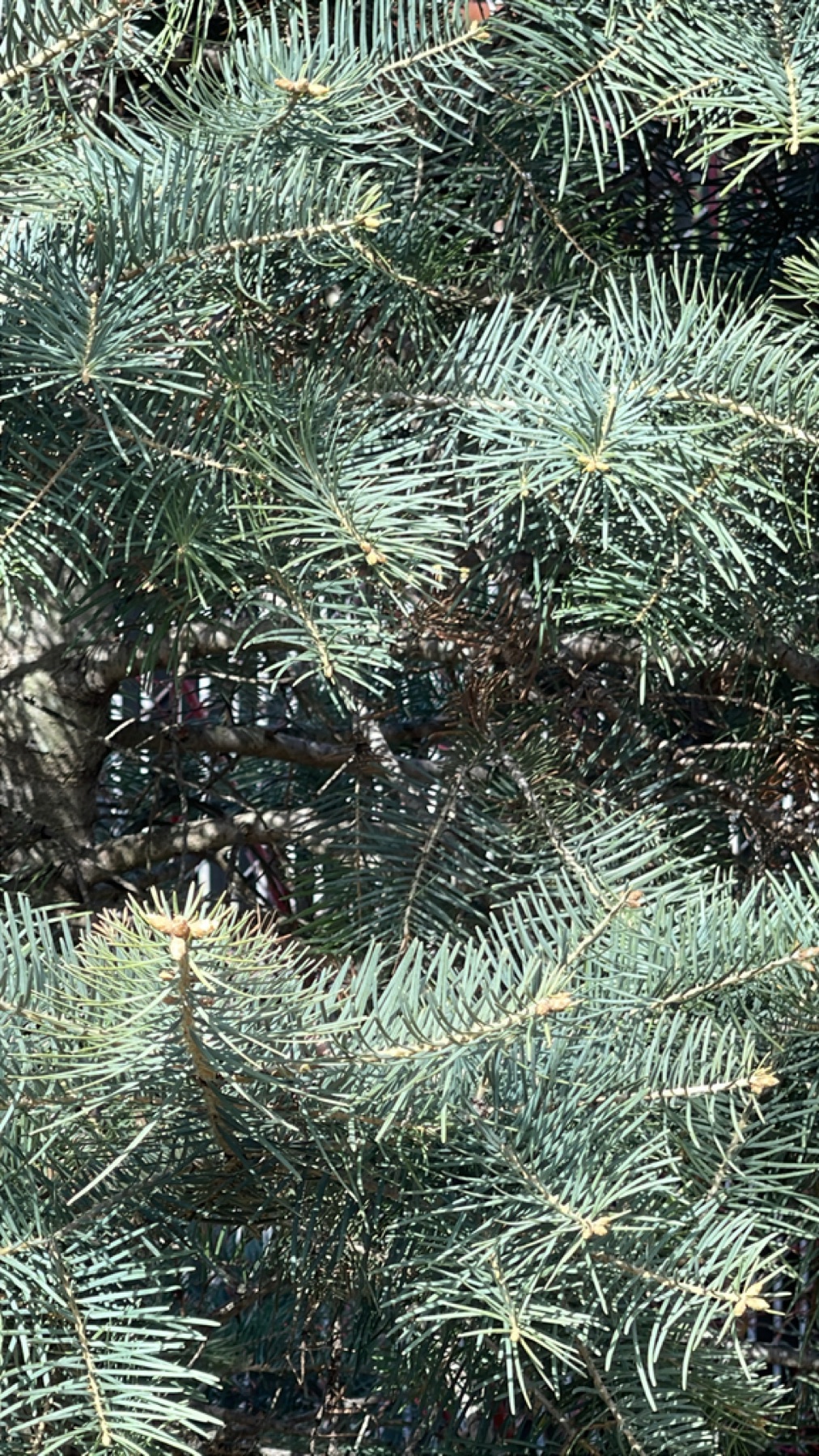 White Fir 🌿 Abies concolor white fir needles are longer, flattened, and spread into two flat ranks; red fir's are shorter, four-sided, blue-glaucous, and curl upward to crowd the twig. White fir bark stays ashy gray where red fir's turns deep red-brown.