Mountain Snowberry
Symphoricarpos rotundifolius · Caprifoliaceae
- Form
- Shrub
- Height
- 2–5 ft
- Sun
- Full Sun
- Water
- Low
- Blooms
- Jun, Jul, Aug
- Habitat
- Montane · Subalpine · Sagebrush Scrub
🌿 California native
Quick facts
- Habitat: Dry Montane and Subalpine slopes, ridges, and open conifer or sagebrush forest
- Form / size: Twiggy shrub, 2–5 ft
- Sun: Full sun to part shade · Water: Low
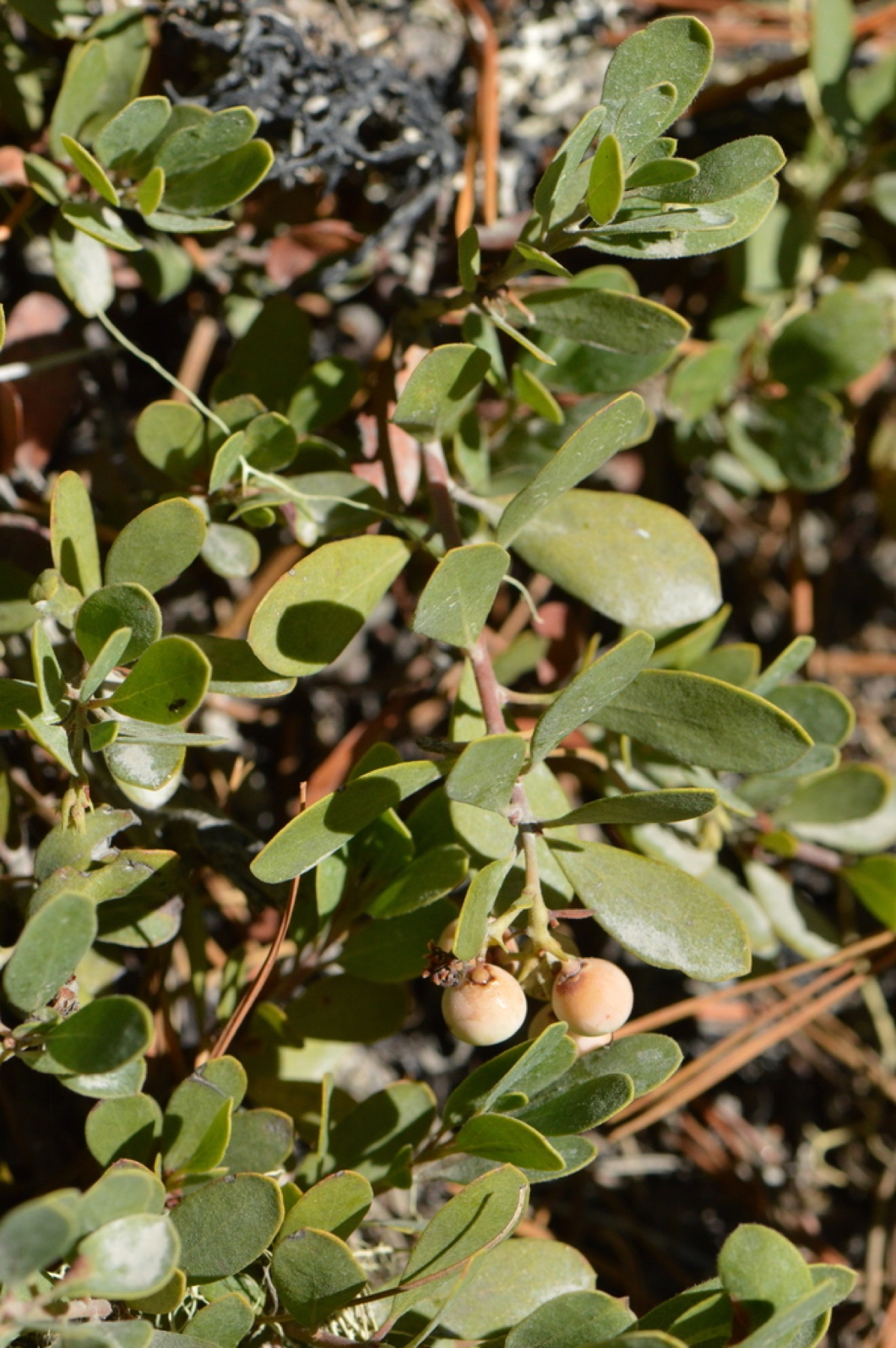
- The tell: small pink bell-flowers, then waxy white paired berries that hang into winter
Description
A twiggy little shrub of dry mountain slopes, two to five feet tall with many stiff, slender branches. The leaves are opposite, oval, small (a quarter to three-quarters of an inch), and smooth-margined. In summer it hangs narrow pink-to-white bell-shaped flowers, one or two at a time in the leaf axils, and follows them with the feature that names it: waxy white berry-like drupes about a third of an inch across that persist on the bare stems into winter. Older stems have shreddy, peeling bark. The genus name means “fruits borne together,” for those clustered white berries.
Ecological role
Mountain snowberry is an important big-game browse plant; on some western ranges it makes up a fifth or more of elk and mule deer summer diets. It sprouts weakly from the root crown after fire and usually regains its cover within about fifteen years. Birds eat and disperse the white drupes, and it forms low thickets that give ground-nesting birds and small animals cover. It is a common understory component of aspen, pine, and sagebrush communities across the western mountains.
Habitat & range
Dry montane and subalpine slopes, ridges, and open conifer and sagebrush forest through the Sierra Nevada, roughly 5,000 to 10,500 ft. It is a common understory shrub around Lake Tahoe and through the Eastern Sierra near Mammoth Lakes, where it is described as common everywhere except the wettest, most heavily shaded sites.
In the garden
A low-water, full-sun to part-shade native shrub for well-drained to dry soil, useful for mountain, erosion-control, and habitat plantings. It suits higher-elevation gardens, tolerates a range of soils from sandy to clay loam, and forms low thickets that give bird cover, with the white berries adding off-season interest.
Propagation
The seed is doubly dormant behind a hard coat and typically needs warm-then-cold moist stratification (often with scarification), germinating slowly. It is easier vegetatively: it spreads by rhizome, and roots from softwood or hardwood cuttings or from divisions of rooted suckers.
Where to see it near you
- iNaturalist — observed across California (map)
- Dry montane forest around Lake Tahoe and the Eastern Sierra (Mammoth area).