Sugar Pine
Pinus lambertiana · Pinaceae
- Form
- Tree
- Height
- 130–200 ft
- Sun
- Full Sun
- Water
- Low
- Habitat
- Montane
🌿 California native
Quick facts
- Habitat: Montane mixed-conifer forest (Tahoe Basin and the western Sierra)
- Form / size: The largest pine, 130–200 ft
- Sun: Full sun · Water: Low
- The tell: needles in bundles of five; enormous cones (up to 20 in) hanging from the branch tips
Description
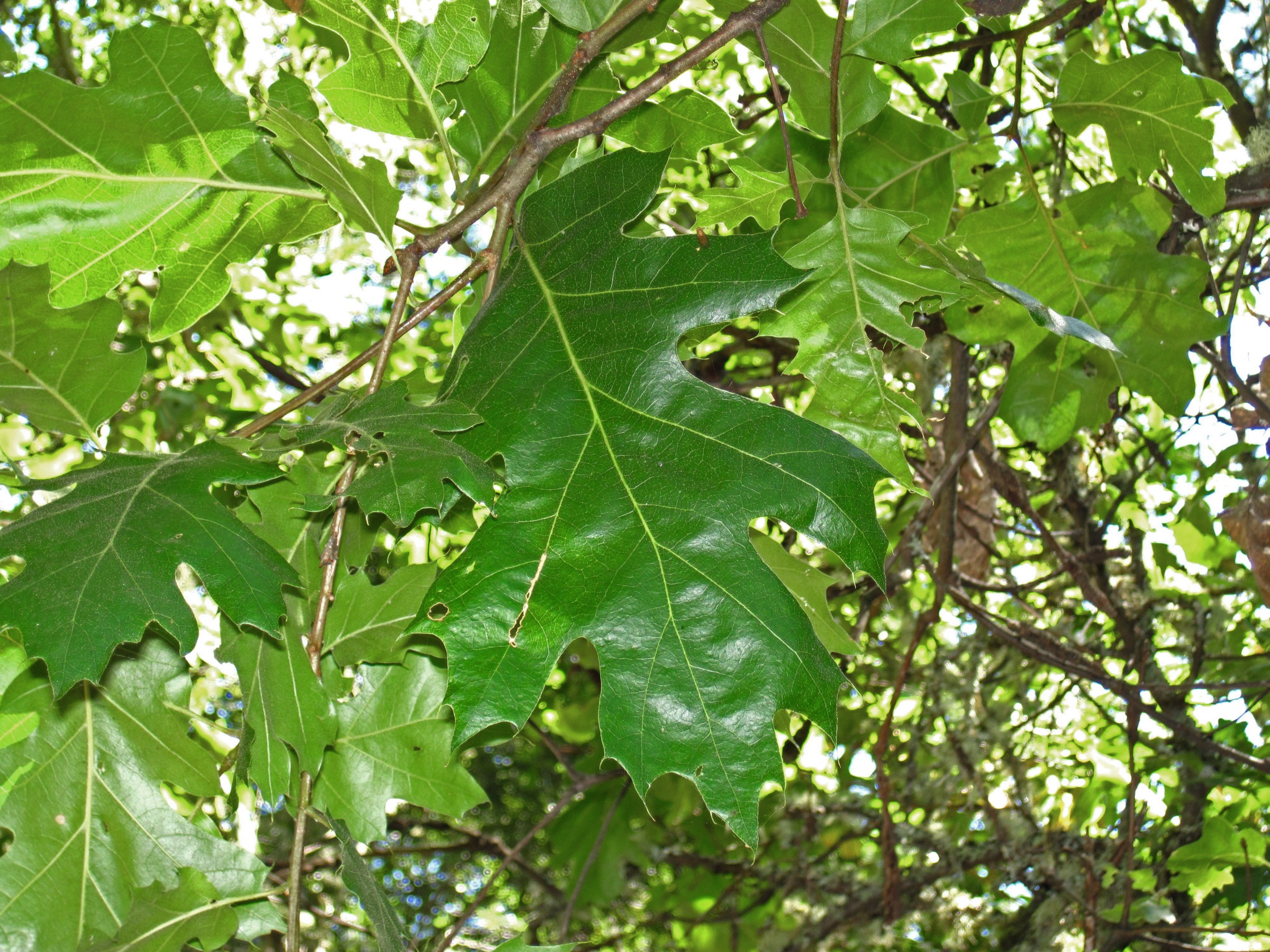
The tallest and most massive of all pines, with a straight bole that can top 200 feet and long, plume-like upper limbs. The needles come in bundles of five, blue-green and slightly twisted, marking it as a true white pine. What settles the identification from a distance is the cone: sugar pine bears the longest cones of any conifer, cylindrical and 12 to 20 inches long, dangling from the branch tips like pendulums. The seeds are large and edible, each carried on a papery wing, and the mature bark breaks into long cinnamon-to-purplish plated ridges.
Indigenous & historical use
The Sierra Miwok of the Yosemite region gathered the large, oily sugar-pine seeds as a relished food. Rather than climb after the heavy cones and twist them off by hand, harvesters swayed and then rotated the limb until the ripe cones worked themselves free, a technique recorded by Samuel Barrett and Edward Gifford in Miwok Material Culture (1933). The tree’s common name comes from the sweet, resinous sap that beads from wounds in the trunk, which was also eaten.
Ecological role
Sugar pine is a keystone of the western-slope mixed-conifer forest, growing among ponderosa and Jeffrey pine, white fir, incense cedar, and black oak. Its big seeds are cached by Douglas squirrels, chipmunks, and Steller’s jays and eaten by black bears in autumn, and those forgotten caches are much of how the tree regenerates. Since about 1909 it has been hit hard by an introduced fungus, white pine blister rust (Cronartium ribicola), which spends part of its life cycle on currants and gooseberries (Ribes) before killing pines; the Tahoe Basin now sees active replanting of rust-resistant sugar pine seedlings.
Habitat & range
A dominant conifer of the yellow-pine and red-fir belt on the western slope of the Sierra Nevada, roughly 2,000 to 7,500 ft. It is native to the Lake Tahoe Basin below about 7,000 ft (the west-shore Sugar Pine Point is named for it) but thins out east of the crest, so it is only a marginal presence in the drier Mammoth country.
In the garden
A very large specimen or shade tree that needs full sun and a lot of room, not a small-yard plant. It prefers sandy or loamy, well-drained soil and does poorly in clay. Low summer water once established.
Propagation
From seed, which needs one to three months of cold-moist stratification to break dormancy. Sow it fresh in fall or stratify and sow in spring; no smoke or heat treatment is needed. Sugar pine is not practically grown from cuttings.
Where to see it near you
- iNaturalist — observed across California (map)
- The mixed-conifer forest around Lake Tahoe, especially Sugar Pine Point on the west shore.
Sources
- Calscape · iNaturalist · Wikipedia
- Indigenous use: Barrett, S.A. & E.W. Gifford, Miwok Material Culture (1933), “Conifers.”
Commonly confused with
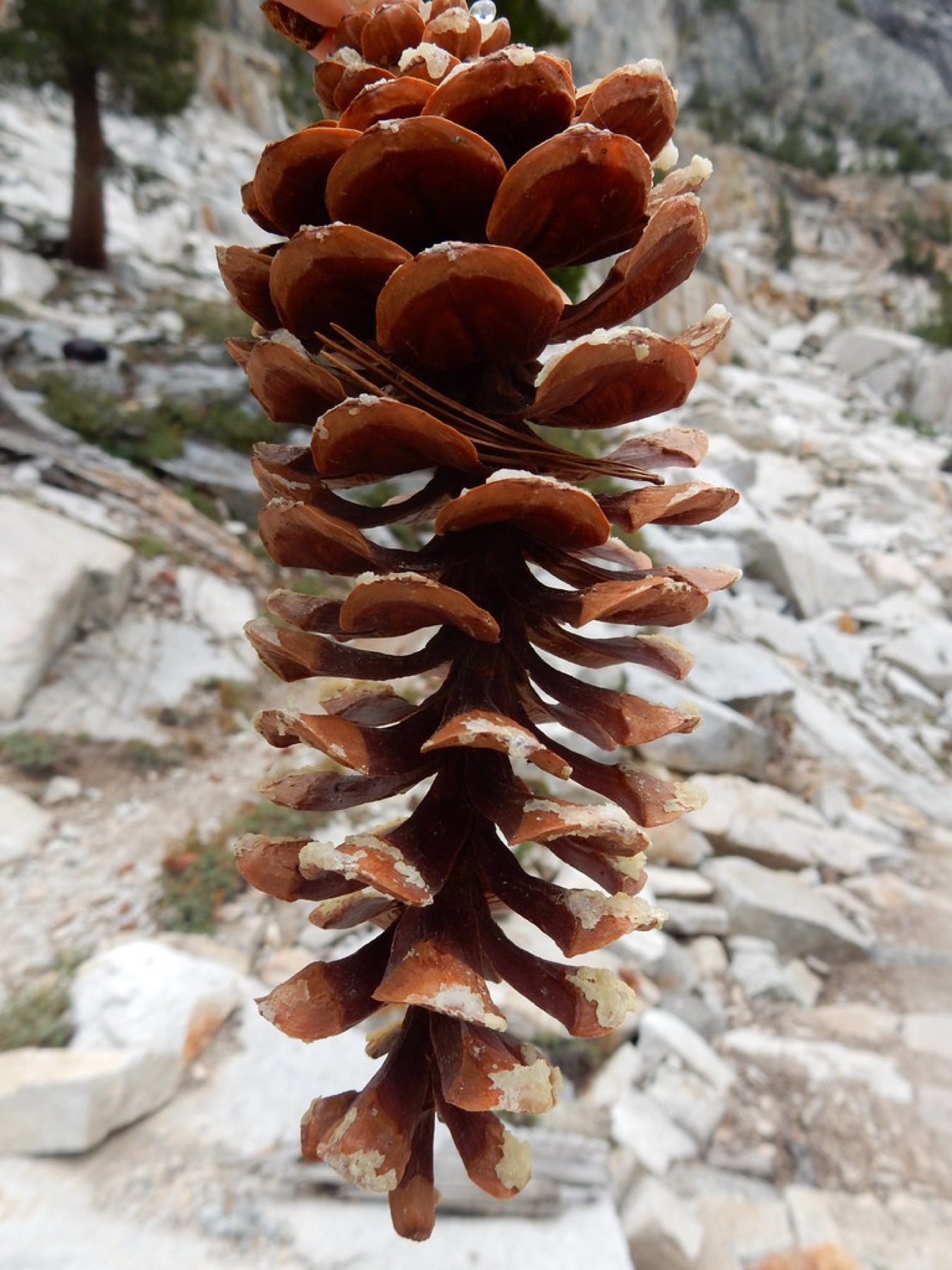 Western White Pine 🌿 Pinus monticola also five needles to a bundle, but its cones are far shorter (5–10 in) and slimmer. Sugar pine's cones are giant.
 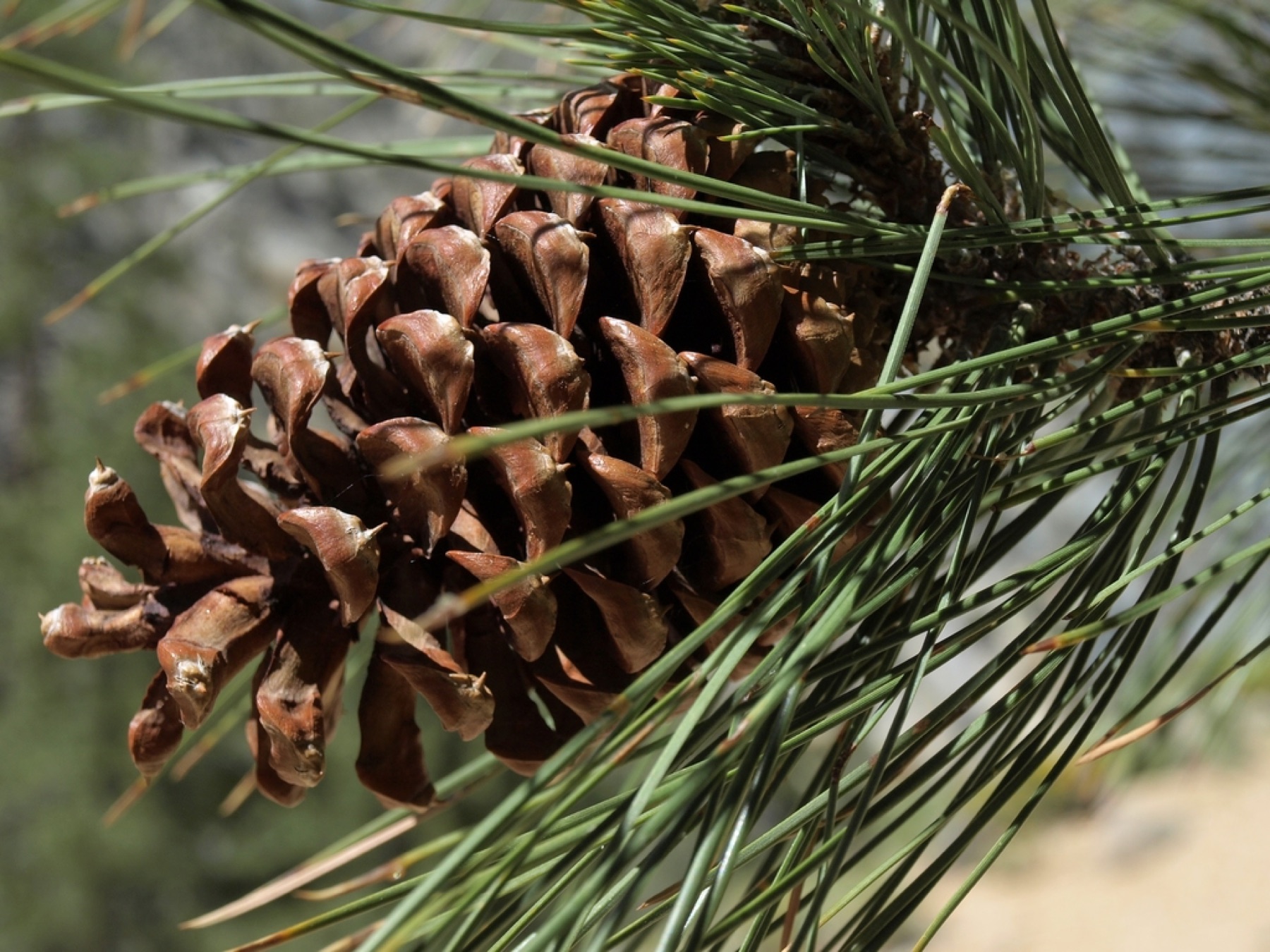 Jeffrey Pine 🌿 Pinus jeffreyi needles in bundles of three, not five, and their cones are short and prickly rather than long and hanging.