Jeffrey Pine
Pinus jeffreyi · Pinaceae
- Form
- Tree
- Height
- 80–130 ft
- Sun
- Full Sun
- Water
- Low
- Habitat
- Montane · Pinyon Juniper
🌿 California native
Quick facts
- Habitat: Montane forest, upper Pinyon-Juniper Woodland (Big Bear, Eastern Sierra)
- Form / size: Tall conifer, 80–130 ft
- Sun: Full sun · Water: Low (mountain rainfall/snow)
- The smell test: bark crevices smell of vanilla / butterscotch
Description
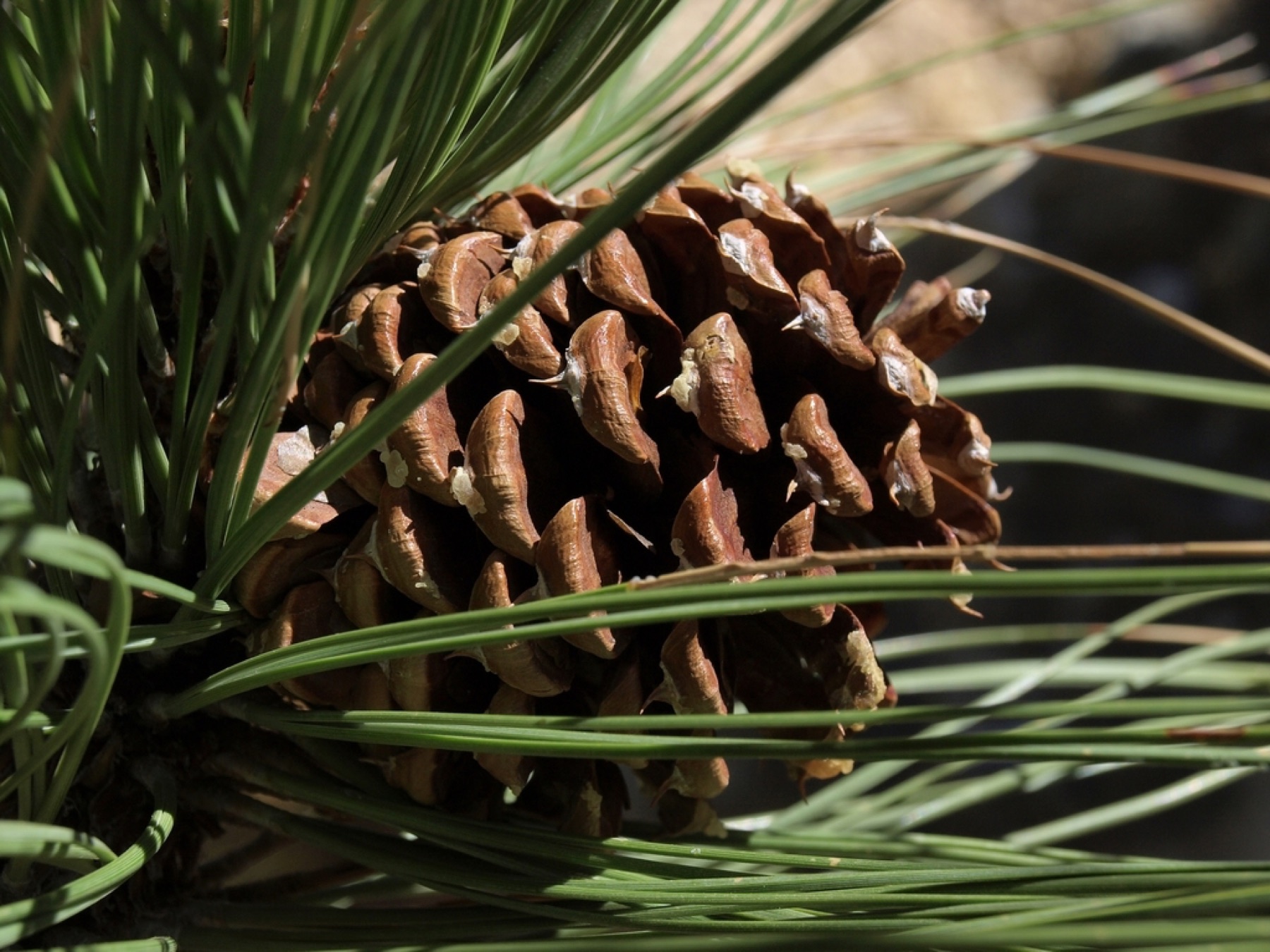
A stately mountain pine with long (5–10 in) blue-green needles in bundles of three, and large, heavy cones. Two famous tells: warm reddish, jigsaw-puzzle bark that smells of vanilla or butterscotch in the sun, and cones whose prickles curve inward (so the cone feels smooth in the hand). Dominant on the dry, higher slopes around Big Bear and throughout the Eastern Sierra.
Wildlife & pollinators
Wind-pollinated. Big seeds feed squirrels, chickarees, and birds (nutcrackers, jays); the tree anchors montane forest food webs.
Habitat & range
Montane and upper pinyon zones of the Sierra Nevada, the Eastern Sierra, and the higher Southern California ranges (San Bernardino/San Jacinto). Tolerates cold, drought, and poor soils better than ponderosa.
Propagation
From seed — collect mature cones, extract seed, and cold-moist stratify before spring sowing. Plant where it will stay; pines resent transplanting once the taproot forms.
Where to see it near you
- iNaturalist — observed across California (map)
- Common around Big Bear and the Eastern Sierra.
In the landscape
A magnificent, fragrant shade and timber tree for large mountain properties. Full sun, excellent drainage, low water once established. Fire-adapted (thick bark).