Ponderosa Pine
Pinus ponderosa · Pinaceae
- Form
- Tree
- Height
- 100–160 ft
- Sun
- Full Sun
- Water
- Low
- Habitat
- Montane
🌿 California native
Quick facts
- Habitat: Montane forest (Big Bear and mid-elevation slopes)
- Form / size: Very tall conifer, 100–160 ft
- Sun: Full sun · Water: Low
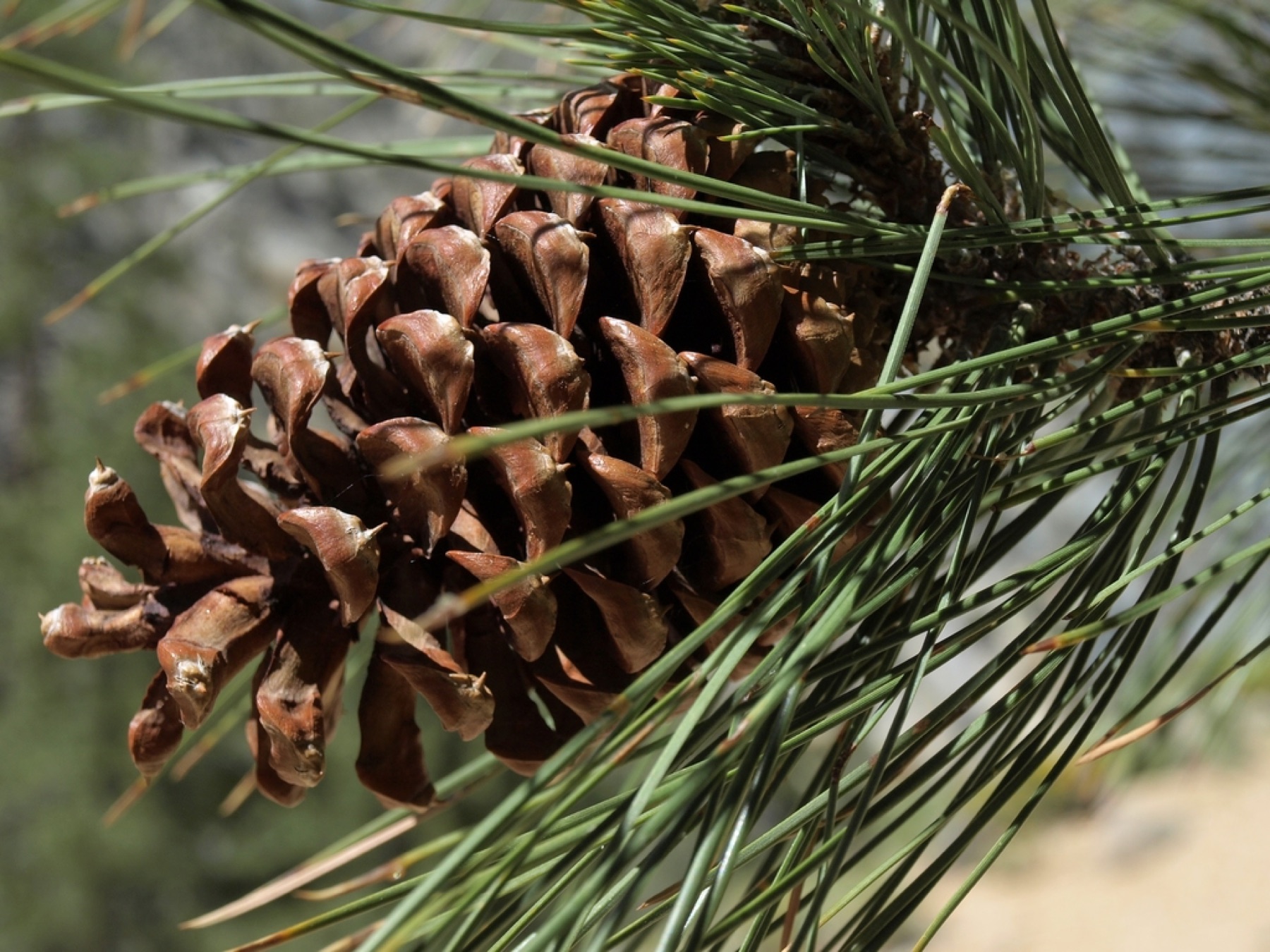
- The tell: cone prickles point out (prickly); bark plates smell faintly of turpentine/butterscotch
Description
One of the West’s iconic timber pines — towering, straight, with long needles (usually in bundles of three) and, on older trees, beautiful orange-brown, jigsaw-plated bark. The cones are armed with outward-pointing prickles that bite when you close your hand on them. Forms open, park-like montane forest.
Wildlife & pollinators
Wind-pollinated; seeds feed squirrels, jays, nuthatches, and woodpeckers, which also forage and nest in the bark.
Habitat & range
Mid-elevation Montane forest across the West, including the San Bernardino Mountains around Big Bear and the western Sierra. Generally a bit lower/moister than Jeffrey Pine.
Propagation
From seed with cold-moist stratification; sow in deep containers for the taproot and plant out young.
Where to see it near you
- iNaturalist — observed across California (map)
- Big Bear montane forest.
In the landscape
A grand shade tree for large mountain lots. Full sun, deep well-drained soil, low water. Thick bark makes mature trees fire-resistant.