White Alder
Alnus rhombifolia · Betulaceae
- Form
- Tree
- Height
- 50–80 ft
- Sun
- Full Sun
- Water
- High
🌿 California native
Quick facts
- Habitat: Riparian streambanks and canyon creeks of the Sierra and foothills
- Form / size: Streamside tree, 50–80 ft
- Sun: Full sun · Water: High (perennial water)
- The tell: small, woody, cone-like fruits persisting on bare winter twigs; drooping catkins before the leaves
Description
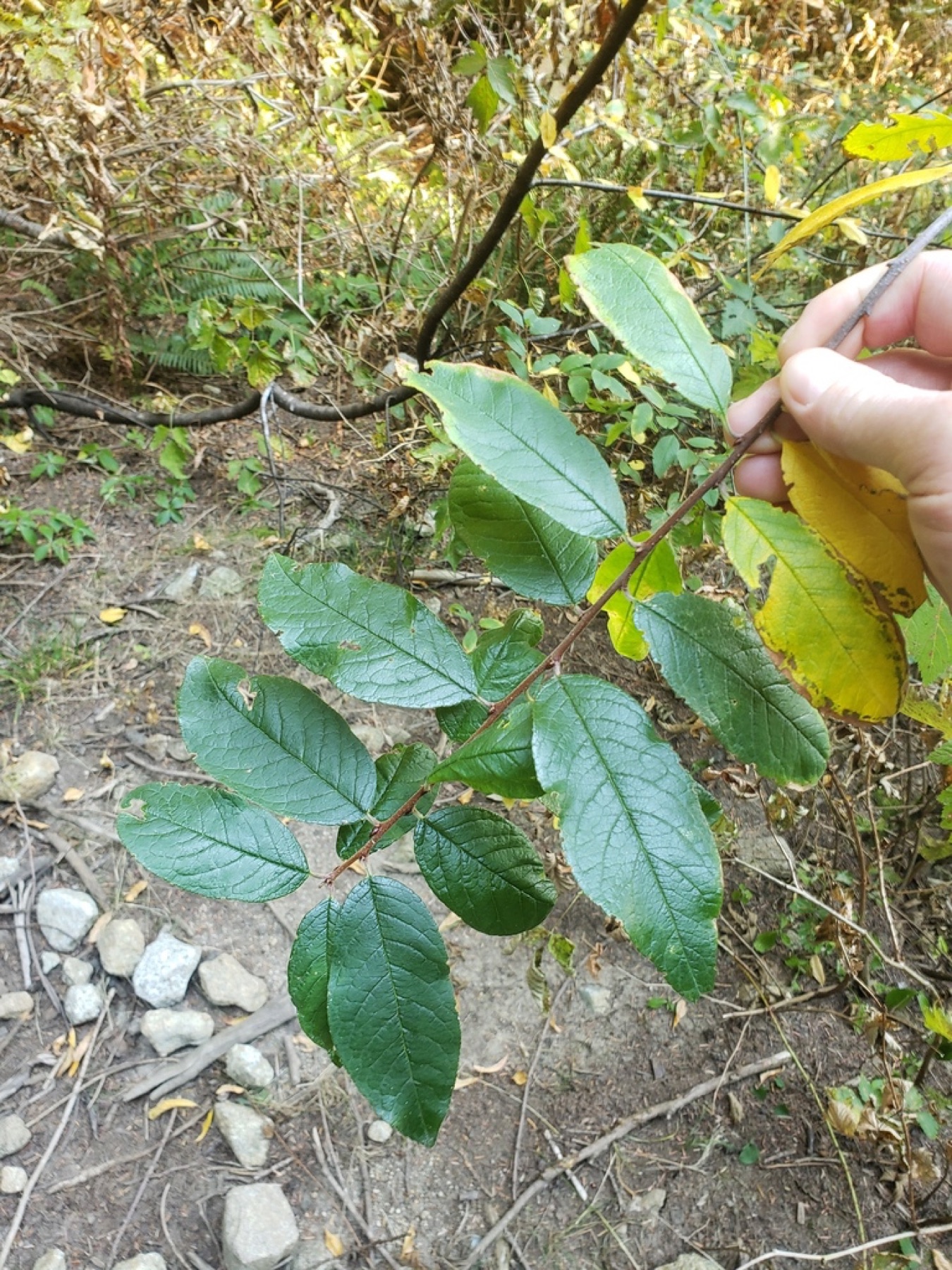
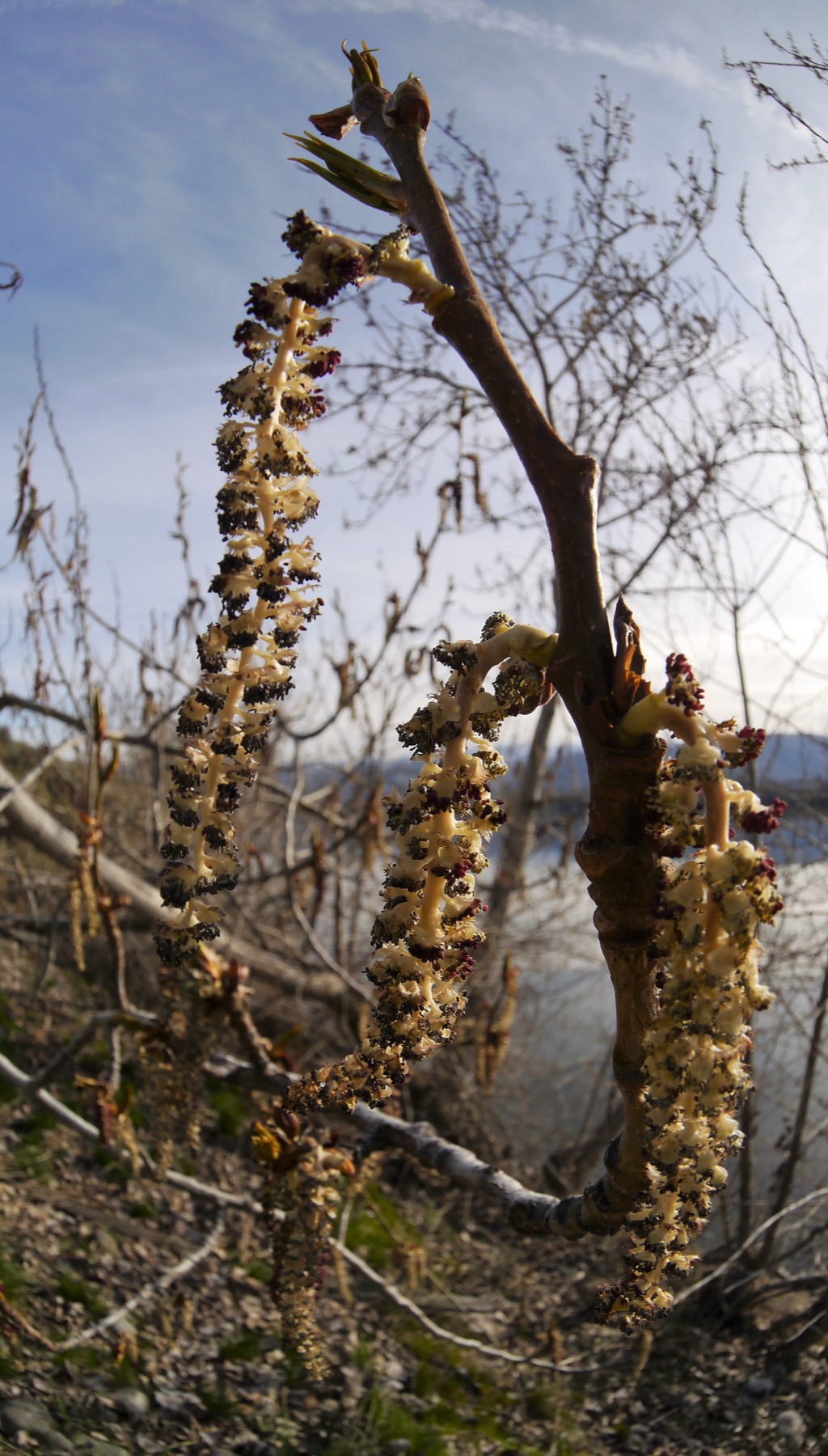
The classic streamside tree of Sierra creeks, following perennial water in a ribbon of pale-gray trunks. The leaves are rhombic to oval, finely and singly toothed, with flat margins that do not roll under (a trait that separates it from coastal red alder). In late winter, drooping yellowish-brown male catkins open before the leaves emerge, and the female catkins mature into small, blackish, woody “cones” a little over a half-inch long that hang on the bare twigs through winter and give the tree away at a glance.
Ecological role
White alder is a nitrogen-fixer: bacteria in its root nodules pull nitrogen from the air, letting the tree colonize raw, infertile streambank gravel and enrich the soil for everything that follows. Its nitrogen-rich leaves drop into the creek and feed the aquatic insects, such as caddisfly larvae, that anchor the stream food web, and the tree shades and cools the water while its roots hold the bank. Pine siskins eat the tiny seeds, deer browse the twigs, beavers take the bark and wood, and it hosts the caterpillars of the western tiger swallowtail.
Habitat & range
Perennial streams and rivers of the Sierra Nevada and its foothills, most abundant on the wetter western slope, roughly 300 to 8,000 ft. It grows in the Lake Tahoe basin along lower-elevation streams; on the drier east side around Mammoth it is scarce and largely replaced by mountain alder (Alnus incana ssp. tenuifolia).
In the garden
Only where there is permanent water: a streambank, pond edge, or a spot with reliable summer moisture. It is very fast-growing and useful for quick riparian restoration and shade, but its aggressive, water-seeking roots mean it should be kept well away from foundations, pavement, and septic lines. Full sun.
Propagation
From the tiny winged seeds shed by the woody cones; surface-sow them on moist mix (they need light) and keep the bed continuously wet, with a short cold-moist stratification to help. It can also be grown from dormant cuttings, though rooting is variable. In the wild it volunteers freely on fresh, scoured banks.
Where to see it near you
- iNaturalist — observed across California (map)
- Lower-elevation streams around Lake Tahoe and throughout the western Sierra foothills.
Sources
Commonly confused with
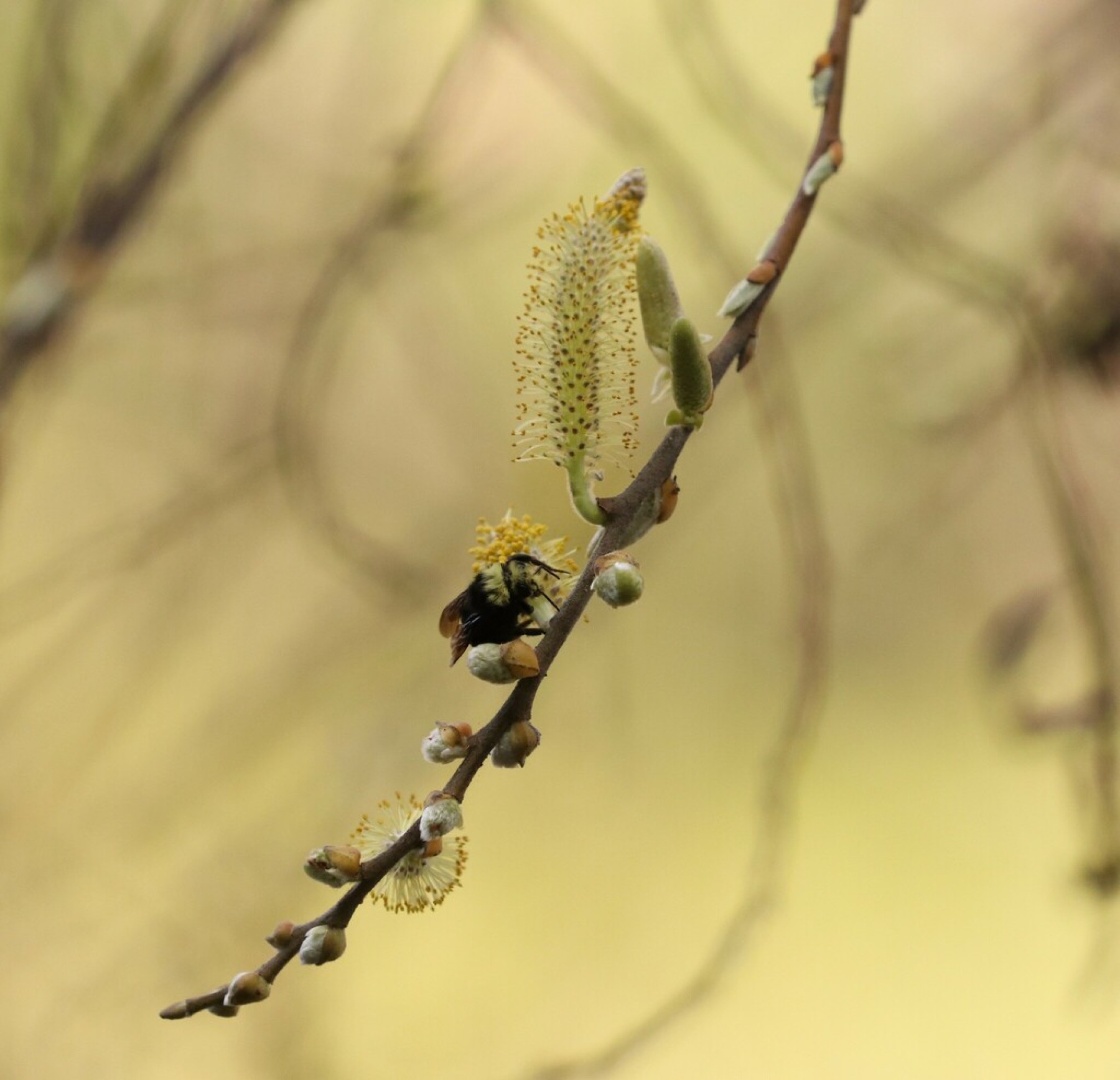 Arroyo Willow 🌿 Salix lasiolepis shares wet streambanks and catkins, but willows have narrow lance-shaped leaves and soft catkins with no woody, persistent cones. The little alder "cones" are the giveaway.