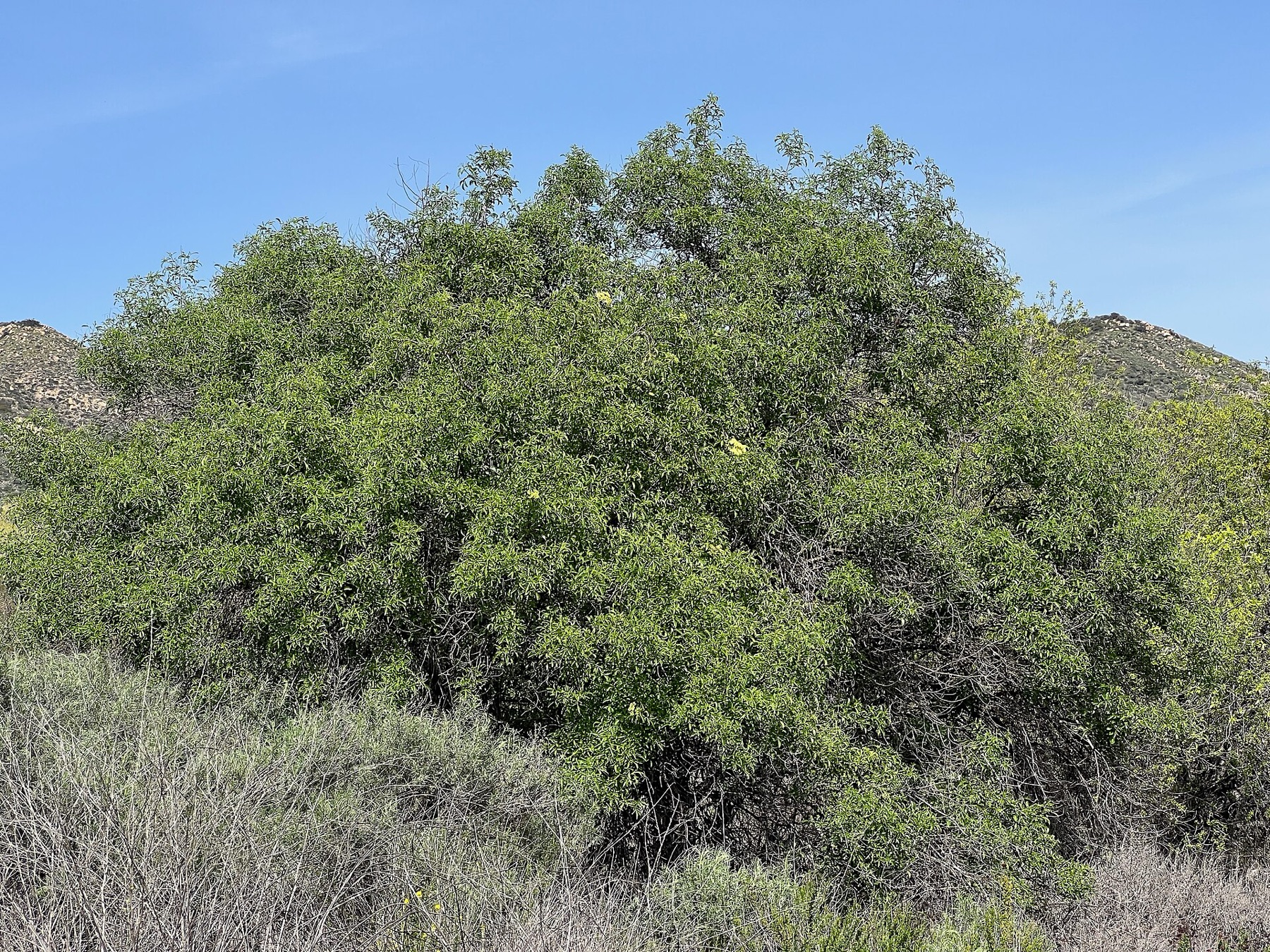
Arroyo Willow
Salix lasiolepis · Salicaceae
- Form
- Shrub
- Height
- 10–30 ft
- Sun
- Full Sun
- Water
- High
- Blooms
- Feb, Mar, Apr
- Habitat
- Riparian
🌿 California native
Quick facts · Habitat: Riparian — creekbanks, washes, seeps (incl. Trabuco Creek) · Form / size: Multi-stemmed shrub / small tree, 10–30 ft · Sun: Full sun · Water: High — wants wet feet · Blooms: Late winter–spring (catkins) · Pollinator value: High (early pollen)
Description
The most common native willow of Southern California streamsides — usually a dense, multi-trunked shrub or small tree with smooth grey bark and slender, lance-shaped leaves that are glossy green above and pale/whitish below. Like all willows it’s dioecious (separate male and female plants) and blooms in fuzzy catkins before or with the new leaves. A fast, foundational riparian pioneer.
Indigenous & historical use
For the Tongva (Gabrielino) and Acjachemen (Juaneño), whose homelands cover coastal and inland Orange County, the standard home was a dome-shaped structure built by bending willow branches into a frame and thatching it with tule — the kiiy to the Tongva, the kiicha to the Acjachemen. The Gabrielino-Tongva Tribe’s own record names arroyo willow specifically for the frame everything else was tied onto. The bark had a use too: the Tongva stripped and worked the flexible inner bark of willow (and cottonwood) into cordage, including the back panel of women’s skirts. Willow bark’s other well-known use — chewed or brewed for pain relief, since it contains the compound aspirin is derived from — is documented regionally rather than specifically for the Tongva or Acjachemen: the Chumash to the north chewed it for toothaches, and the Cahuilla to the east bathed in and drank willow water for fever. It’s likely local peoples knew the same property, but that specific practice isn’t confirmed in the record for Orange County’s own tribes, so it’s worth naming as neighboring knowledge rather than claiming it here. A plant that grows this fast, this easily, along every creek in the region was infrastructure, not just a convenience.
Ecological role
Arroyo willow blooms before most of the creek has anything else to offer, so its catkins are one of the first pollen sources native bees get all year. Calscape lists it as a host plant for 13 confirmed and well over 200 likely butterfly and moth species, including Lorquin’s admiral, mourning cloak, and western tiger swallowtail. Feeding insects is only part of the job. The roots spread through wet soil and lock the bank in place, so when winter floods come through, arroyo willow is a big part of why the channel doesn’t just wash out. The canopy shades the water and keeps it cooler through summer, which matters more than it sounds like — steelhead and other native fish need cold water to survive, and a bare streambank heats up fast. Dense willow thickets are also nesting structure. The least Bell’s vireo and the southwestern willow flycatcher, both federally endangered, build in exactly this kind of low, tangled riparian growth. USGS surveys along the San Luis Rey River found vireos nesting overwhelmingly in willow-dominated habitat — willow-cottonwood, mixed willow riparian, willow-sycamore — even though a handful of other riparian species show up in the mix. Restoration for both birds centers on willow because that’s what they actually use. Cut a stand of arroyo willow down, and several other species lose the scaffolding their life cycle depends on.
Habitat & range
Lines creeks, washes, ponds, and seeps throughout cismontane California — a backbone of local Riparian corridors and a top choice for streambank restoration.
In the garden
Only for wet or regularly irrigated spots (pond/creek edges, rain gardens, bioswales) — not a dry-garden plant. Fast and vigorous; can be coppiced.
Propagation
Famously easy from cuttings — willows root so readily they’re the classic “living stake.” Push dormant cuttings or live stakes straight into moist ground in winter and they sprout. (Willow water is even used as a natural rooting hormone for other plants.) Also grows from seed, but seed is short-lived and rarely needed.
Where to see it near you
- iNaturalist — observed in Orange County
- Any local creek — Trabuco, Aliso, San Juan.
Problems
Vigorous and trouble-free in the wet sites it likes; aphids and gall-forming insects are cosmetic.
Sources
- Calscape · iNaturalist · Wikipedia
- Indigenous use: Gabrieleno-Tongva Tribe — Kiiy (House) · Northern Chumash Tribal Council — Arroyo Willow (Chumash bark-chewing for toothache, cited for regional context, not as a Tongva/Acjachemen source) · Bean & Saubel, Temalpakh: Cahuilla Indian Knowledge and Usage of Plants (1972) — willow-water fever remedy, cited for regional context
Commonly confused with
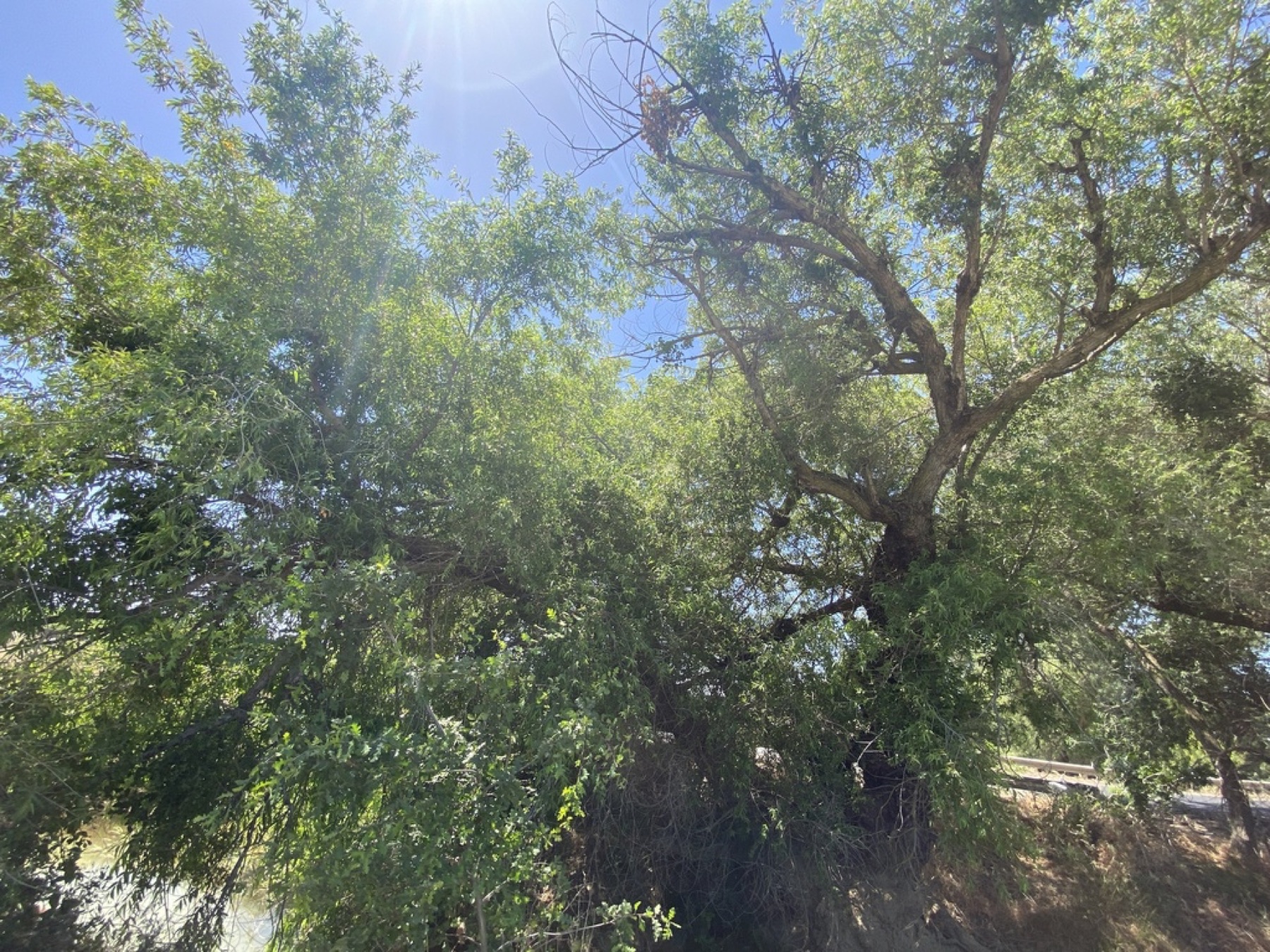 Goodding's Willow 🌿 Salix gooddingii grows into a larger single-/few-trunked tree with yellowish twigs and furrowed bark; arroyo willow stays shrubbier and multi-stemmed with grey bark.
 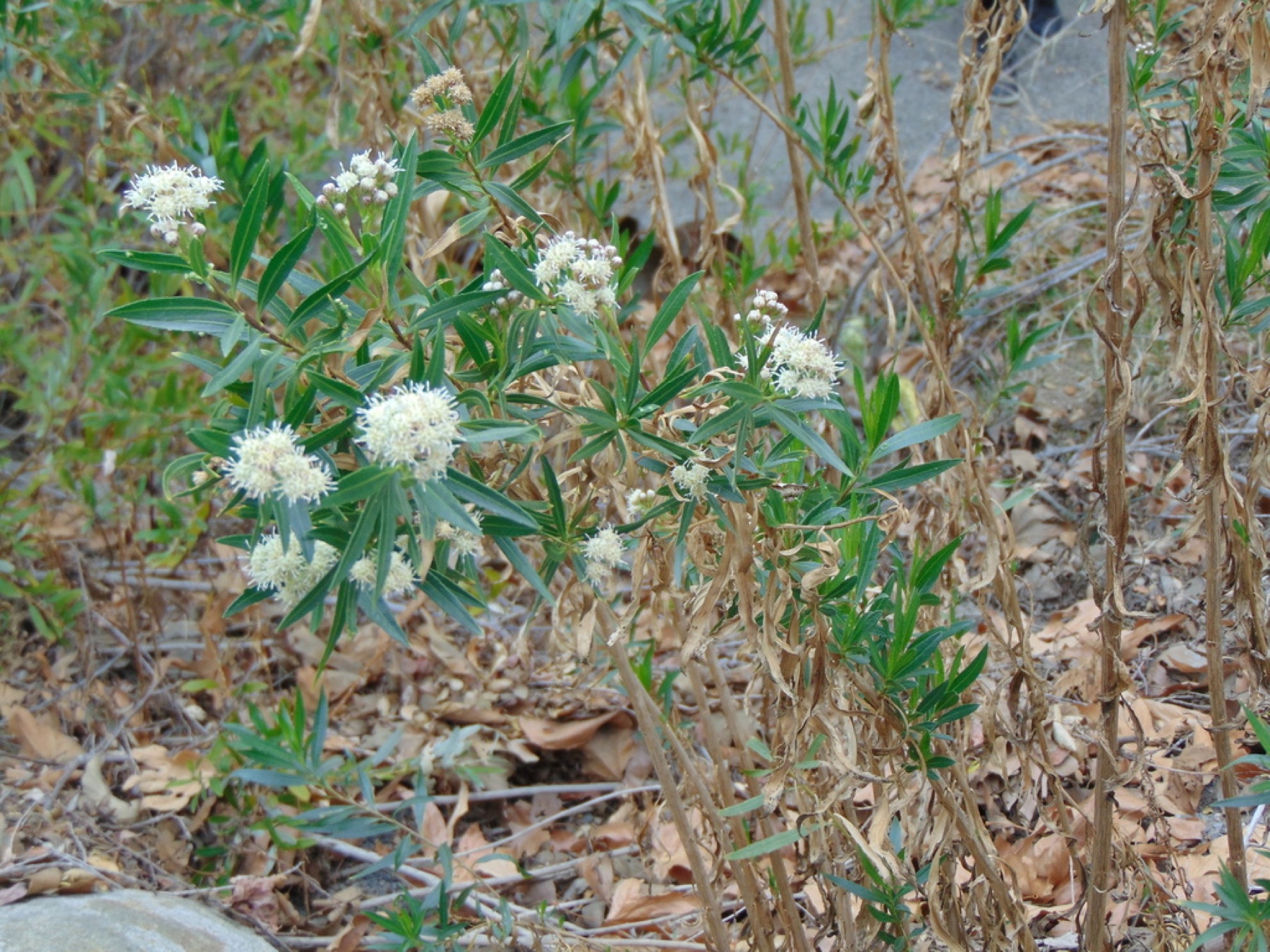 Mule Fat 🌿 Baccharis salicifolia looks willow-like but is not a willow: evergreen, with toothed leaves and white flower clusters (it's in the sunflower family).