Goodding's Willow
Salix gooddingii · Salicaceae
- Form
- Tree
- Height
- 30–50 ft
- Sun
- Full Sun
- Water
- High
- Blooms
- Mar, Apr
- Habitat
- Riparian
🌿 California native
Quick facts · Habitat: Riparian — larger streams, rivers, wet bottoms · Form / size: Tree, 30–50 ft (single to few trunks) · Sun: Full sun · Water: High · Blooms: Spring (catkins) · Pollinator value: High
Description
The big native “black willow” of Southern California waterways — a true tree with one to a few trunks, deeply furrowed grey bark on age, yellowish twigs, and narrow, finely toothed lance-shaped leaves green on both sides. Where Arroyo Willow is the streamside shrub, Goodding’s is the canopy willow of larger, wetter bottoms.
Indigenous & historical use
Goodding’s willow isn’t a coastal-canyon tree. It grows along the desert-edge rivers and washes of inland Southern California, including the Whitewater River and San Felipe Creek and Wash, which is Cahuilla territory. The Cahuilla used the wood to build cradle boards, documented by Lowell Bean and Katherine Siva Saubel in Temalpakh, their landmark record of Cahuilla plant knowledge. Further east and south, where the species is even more at home along the Colorado and Gila river systems, the Pima steeped the leaves and bark into a fever remedy, split young branches for sewing coiled baskets, and ate the catkins raw. The Yuma and Mohave drank tea made from the leaves and bark. Willow bark and leaves contain salicin, the same compound behind aspirin. People who lived along these rivers for generations were treating fevers with a plant that actually worked.
Ecological role
Goodding’s willow is a pioneer. It’s one of the first trees to take root on a bare gravel bar after a flood scours a channel clean, and it grows fast enough to get ahead of the grasses and claim that ground before anything else can. Paired with Fremont cottonwood, it forms cottonwood-willow gallery forest, and that habitat type is regularly ranked among the most productive bird habitats in the western United States. The endangered southwestern willow flycatcher depends on it directly. A 2025 USGS survey of the San Dieguito and upper San Luis Rey rivers found every flycatcher territory in habitat dominated by Goodding’s black willow, most of it with better than 95 percent native plant cover. Flycatcher numbers have collapsed along with the habitat: dammed rivers, diverted water, and cleared banks took the dense creekside thickets this bird needs to breed, and there’s nowhere else for it to go. Beavers used to be part of this system too, eating the branches and building dams out of them, before trapping wiped them out of most Southwestern rivers in the 1800s. Calscape lists 177 likely species of moths and butterflies supported by this tree, on top of the bees working the spring catkins and the birds and small mammals using the cover. Pull the willow out of a stream corridor. The birds don’t have a backup plan.
Habitat & range
Rivers, large creeks, and wet floodplains across the warmer parts of California and the Southwest; a key tall component of mature Riparian forest.
In the garden
A fast shade tree for large, wet sites only. Roots seek water aggressively — keep well away from pipes, foundations, and septic systems.
Propagation
Very easy from dormant cuttings / live stakes, like all willows — set into moist ground in winter. Seed is viable only briefly and rarely used.
Where to see it near you
- iNaturalist — observed in Orange County
- Larger creek bottoms and river reaches.
Problems
Trouble-free in wet sites; the usual willow aphids/galls are cosmetic.
Sources
- Calscape · iNaturalist · Wikipedia
- Ecological role: USDA Forest Service FEIS species review · USGS — Southwestern Willow Flycatcher surveys, San Dieguito & upper San Luis Rey rivers (2025)
- Indigenous use: Native American Ethnobotany Database — Salix gooddingii · Bean & Saubel, Temalpakh: Cahuilla Indian Knowledge and Usage of Plants (1972), cited via NAEB
Commonly confused with
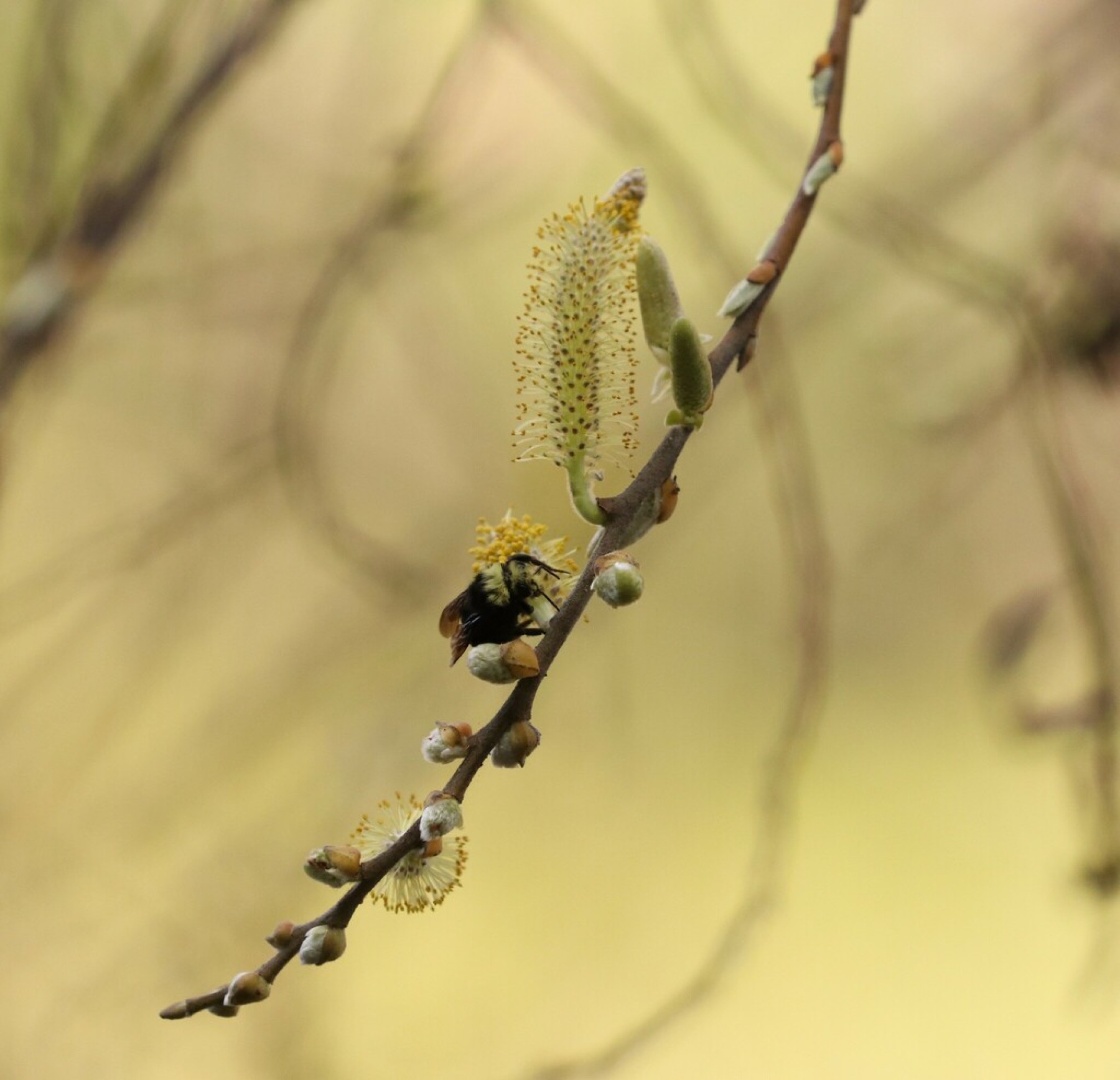 Arroyo Willow 🌿 Salix lasiolepis a multi-stemmed shrub with grey twigs and leaves whitish beneath; Goodding's is a single-trunked tree with yellowish twigs and green-both-sides leaves.
 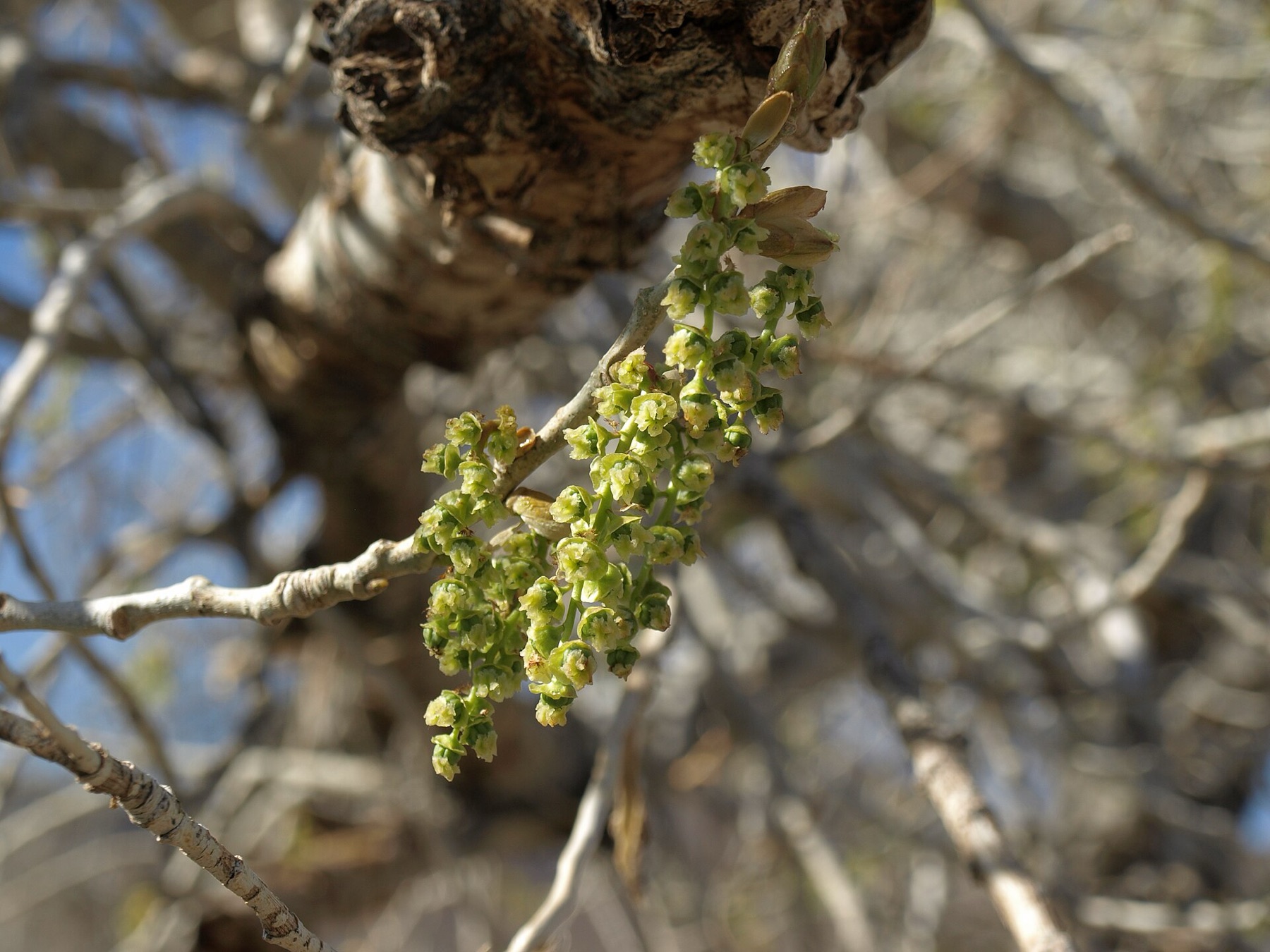 Fremont Cottonwood 🌿 Populus fremontii same habitat but broad triangular leaves that flutter, not narrow willow leaves.