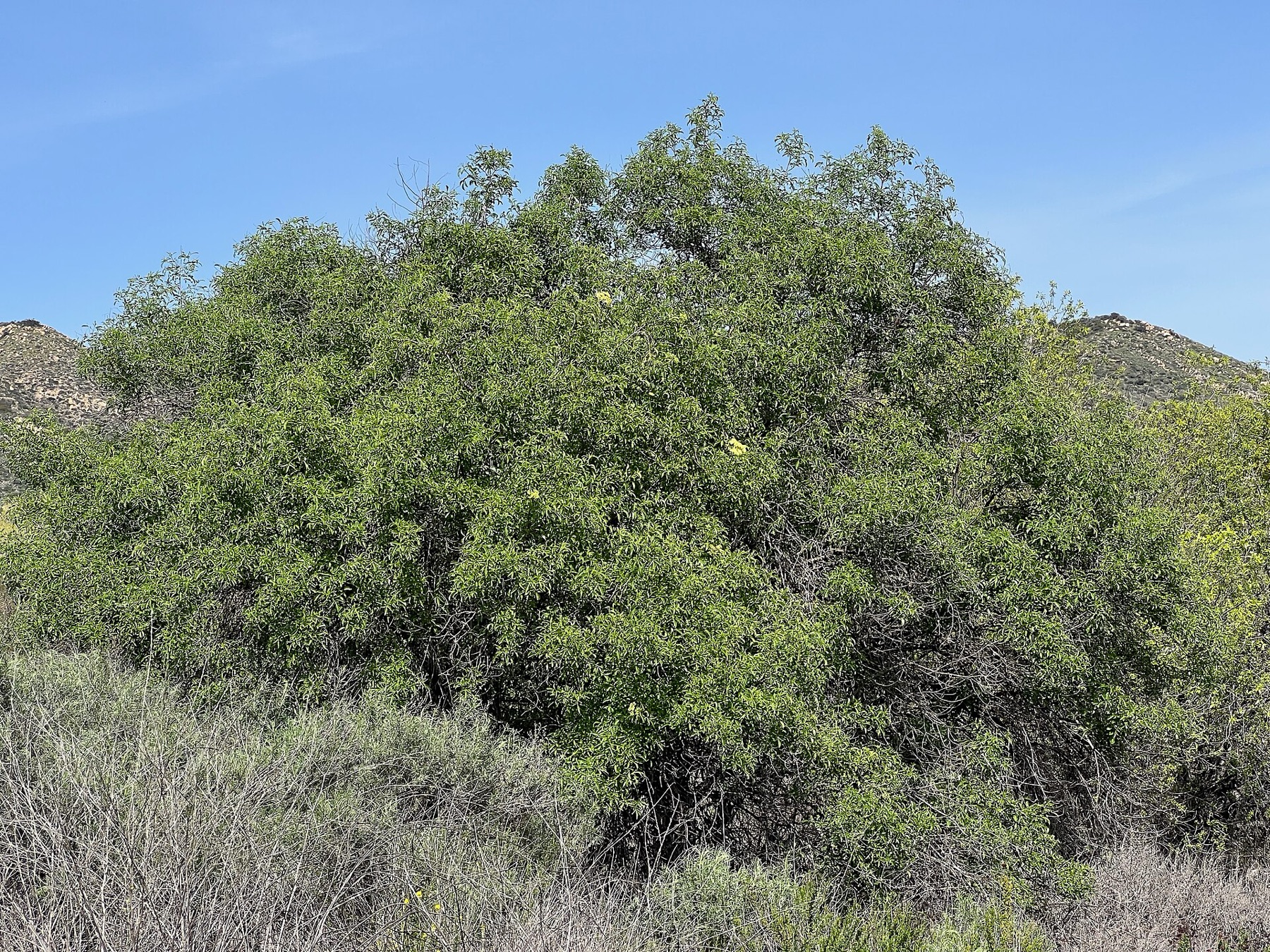
Fremont Cottonwood
Populus fremontii · Salicaceae
- Form
- Tree
- Height
- 40-90 ft
- Sun
- Full Sun
- Water
- High
- Blooms
- Feb, Mar, Apr
- Habitat
- Riparian
🌿 California native
Quick facts · Habitat: Riparian - rivers, creeks, floodplains, sandy washes · Form / size: Large deciduous tree, 40-90 ft · Sun: Full sun · Water: High · Blooms: Late winter-spring catkins · Pollinator value: Low, but habitat value is high
Description
A fast, broad-crowned creek tree with large triangular to heart-shaped leaves that flutter in the slightest breeze. Mature trunks become rough and furrowed; young growth is smooth and pale. In spring, cottonwoods produce hanging catkins, followed by the familiar cottony seed fluff on female trees.
Indigenous & historical use
The Cahuilla of inland Southern California prepared the bark and leaves as medicine for headaches, rheumatism, and wounds, documented by Bean and Saubel in Temalpakh. The Akimel O’odham of southern Arizona wove the twigs into baskets, and the Hopi carve the soft root of the cottonwood into kachina dolls, a practice that continues today.
Ecological role
Fremont cottonwood’s ecological role centers on providing physical structure to riparian habitat rather than direct pollinator resources. The tree’s soft wood decays readily, creating cavities that woodpeckers, owls, and wood ducks use for nesting and roosting, and the peeling bark of mature trees adds further shelter and foraging sites for cavity-nesting birds. The canopy shades the streamchannel and the root systems spread through wet sediment, anchoring the banks during high water. Beavers eat the soft bark, which damages individual trees but also creates cavity-like wounds that end up supporting cavity-nesting birds. Cottonwood seeds float downstream on their cottony fluff and establish on post-flood sandbars, making the tree a pioneer species in channel recovery and often the first large growth to recolonize bare sediment. The catkins themselves are wind-pollinated, so bees gain little from them directly, but between the cavities, the shade, the bank stability, and the seed dispersal, cottonwood does most of its work as structure rather than as a food source.
Habitat & range
A signature tree of warm Western river corridors, washes, and floodplains. In Southern California it belongs with Western Sycamore, Goodding’s Willow, and Red Willow in the taller Riparian canopy.
In the garden
Only for large, wet sites: creek edges, restoration areas, big bioswales, or acreage with room for roots and litter. It grows fast, casts generous shade, and can be magnificent, but it is much too large and thirsty for a small dry garden.
Propagation
Very easy from dormant hardwood cuttings / live stakes set into moist soil in winter. Seed is short-lived and must land quickly on open, damp sediment after flows recede.
Where to see it near you
- iNaturalist — observed in Orange County
- Larger creek and river bottoms, especially where the floodplain is wide enough for big trees.
Problems
Messy, thirsty, and powerful-rooted by garden standards. In the right wet place, those traits are strengths.
Sources
- Calscape · iNaturalist · Wikipedia
- Indigenous use: Bean & Saubel, Temalpakh: Cahuilla Indian Knowledge and Usage of Plants (1972) · Wikipedia: Populus fremontii (Uses) · Moerman, Native American Ethnobotany (Populus fremontii)
Commonly confused with
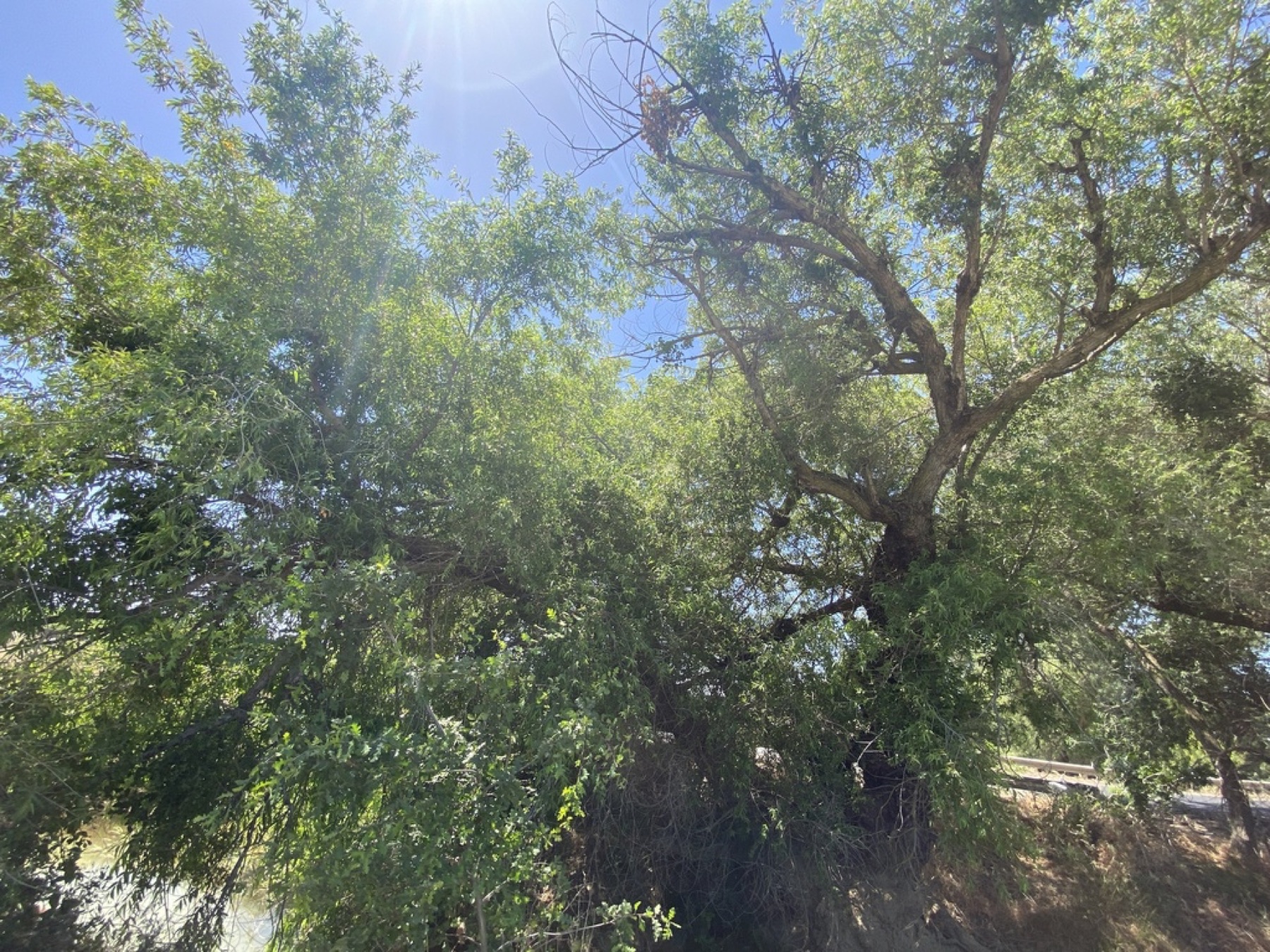 Goodding's Willow 🌿 Salix gooddingii both grow in wet bottoms, but cottonwood has broad triangular leaves; willows have narrow lance-shaped leaves.