Greenspot Nightshade
Solanum douglasii · Solanaceae
- Form
- Perennial herb
- Height
- 1-3 ft
- Sun
- Part Shade
- Water
- Low
- Blooms
- Mar, Apr, May, Jun, Jul, Aug
- Pet toxicity
- Toxic
- Habitat
- Chaparral · Coastal Sage Scrub · Riparian · Oak Woodland · Disturbed
🌿 California native
Quick facts · Habitat: Scrub edges, canyons, disturbed shade, riparian margins · Form / size: Soft perennial herb/subshrub, 1-3 ft · Sun: Part shade to sun · Water: Low to moderate · Blooms: Spring-summer · Pollinator value: Moderate
Description
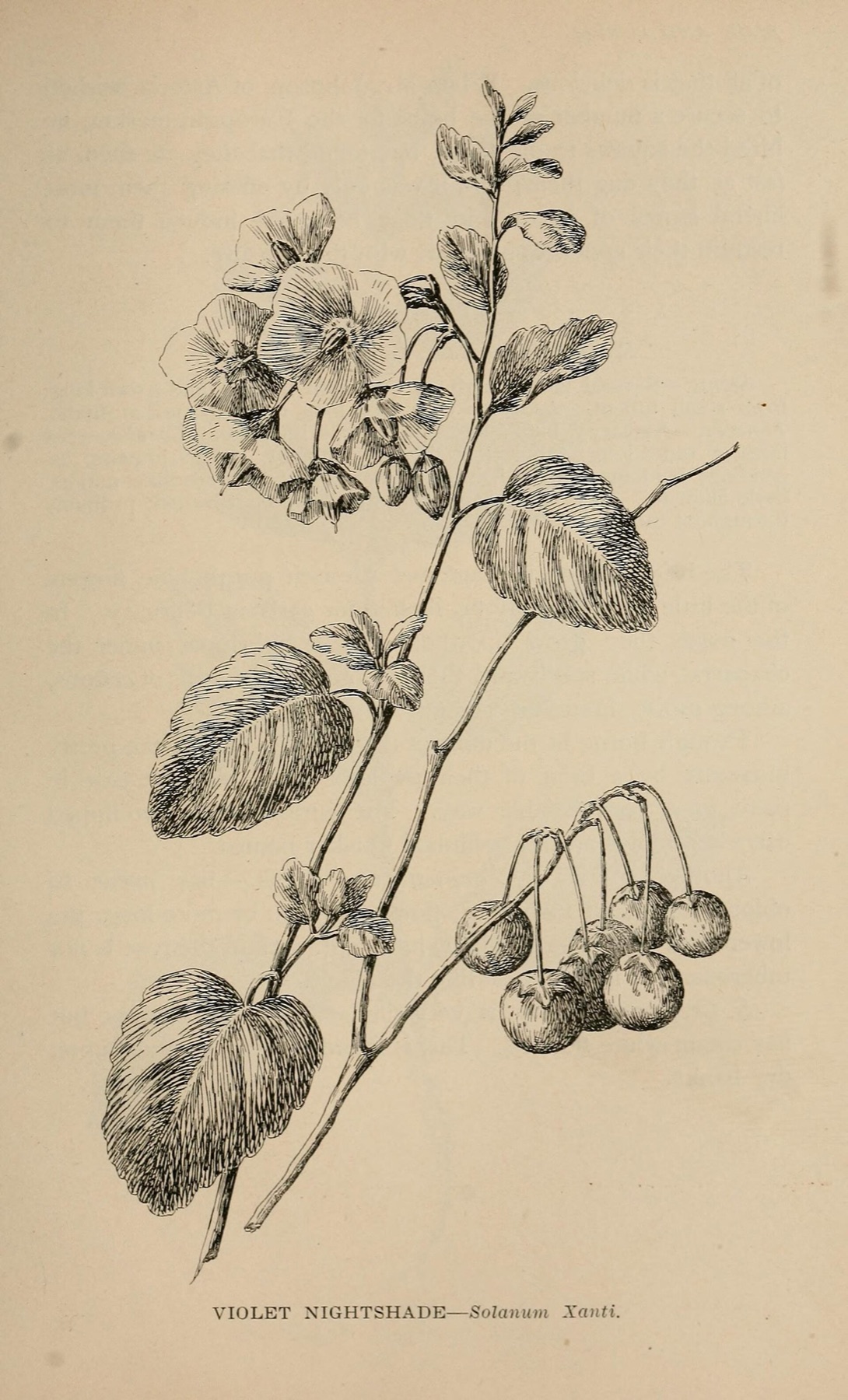
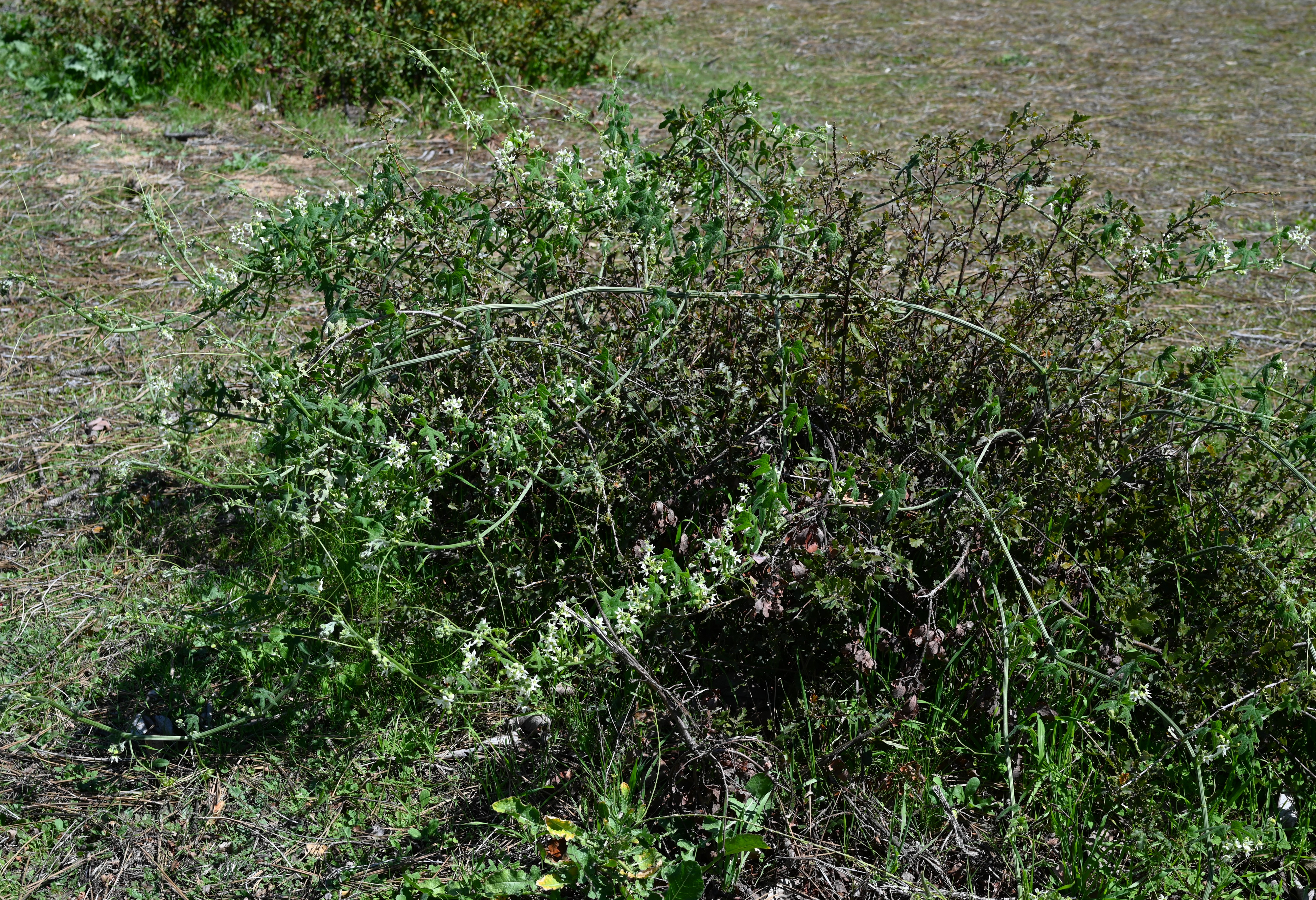
A native nightshade with soft green leaves, small white star-shaped flowers, yellow anthers, and berries that ripen dark. It often appears in semi-shaded disturbed edges and canyon bottoms.
Wildlife & pollinators
Native bees visit the flowers, and birds may take ripe berries. It also provides soft seasonal cover.
Habitat & range
Chaparral and coastal sage scrub margins, riparian edges, oak woodland shade, old lots, roadsides, and garden edges across Southern California.
In the garden
Usually a volunteer rather than a planned ornamental. It can support wildlife in rough habitat corners, but avoid it where children or pets may eat berries.
Propagation
From seed. Birds often spread it naturally; intentional planting is rarely needed.
Where to see it near you
- iNaturalist — observed in Southern California
- Canyon shade, fence lines, creek edges, and scrub margins.
Problems
Treat all parts as potentially toxic. It can self-sow into irrigated edges and rough garden corners.