Wild Cucumber
Marah macrocarpa · Cucurbitaceae
- Form
- Vine
- Height
- climbing 6–20 ft
- Sun
- Part Shade
- Water
- Low
- Blooms
- Jan, Feb, Mar, Apr, May
- Pet toxicity
- Toxic
- Habitat
- Chaparral · Coastal Sage Scrub · Oak Woodland · Riparian
🌿 California native
Quick facts
- Habitat: Scrub, chaparral, woodland edges, creek corridors
- Form / size: Fast winter-spring vine from a huge tuber
- Sun: Part shade to sun · Water (established): Low
- Blooms: Winter–spring · Pollinator value: Moderate
Description
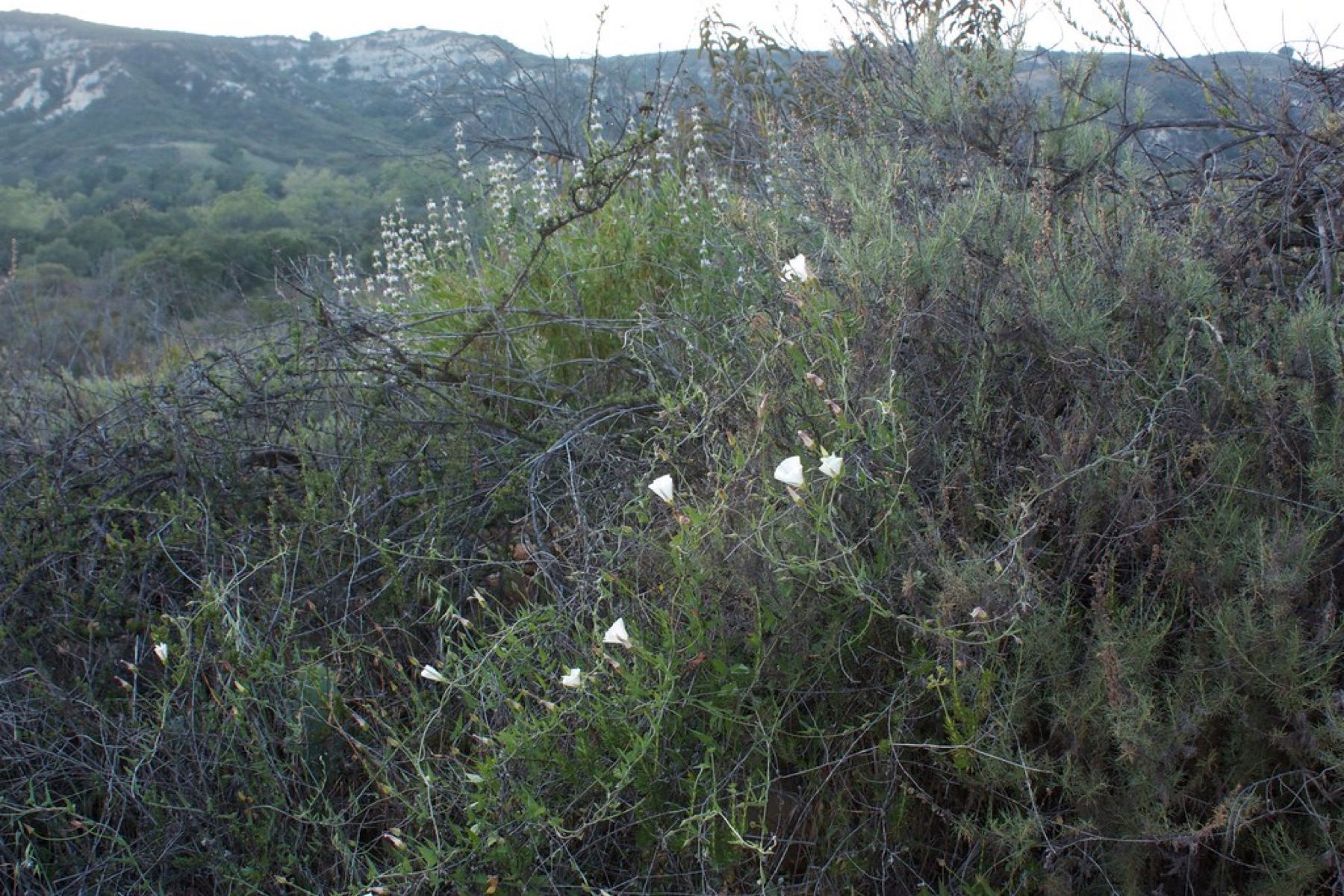
A fast native vine that appears with winter rain, climbing over shrubs with curling tendrils and broad lobed leaves. Small white flowers are followed by oval, spiny green fruits. Underground is the “manroot” — a massive storage tuber that lets the plant return year after year.
Wildlife & pollinators
Flowers feed native bees and small insects early in the year, when relatively few plants are blooming.
Habitat & range
Chaparral, coastal sage scrub, oak woodland edges, washes, and riparian margins throughout much of Southern California.
In the garden
Best for wild habitat edges, not tidy beds. It climbs quickly, then dies back after seed set. Give it shrubs or fencing to ramble through and expect seasonal disappearance.
Propagation
Usually from seed. The hard seeds may need scarification and seasonal timing. Established plants resprout from the tuber.
Where to see it near you
- iNaturalist — observed in Southern California
- Scrub edges, canyon slopes, and creekside thickets in winter and spring.
Problems
Fruit and plant parts are not edible and can be toxic. The vine can temporarily smother small plants, though it dies back seasonally.
Sources
Commonly confused with
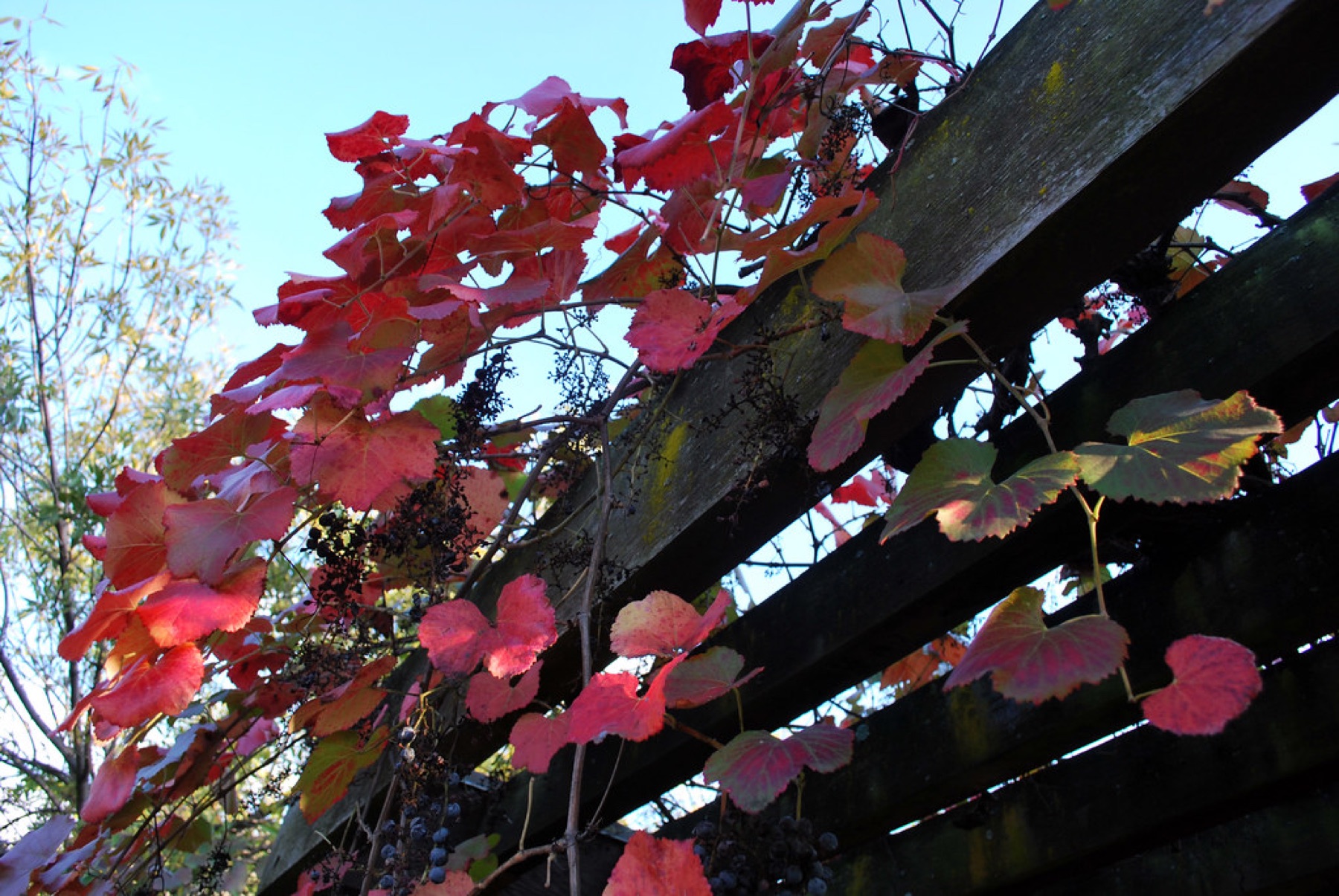 California Grape 🌿 Vitis californica grape has woody stems and grape clusters; wild cucumber is a soft seasonal vine with spiny fruits.