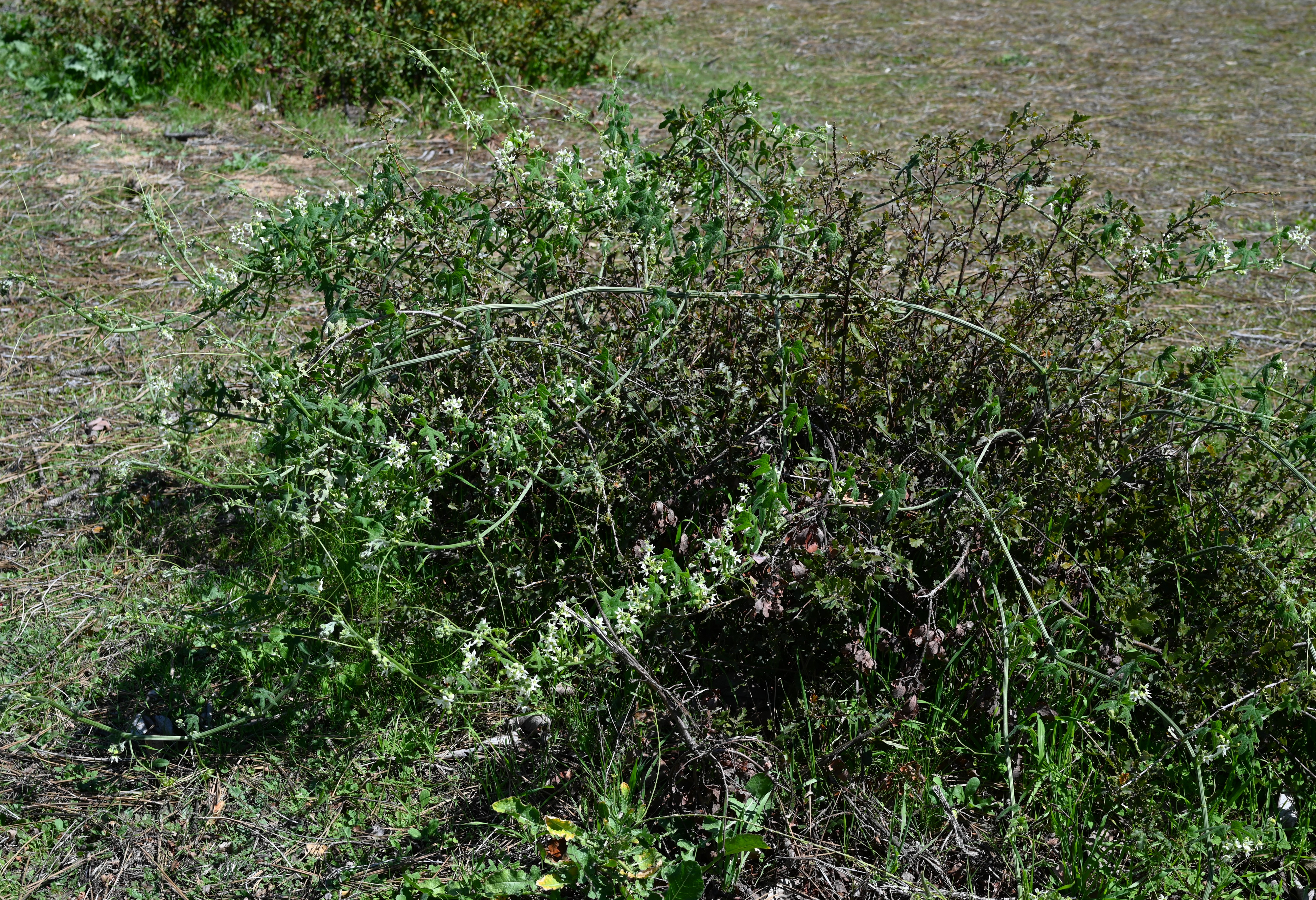
Pacific Poison Oak
Toxicodendron diversilobum · Anacardiaceae
- Form
- Shrub
- Height
- 1–6 ft, climbing higher as a vine
- Sun
- Part Shade
- Water
- Low
- Blooms
- Mar, Apr, May, Jun
- Pet toxicity
- Toxic
- Habitat
- Oak Woodland · Chaparral · Coastal Sage Scrub · Riparian
🌿 California native
Causes severe allergic rash Leaves, stems, roots, and even dormant twigs contain urushiol oil, which can cause a blistering rash. Do not burn it — smoke can carry the oil and injure lungs. Wear protection, wash exposed skin/tools, and assume dead-looking stems can still cause a reaction.
Quick facts
- Habitat: Oak woodland, chaparral, riparian edges, shaded slopes
- Form / size: Shrub or climbing vine
- Sun: Part shade to sun · Water (established): Low
- Blooms: Spring · Wildlife value: High, human-contact risk also high
Description
“Leaves of three, let it be” is imperfect but useful here. Pacific poison oak has leaflets in threes, variable oak-like lobing, and a habit that ranges from low shrub to climbing vine. New growth can be shiny red-green; fall color can be brilliant red.
Wildlife & pollinators
Flowers feed insects; berries feed birds and mammals. Dense growth provides cover.
Habitat & range
Common in woodland, chaparral, riparian margins, canyon bottoms, and shaded slopes throughout coastal and inland California.
In the garden
Usually not intentionally planted in home landscapes because of the rash hazard. In wildland habitat, it is a valuable native and should be managed with context: protect it away from trails, remove carefully where public contact is likely.
Propagation
Not recommended for ordinary gardens. It grows from seed and rhizomes in wild habitat.
Where to see it near you
- iNaturalist — observed in Southern California
- Shaded trails, canyon bottoms, oak woodland edges, and creek corridors.
Problems
Human safety is the main issue. Never weed-whack or burn without expert precautions.