Desert Lavender
Condea emoryi · Lamiaceae
- Form
- Shrub
- Height
- 3-8 ft
- Sun
- Full Sun
- Water
- Very Low
- Blooms
- Feb, Mar, Apr, May
- Pet toxicity
- Unknown
- Habitat
- Desert · Riparian · Coastal Sage Scrub
🌿 California native
Quick facts · Habitat: Desert washes, rocky slopes, warm dry canyon edges · Form / size: Aromatic shrub, 3-8 ft · Sun: Full sun · Water: Very low once established · Blooms: Late winter-spring · Pollinator value: High
Description
A fragrant desert shrub with gray-green leaves and lavender-purple flower clusters. The leaves have a strong herbal smell when brushed, making the plant easy to remember once you meet it.
Wildlife & pollinators
Flowers are valuable to bees, butterflies, and hummingbirds during the desert spring bloom.
Habitat & range
Desert washes, rocky slopes, alluvial fans, and warm canyon edges in Southern California deserts and desert-transition zones.
In the garden
Excellent for hot, dry native gardens with fast drainage. Give it room, sun, and very little summer water once established.
Propagation
From seed or semi-hardwood cuttings. Use lean, fast-draining soil and avoid keeping young plants wet.
Where to see it near you
- iNaturalist — observed in Southern California
- Desert washes, rocky canyon mouths, and warm inland slopes.
Problems
Poor drainage and regular irrigation shorten its life. It wants heat, air, and dry mineral soil.
Sources
Commonly confused with
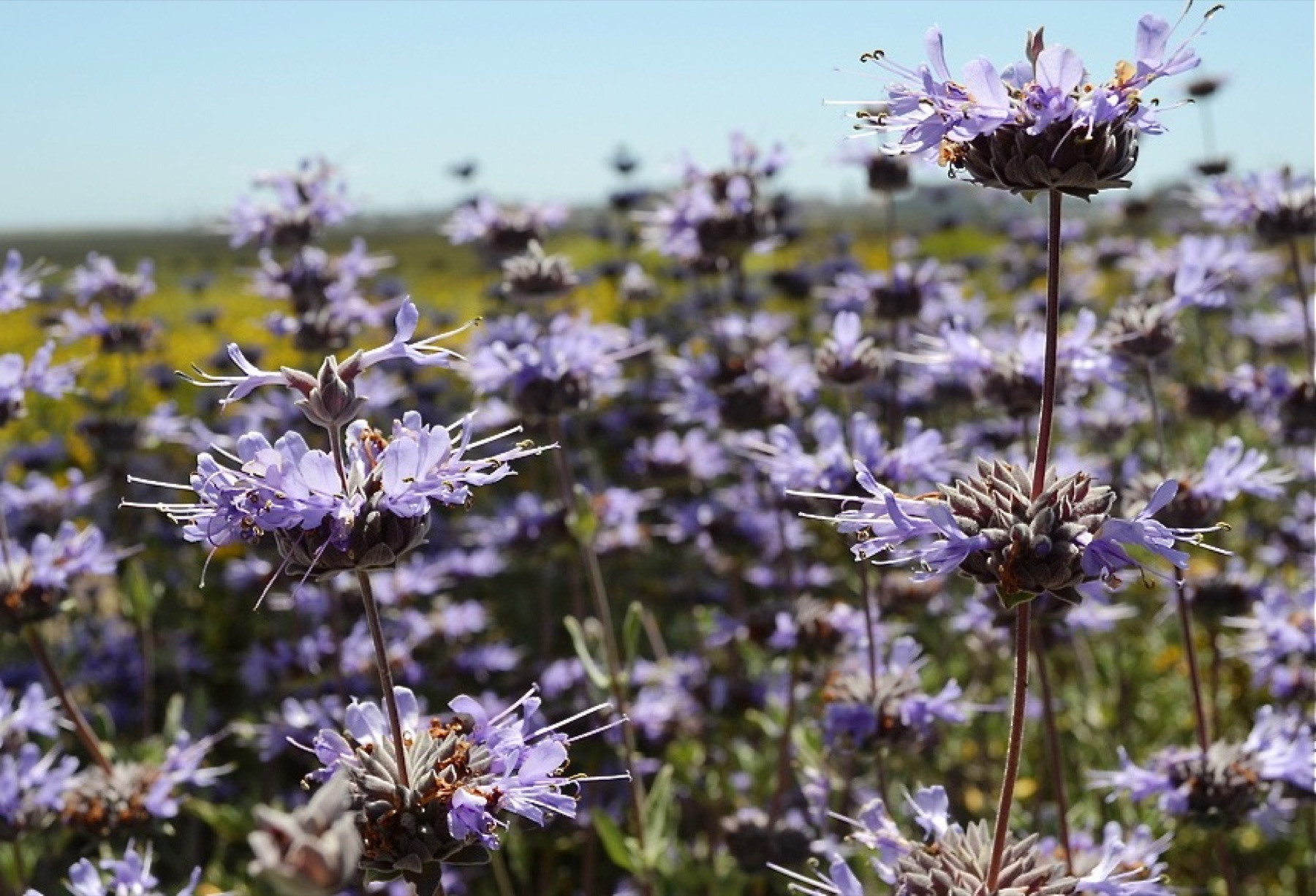 Cleveland Sage 🌿 Salvia clevelandii larger, rounder sage leaves and whorled flower clusters; desert lavender is a desert shrub with narrower leaves and a different herbal scent.
 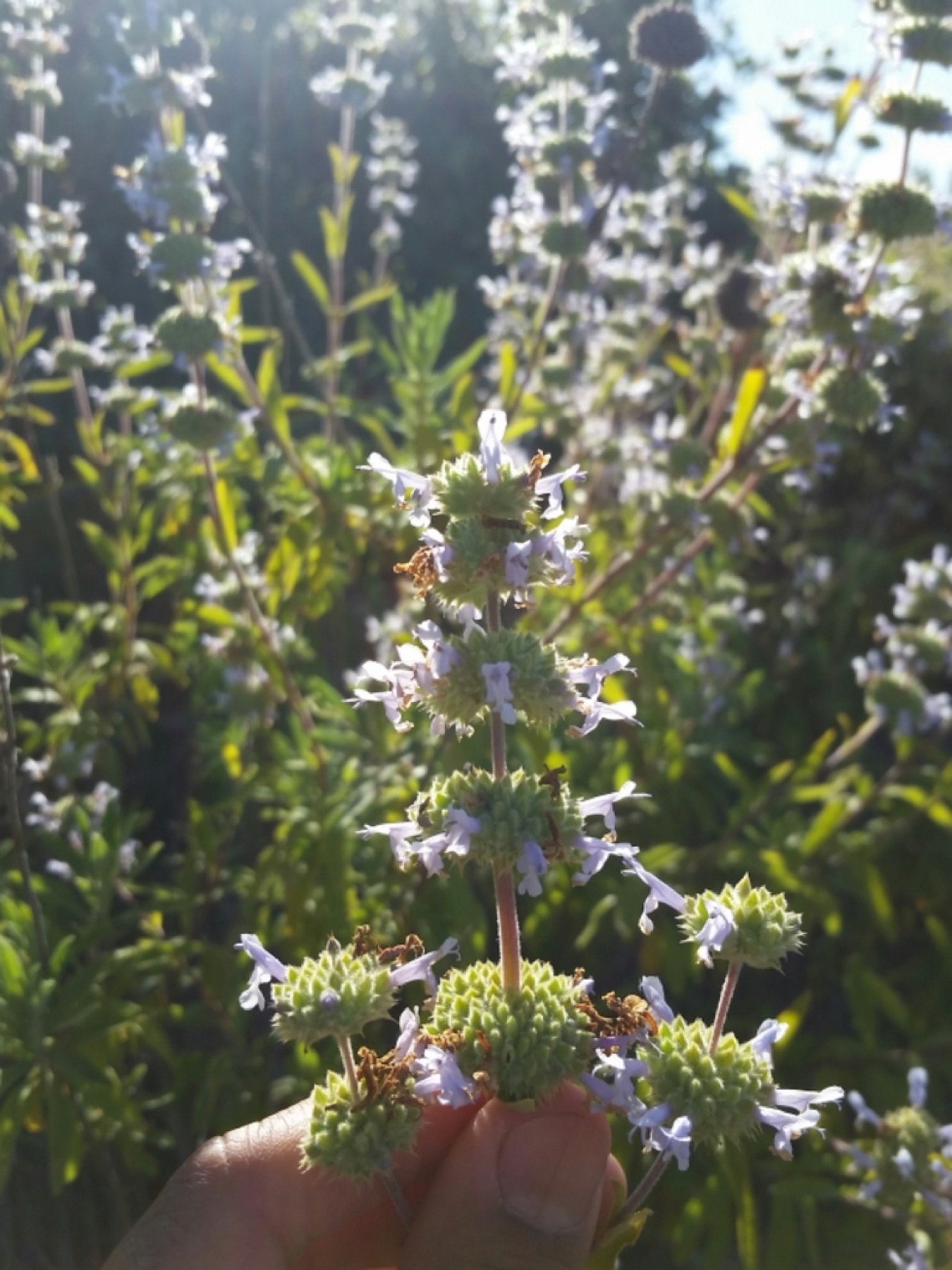 Black Sage 🌿 Salvia mellifera darker, more coastal scrub sage with square stems and whorled flowers; desert lavender is grayer and wash-loving.