Desert Broom
Baccharis sarothroides · Asteraceae
- Form
- Shrub
- Height
- 3-10 ft
- Sun
- Full Sun
- Water
- Very Low
- Blooms
- Sep, Oct, Nov, Dec
- Pet toxicity
- Unknown
- Habitat
- Desert · Riparian · Coastal Sage Scrub · Disturbed
🌿 California native
Quick facts · Habitat: Desert washes, disturbed edges, dry creek corridors · Form / size: Upright shrub, 3-10 ft · Sun: Full sun · Water: Very low · Blooms: Fall-winter · Pollinator value: High
Description
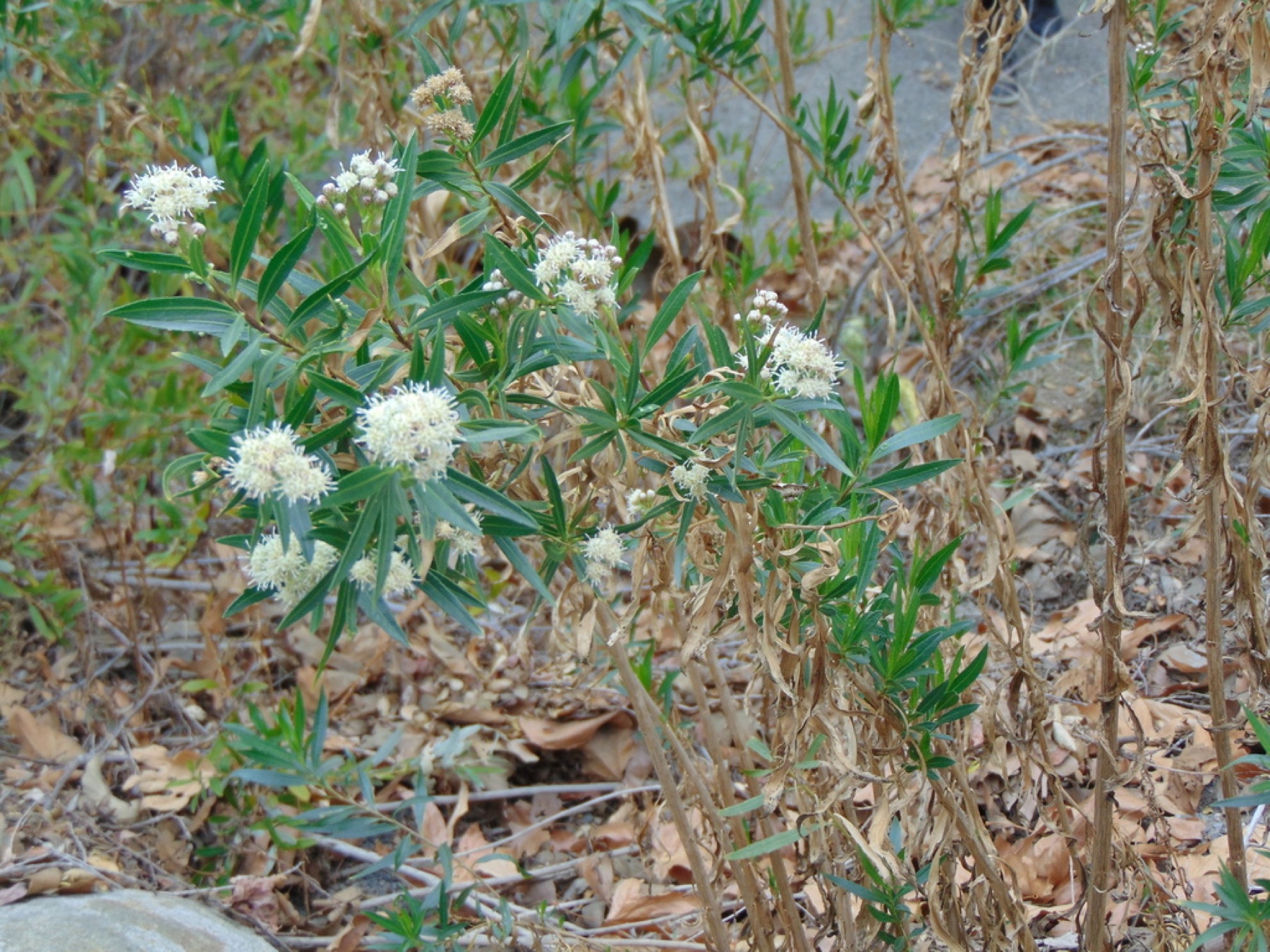
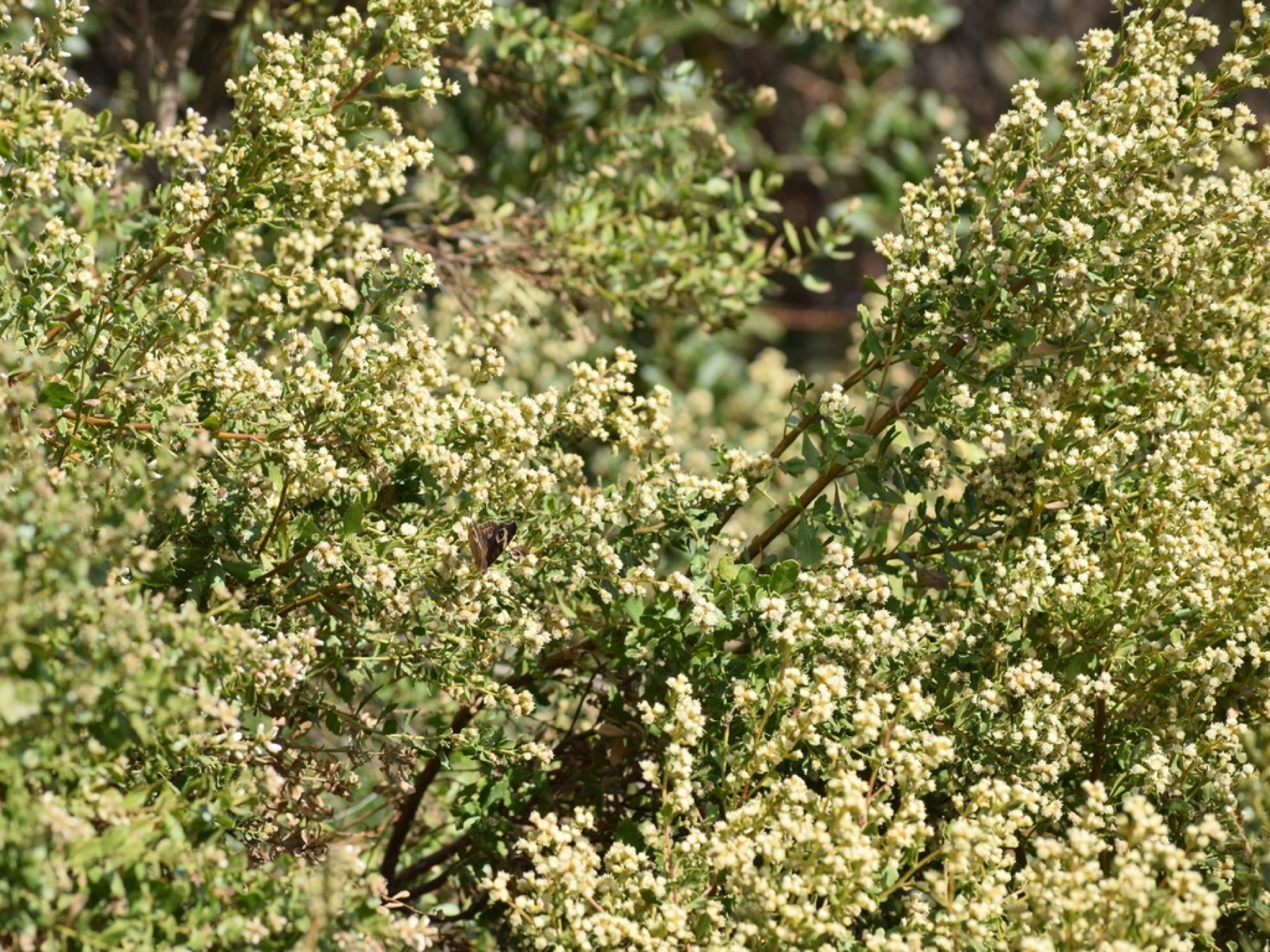
A tough, broomy Baccharis with many green upright stems and narrow leaves. Female plants produce masses of fluffy white seed in fall, making the shrub conspicuous along washes and roadsides.
Wildlife & pollinators
Fall flowers are valuable for native bees, flies, and butterflies when fewer plants are blooming. Dense stems provide cover for small birds.
Habitat & range
Desert washes, alluvial flats, roadsides, dry creek margins, and disturbed sunny ground from desert into warmer inland valleys.
In the garden
Useful only where toughness, cover, and late-season pollinator value matter more than neatness. Give it room, keep it dry, and expect reseeding.
Propagation
From seed or cuttings. Seed is wind-dispersed and can volunteer readily in bare soil.
Where to see it near you
- iNaturalist — observed in Southern California
- Desert washes, freeway edges, dry creek crossings, and open disturbed ground.
Problems
Can become weedy in disturbed sites and produces a lot of windblown seed fluff. Use selectively in designed landscapes.