Arroyo Lupine
Lupinus succulentus · Fabaceae
- Form
- Annual
- Height
- 1–3 ft
- Sun
- Full Sun
- Water
- Low
- Blooms
- Feb, Mar, Apr, May
- Pet toxicity
- Toxic
- Habitat
- Grassland · Coastal Sage Scrub · Riparian · Disturbed
🌿 California native
Quick facts
- Habitat: Open grassland, disturbed native ground, washes, scrub edges
- Form / size: Spring annual, 1–3 ft
- Sun: Full sun · Water: Winter rain
- Blooms: Late winter–spring · Pollinator value: High
Description
A lush annual lupine with palmately divided leaves and showy blue-purple flower spikes. In wet years it can form impressive patches along roadsides, washes, and open fields.
Wildlife & pollinators
Flowers are valuable for native bees, especially bumble bees and other larger bees. Seeds feed wildlife but are toxic if eaten by people or pets.
Habitat & range
Grasslands, open scrub, washes, roadsides, and disturbed winter-wet soils throughout much of California.
In the garden
Excellent in native wildflower mixes and restoration seedings. It can be big and floppy, so give it room.
Propagation
From seed sown in fall. Scarification or a hot-water soak can improve germination.
Where to see it near you
- iNaturalist — observed in Southern California
- Spring roadsides, washes, fields, and open scrub.
Problems
Seeds are toxic if eaten. Annual abundance varies dramatically with rainfall.
Sources
Commonly confused with
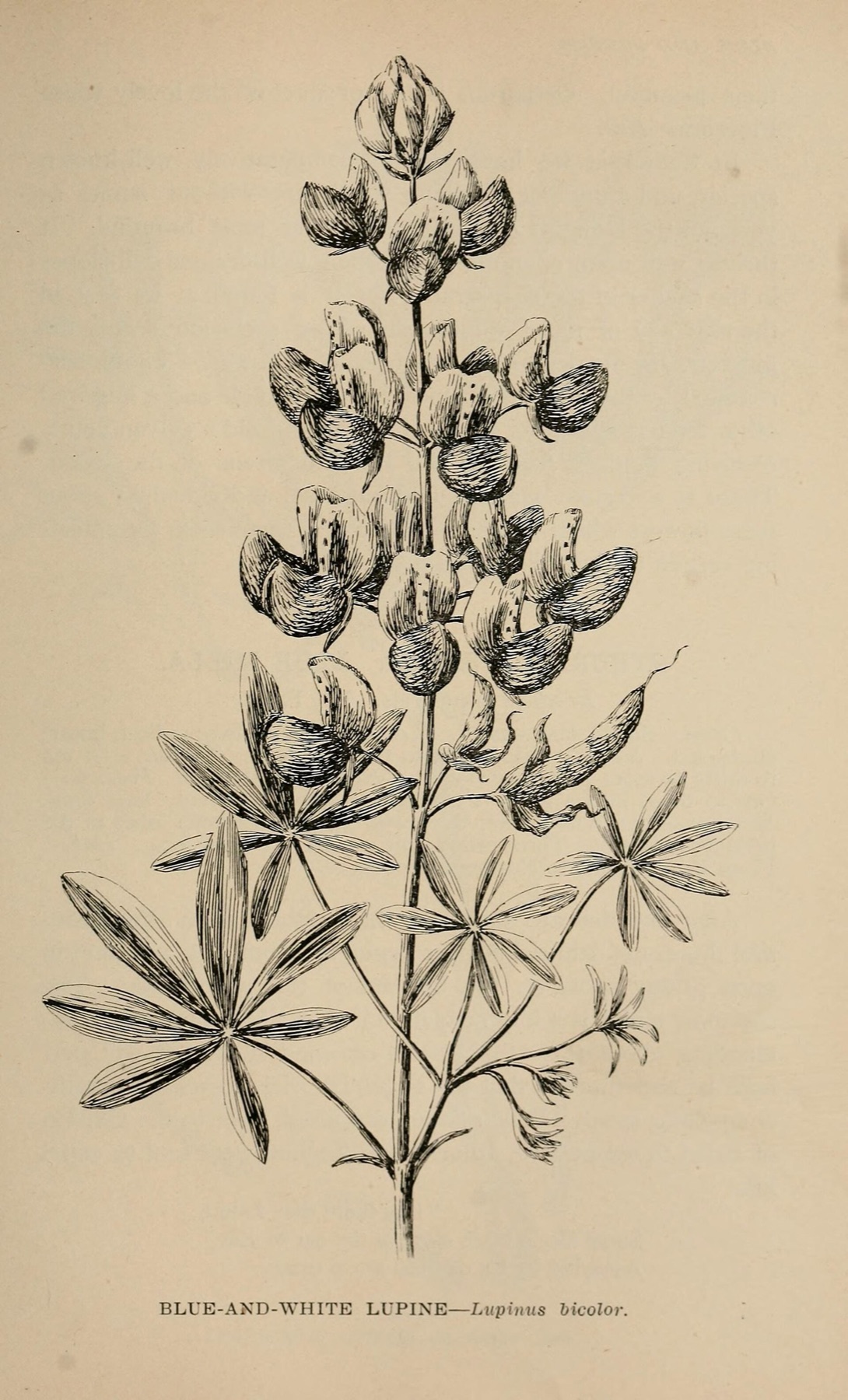 Miniature Lupine 🌿 Lupinus bicolor smaller annual with smaller flowers.
 🌿 Garden lupines often perennial hybrids with larger ornamental spikes.