Italian Thistle
Carduus pycnocephalus · Asteraceae
- Height
- 1-4 ft
- Habitat
- Grassland · Oak Woodland · Coastal Sage Scrub · Disturbed
🚫 Invasive / non-native weed
At a glance
- Tell-tale sign: Spiny annual thistle with small clustered purple flower heads
- Where: Roadsides, grasslands, disturbed slopes, woodland edges
- Why it matters: Crowds native annuals and creates painful, seedy patches
How to identify
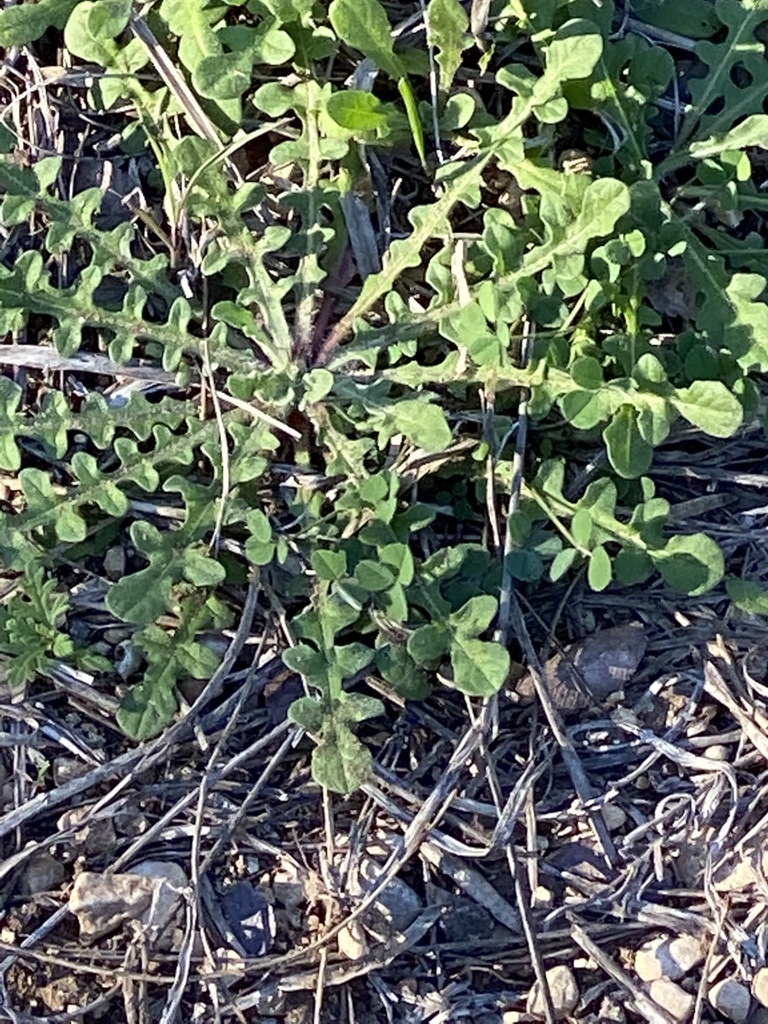
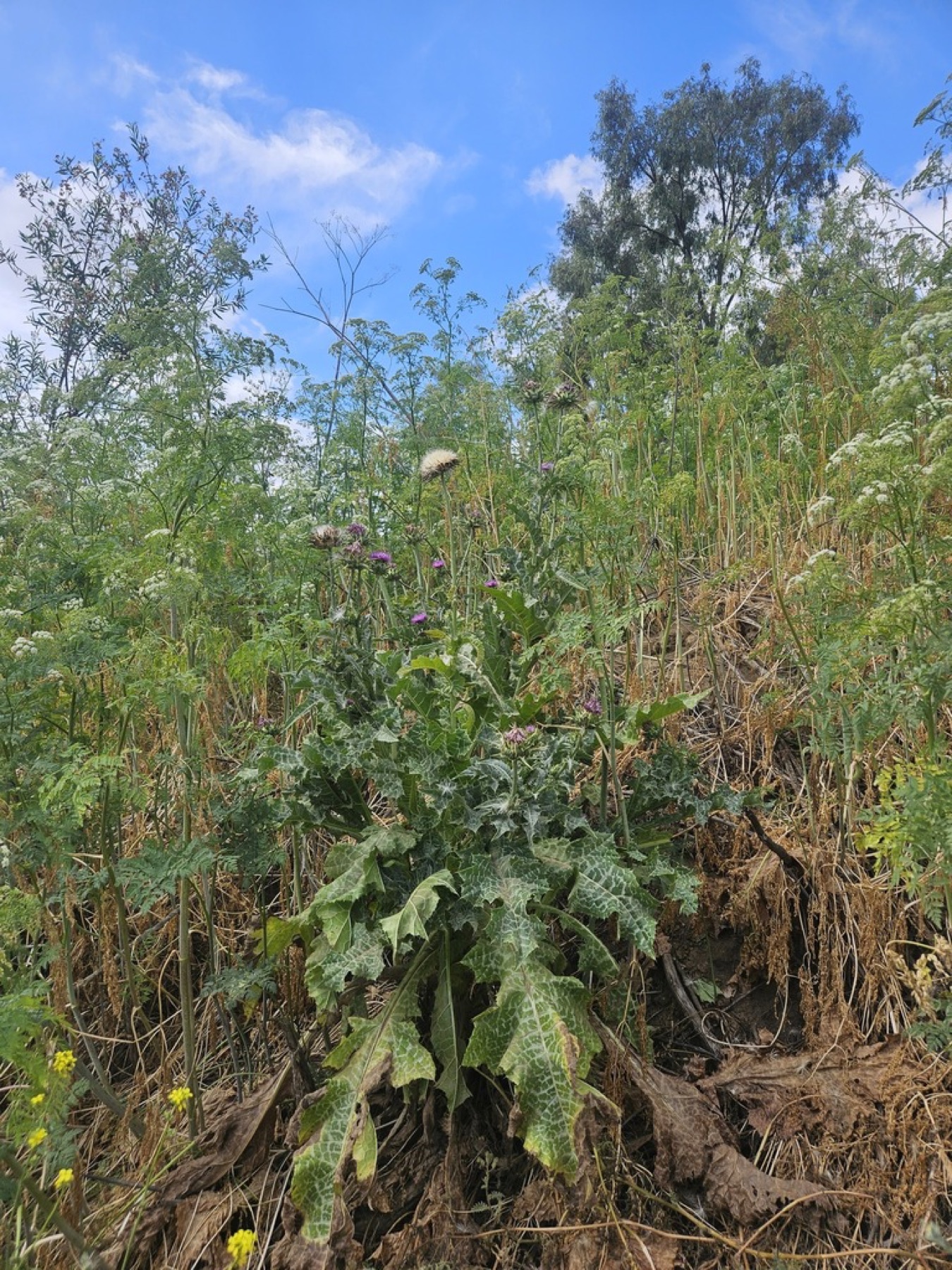
A spiny annual thistle with winged, prickly stems and narrow purple flower heads often clustered near branch tips. Plants may be slender in dry places or robust in better soil.
Why it’s a problem
Italian thistle invades grasslands, roadsides, and disturbed native habitat, crowding spring annuals and creating sharp seed-producing stands.
How it spreads
By wind-dispersed seed. Disturbance and bare ground help it establish.
How to remove it
Pull or cut below the root crown before seed matures. Bag flowering/seed heads. Recheck the site because seedlings keep coming from the seed bank.
Plant this instead
For native spring structure and competition, use Yarrow, California Poppy, Purple Needlegrass, Deergrass, and California Buckwheat depending on habitat.