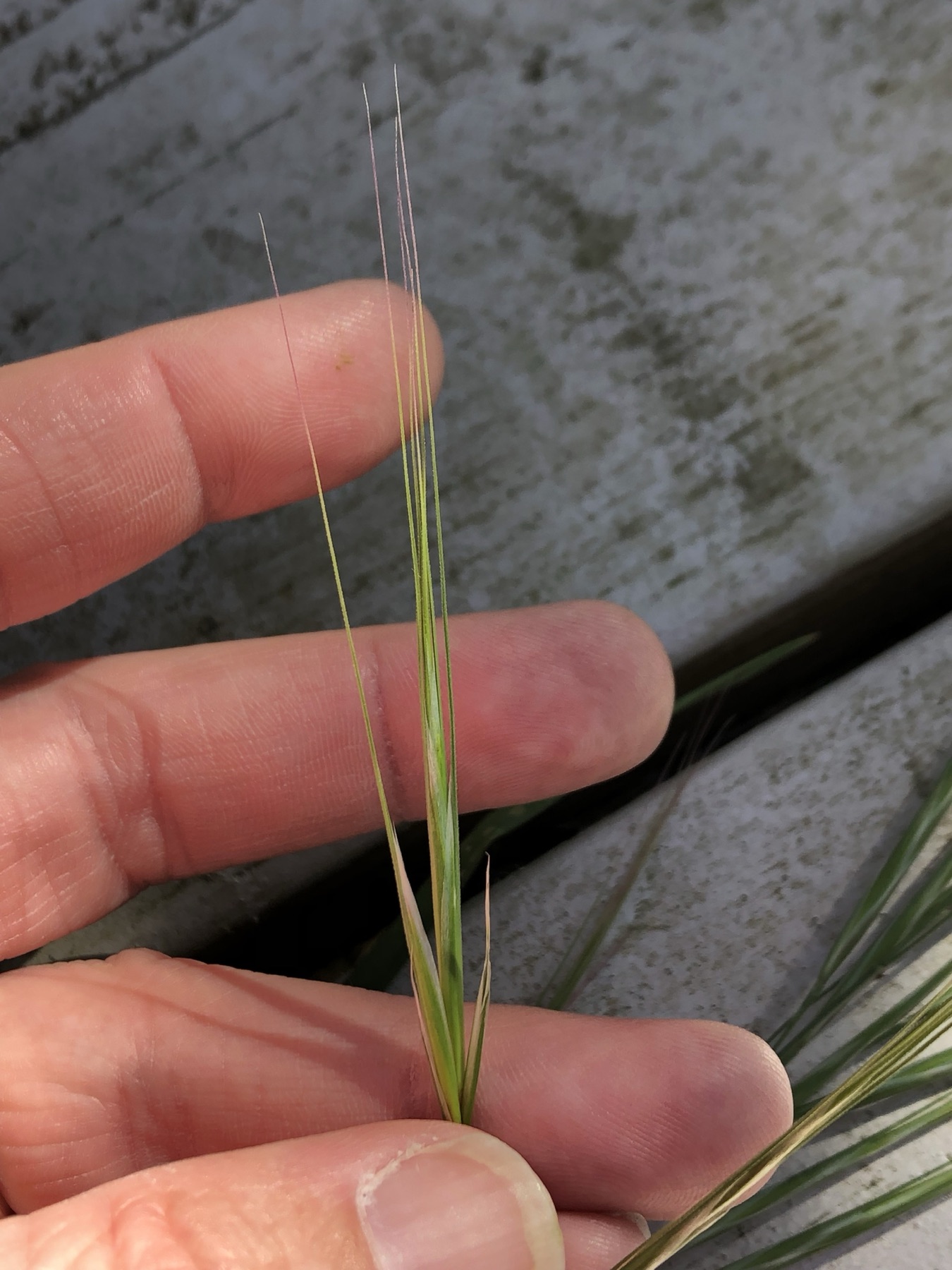
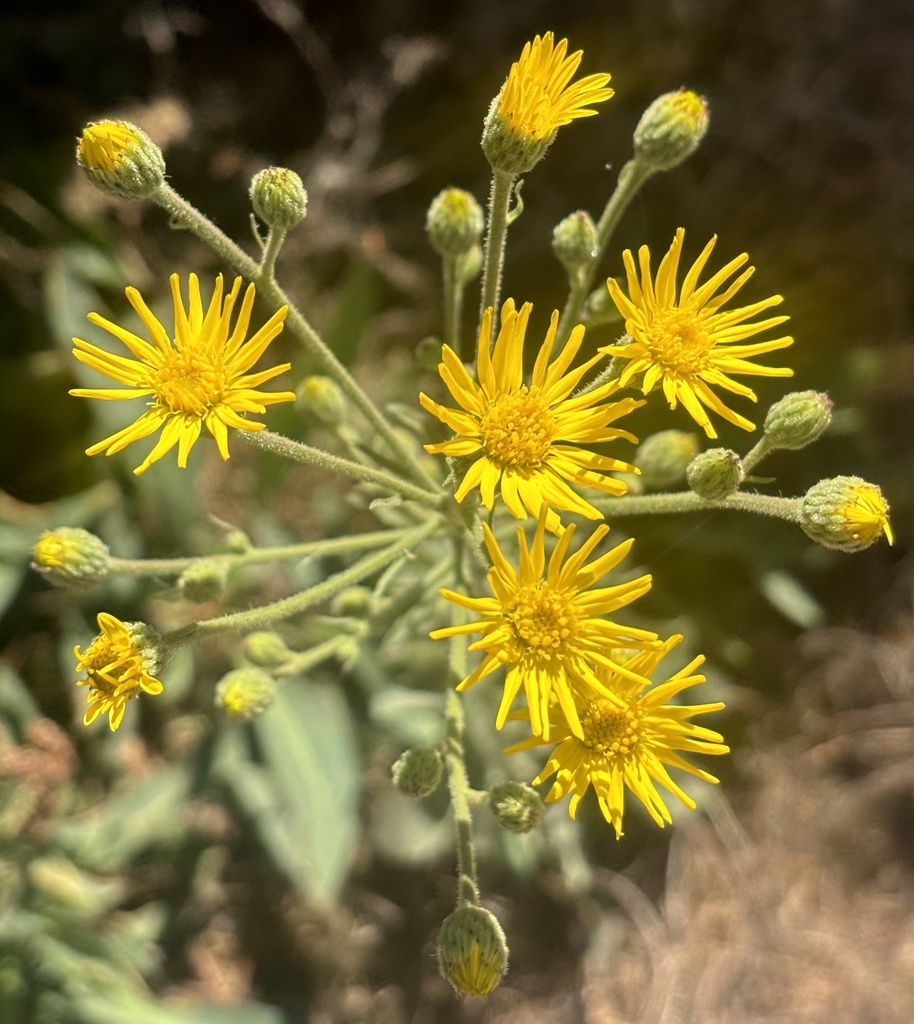
Tocalote
Centaurea melitensis · Asteraceae
- Height
- 1-3 ft
- Habitat
- Grassland · Disturbed
🚫 Invasive / non-native weed
At a glance
- Tell-tale sign: Small yellow thistle flowers subtended by short spines; stiff, branchy plant
- Form: Annual, 1–3 ft, in dry grassland
How to identify
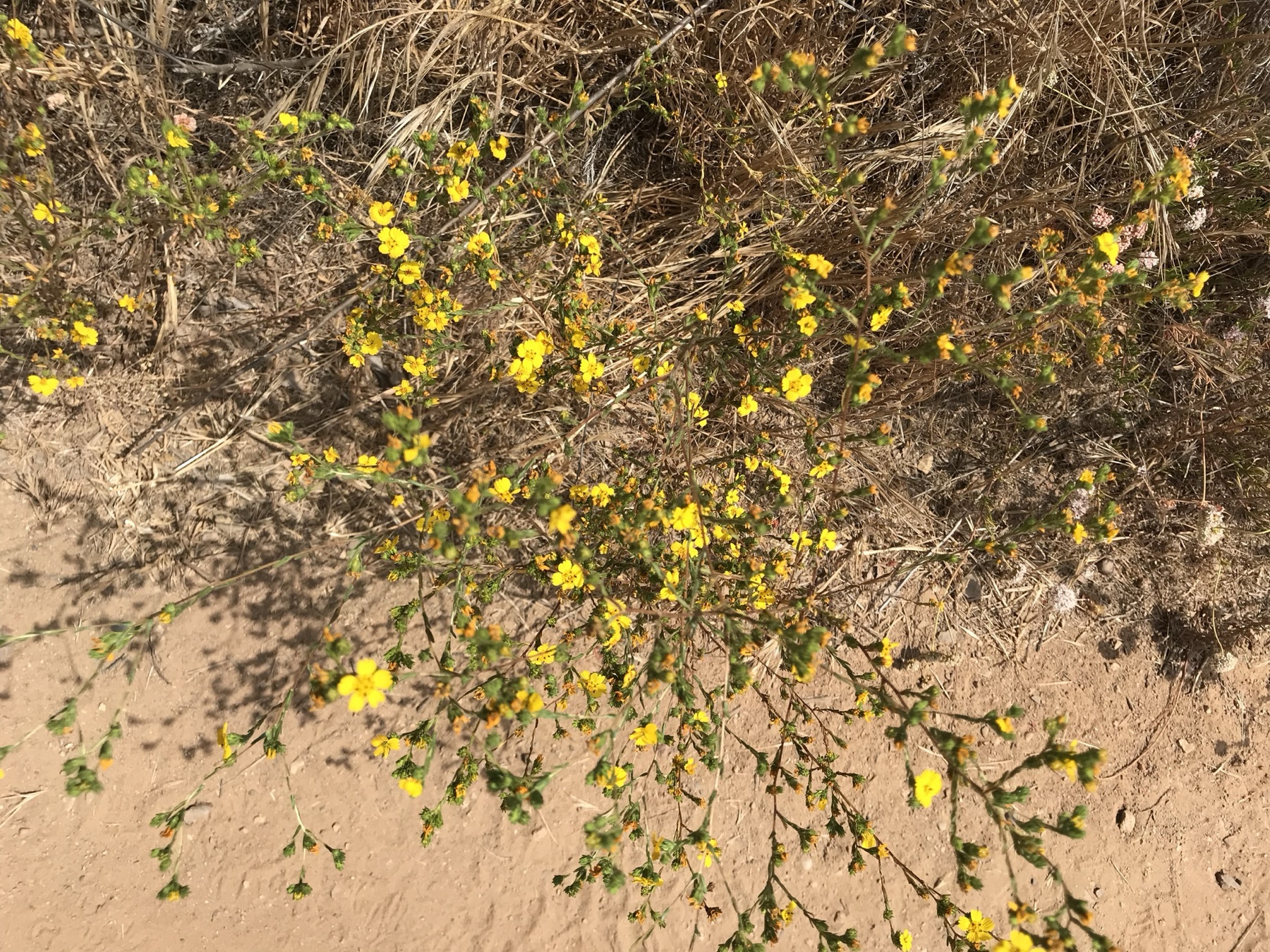
A wiry annual star-thistle with small yellow flower heads ringed by short, sharp spine-tipped bracts, on grey-green, stiffly branched stems with leaves running down the stem (winged). A close relative of the notorious yellow star-thistle, it carpets dry grassland and disturbed ground in late spring–summer.
Why it’s a problem
Forms dense, spiny stands that displace native grassland and wildflowers, reduce forage, and are unpleasant for people and animals to move through. Builds a persistent seed bank.
How it spreads
By seed, favored by disturbance and overgrazing; seed persists in soil for years.
How to remove it
- Pull, hoe, or mow before flowering/seed set (timing is everything with annual thistles).
- Keep ahead of it on disturbed ground and revegetate with competitive natives like Purple Needlegrass and California Poppy.
- Bag any seeding heads.
Where it’s spread near you
Sources
Commonly confused with
🌿 Yellow star-thistle Centaurea solstitialis has much longer, stout spines; tocalote's spines are shorter. Both are managed the same way.
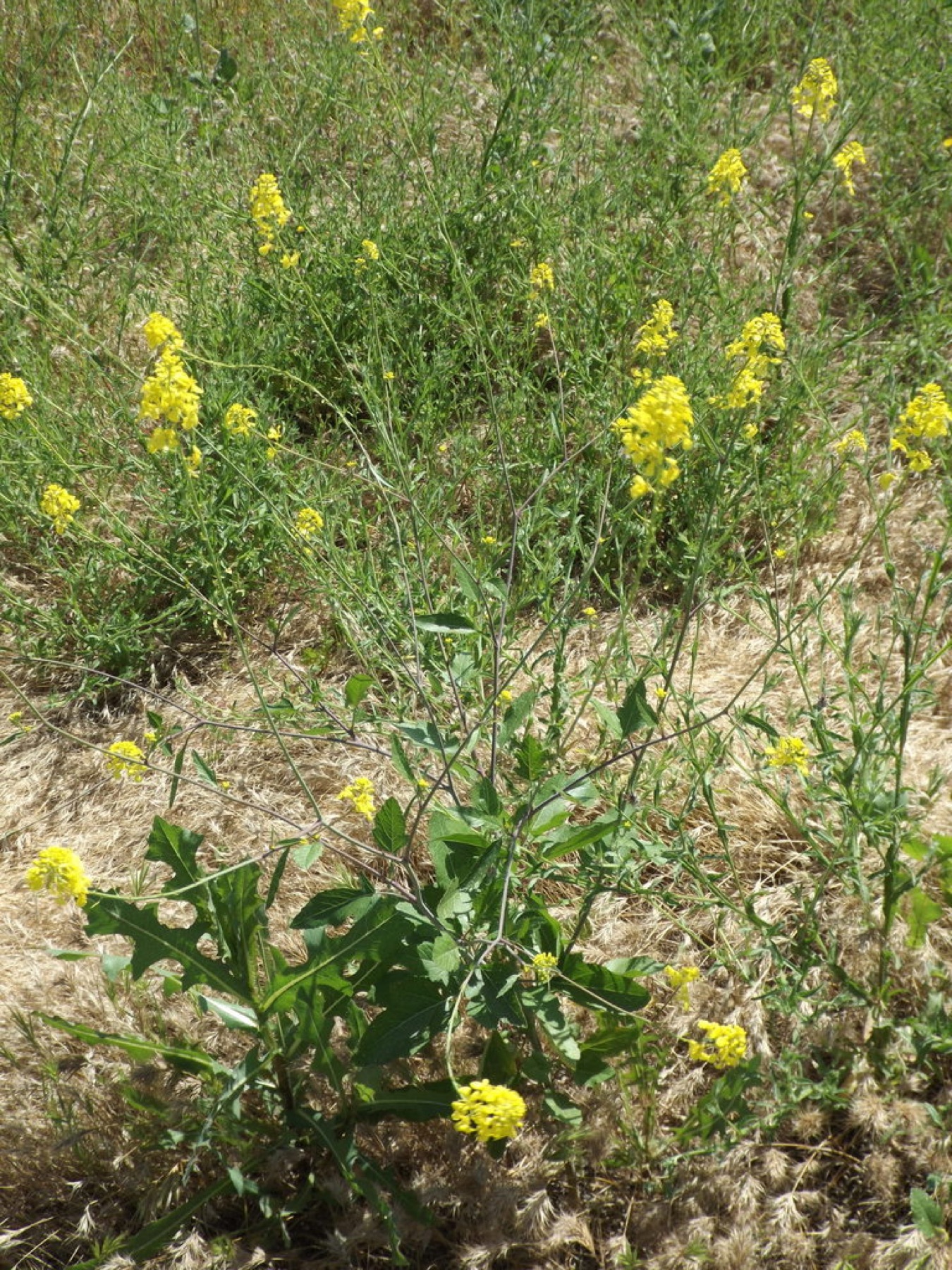
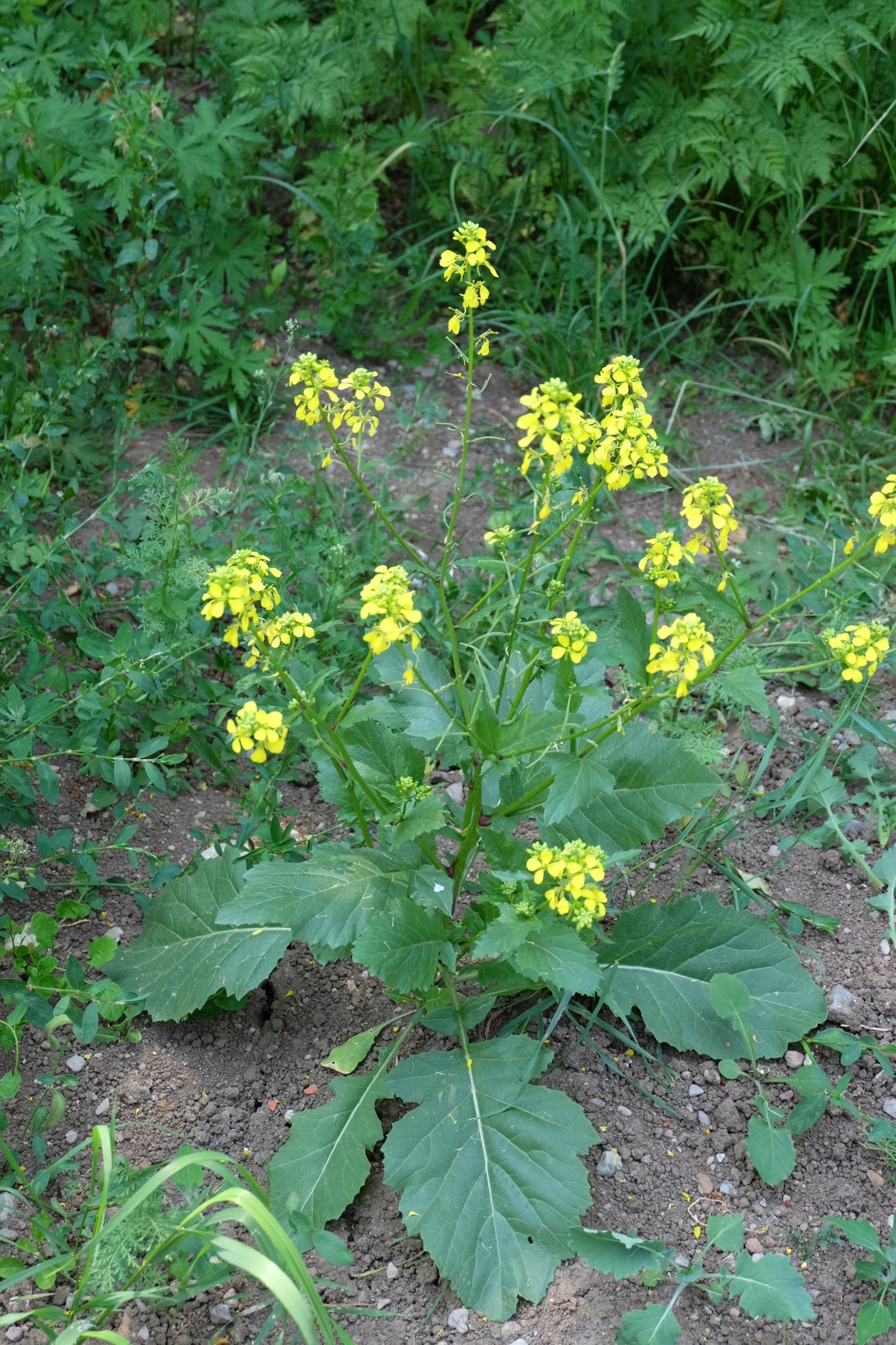 Wild Mustard 🚫 Brassica nigra & Hirschfeldia incana also yellow, but mustard has soft 4-petaled flowers and no spines.