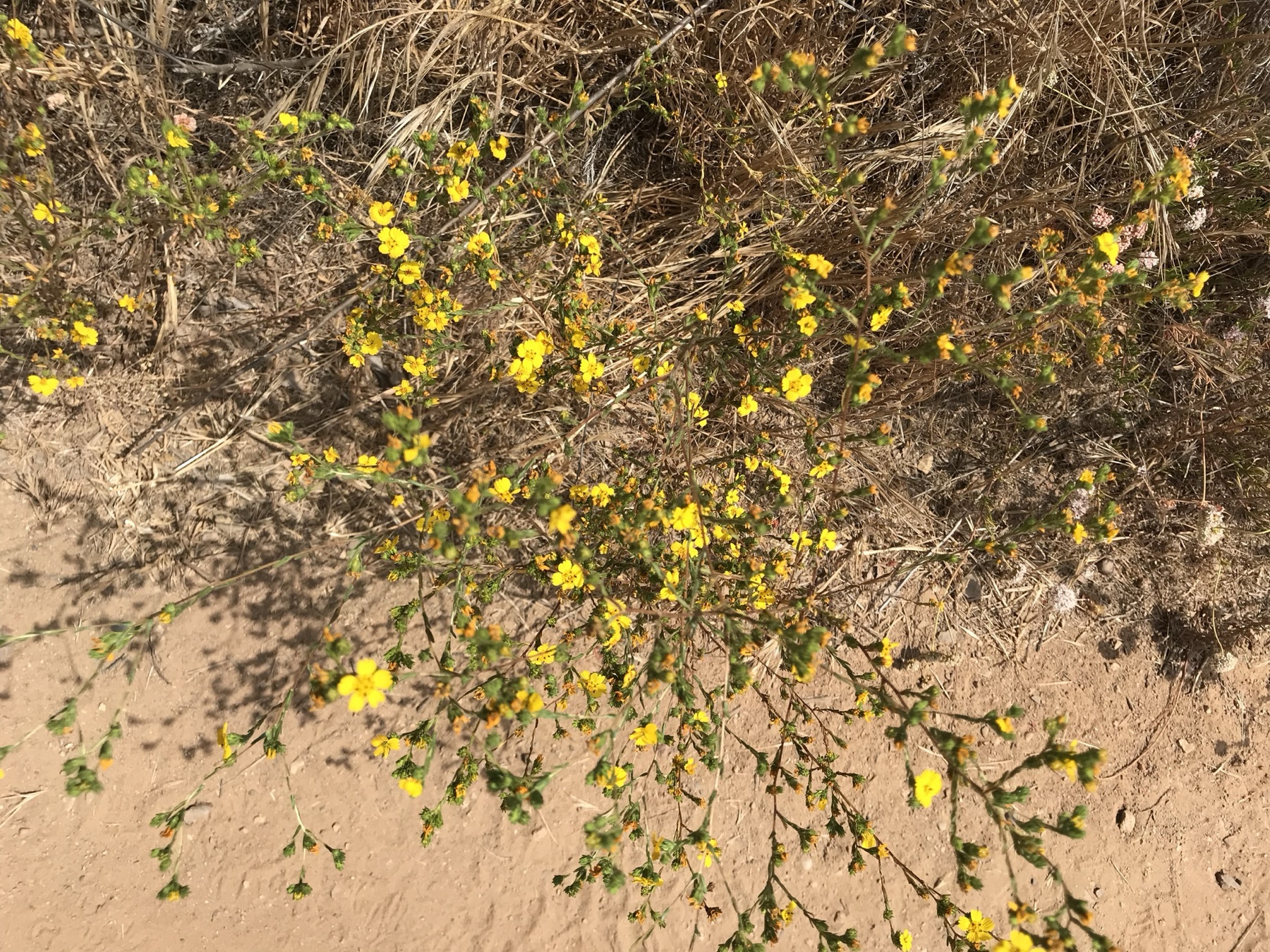
Black Mustard
Brassica nigra · Brassicaceae
- Form
- Annual herb
- Height
- 2-8 ft
- Sun
- Full Sun
- Water
- Low
- Blooms
- Mar, Apr, May, Jun
- Pet toxicity
- Mild
- Habitat
- Grassland · Coastal Sage Scrub · Disturbed
🚫 Invasive / non-native weed
At a glance
- What it is: Tall non-native annual mustard common in disturbed slopes and grasslands
- Tell-tale sign: Yellow four-petaled flowers on tall branching stems
- Why it matters: Builds dense stands and dry fuel that crowd native annuals
How to identify
A tall, fast-growing annual with rough, lobed to toothed leaves and many small yellow, four-petaled mustard flowers. Crushed foliage has the familiar mustard/cabbage smell. Dry plants become stiff, pale fuel by summer.
How it got here
The story you’ll hear is that Spanish missionaries scattered mustard seed as they walked between missions, marking El Camino Real with a “ribbon of gold.” People credit it to Junípero Serra himself. It’s a nice story. There’s no real proof it happened. Here’s what the record actually shows. Researchers studied the adobe bricks the missions were built from and found zero mustard in the region before Spanish colonization started in 1769. After that, it’s in the bricks, along with more than a dozen other weeds nobody planted on purpose. Mustard almost certainly came the way most farm weeds do — mixed into crop seed, animal feed, or soil, carried along by colonization instead of scattered by hand for scenery. Heidi Lucero, chairwoman of the Juaneño Band of Mission Indians Acjachemen Nation, put it plainly: “The colonizers came in and choked out the Native people here. And now the plants they brought are choking out the native plants here. It’s kind of a good comparison.”
Why it’s a problem
Black mustard grows fast and dense enough to shade out native annuals before they get a foothold. It also poisons the ground a little: the roots release allelopathic compounds that can stop other seeds from germinating nearby. It’s not just outcompeting the neighbors, it’s cheating. Every summer it dries into a continuous mat of fine, flashy fuel that burns faster and hotter than the native shrubs it replaced. Fire comes through, mustard comes back first, and coastal sage scrub slowly gets converted into weedy annual grassland for good. This is one of the main reasons Southern California is losing sage scrub.
How it spreads
Seeds heavily into open disturbed soil, roadsides, slopes, fields, and post-disturbance patches.
How to remove it
- Pull or cut before seed set when soil is moist.
- Bag mature seed heads if seeds are already forming.
- Follow with native annuals or perennial cover so bare soil does not refill with mustard.
Restoration alternative
Pulling mustard and leaving bare dirt doesn’t fix anything; the seed bank just refills it. Something native has to take that ground instead. In grassland, that means perennial bunchgrasses like Purple Needlegrass and Deergrass, rebuilding the cover mustard wiped out. In coastal sage scrub, it’s California Buckwheat, White Sage, and the other sage scrub natives that actually feed local pollinators instead of just standing there. Mustard seed stays viable in the soil for years, so this isn’t a one-time weekend job. Plan on weeding it back for at least a season or two before it’s actually gone.
Where it’s spread near you
- iNaturalist — observed in Southern California
- Disturbed slopes, fields, roadsides, and grassland edges.
Sources
- Cal-IPC profile · iNaturalist · Wikipedia
- Introduction history: PBS SoCal — “The Colonial Roots of the Black Mustard Plant” · Ecological impact: UC Irvine Center for Environmental Biology
Commonly confused with
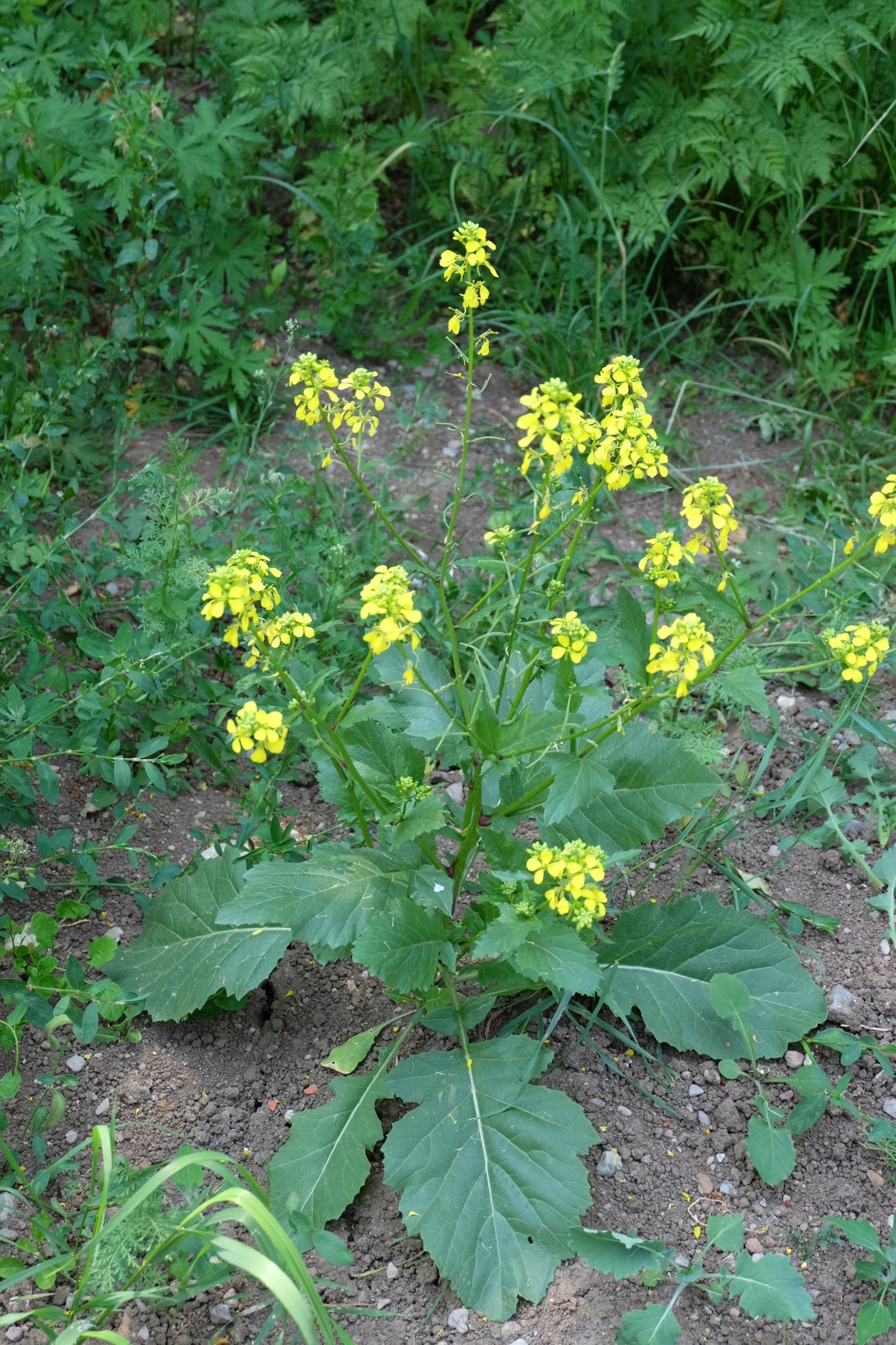 Wild Mustard 🚫 Brassica nigra & Hirschfeldia incana similar yellow mustard weed; black mustard is often taller and coarser.