Common Fiddleneck
Amsinckia menziesii · Boraginaceae
- Form
- Annual herb
- Height
- 6-30 in
- Sun
- Full Sun
- Water
- Low
- Blooms
- Feb, Mar, Apr, May
- Pet toxicity
- Toxic
- Habitat
- Grassland · Coastal Sage Scrub · Disturbed
🌿 California native
Quick facts
- Habitat: Grassland, Coastal Sage Scrub, disturbed open soil
- Form / size: Bristly annual, 6-30 in
- Sun: Full sun · Water: Winter rain only
- Blooms: Late winter-spring · Pollinator value: Moderate
Description
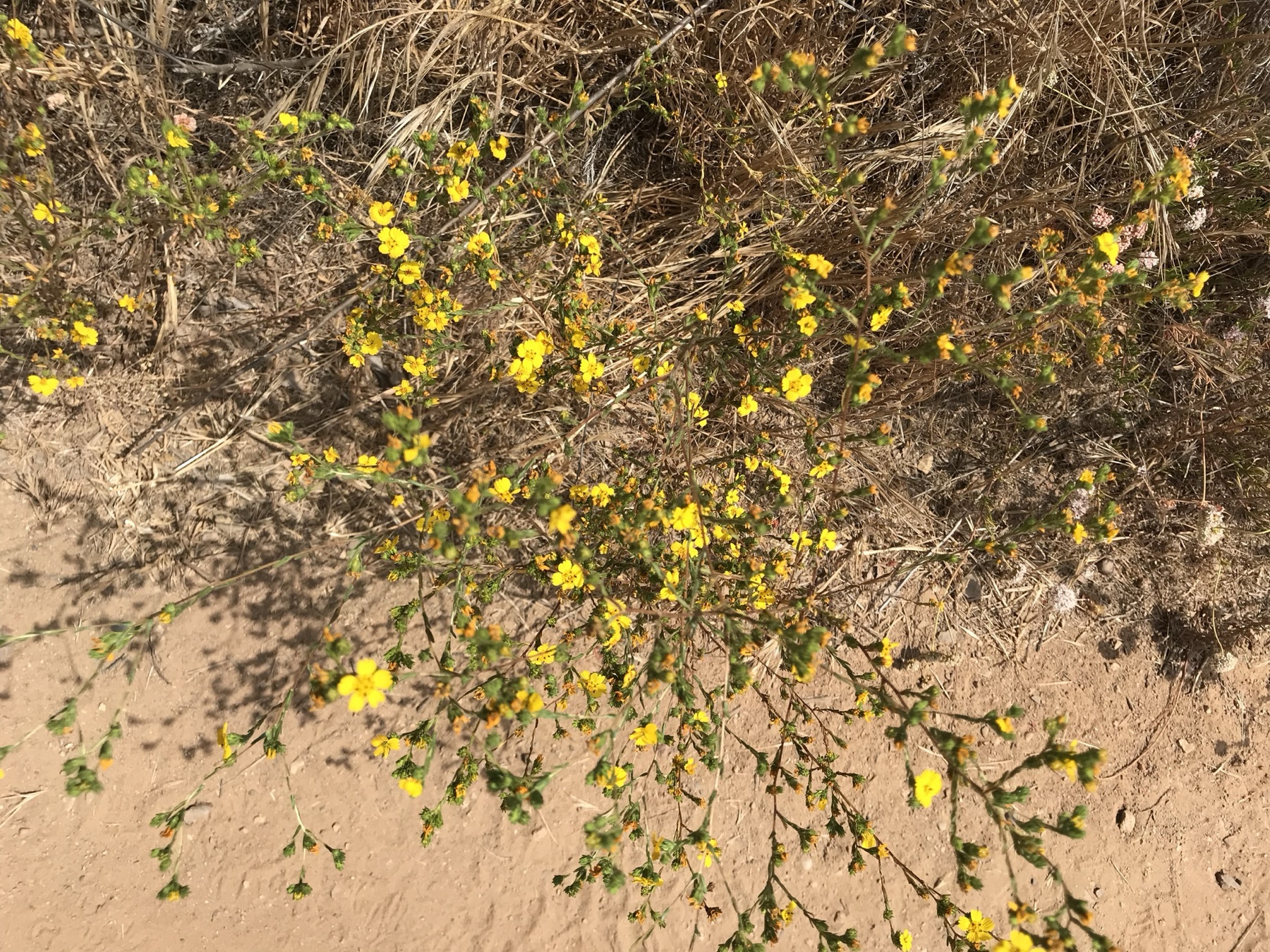
A bristly annual wildflower with coiled “fiddlehead” flower clusters and small yellow-orange tubular flowers. It often appears in big spring flushes after winter rain.
Wildlife & pollinators
Native bees and flies visit the flowers. It is one of the common spring annuals that help bridge early-season pollinator gaps.
Habitat & range
Grasslands, open scrub, roadsides, disturbed soil, old fields, and sunny slopes throughout Southern California.
In the garden
Best as a self-sowing wildflower in informal meadow or restoration settings. Not a tidy border plant, and not ideal around grazing animals.
Propagation
From seed sown in fall. Let plants dry and drop seed if you want a recurring patch.
Where to see it near you
- iNaturalist — observed in Southern California
- Open slopes, trail edges, restoration sites, and spring grasslands.
Problems
Can be toxic to livestock if eaten in quantity, especially in hay. Handle bristly plants gently if you have sensitive skin.